Twenty lengths of the pool. I took my time,
got through it. They split us then:
Japanese girls, westerners.

The numbers didn't work. I went with the girls
and one Australian man. Nobody commented.
Nobody needed to.

Shuta Tanaka spoke Japanese only—
full-speed explanation, then demonstration.
The girls followed. I worked it out from context.

They didn't speak to me. Not fitting gear,
not waiting for the next drill. They talked together,
laughed together. I stayed close, a step aside.

Fin pivoting was harder than it looked:
the body held in a shape that felt wrong,
head back, hips higher than instinct allowed.

I kept getting it nearly right.
One instructor had decided I was trouble.
He watched me longer than the others.

Two days, then out to the outer reef.
The water colder than expected, a clean shock
each time. Down, across, up. Again.

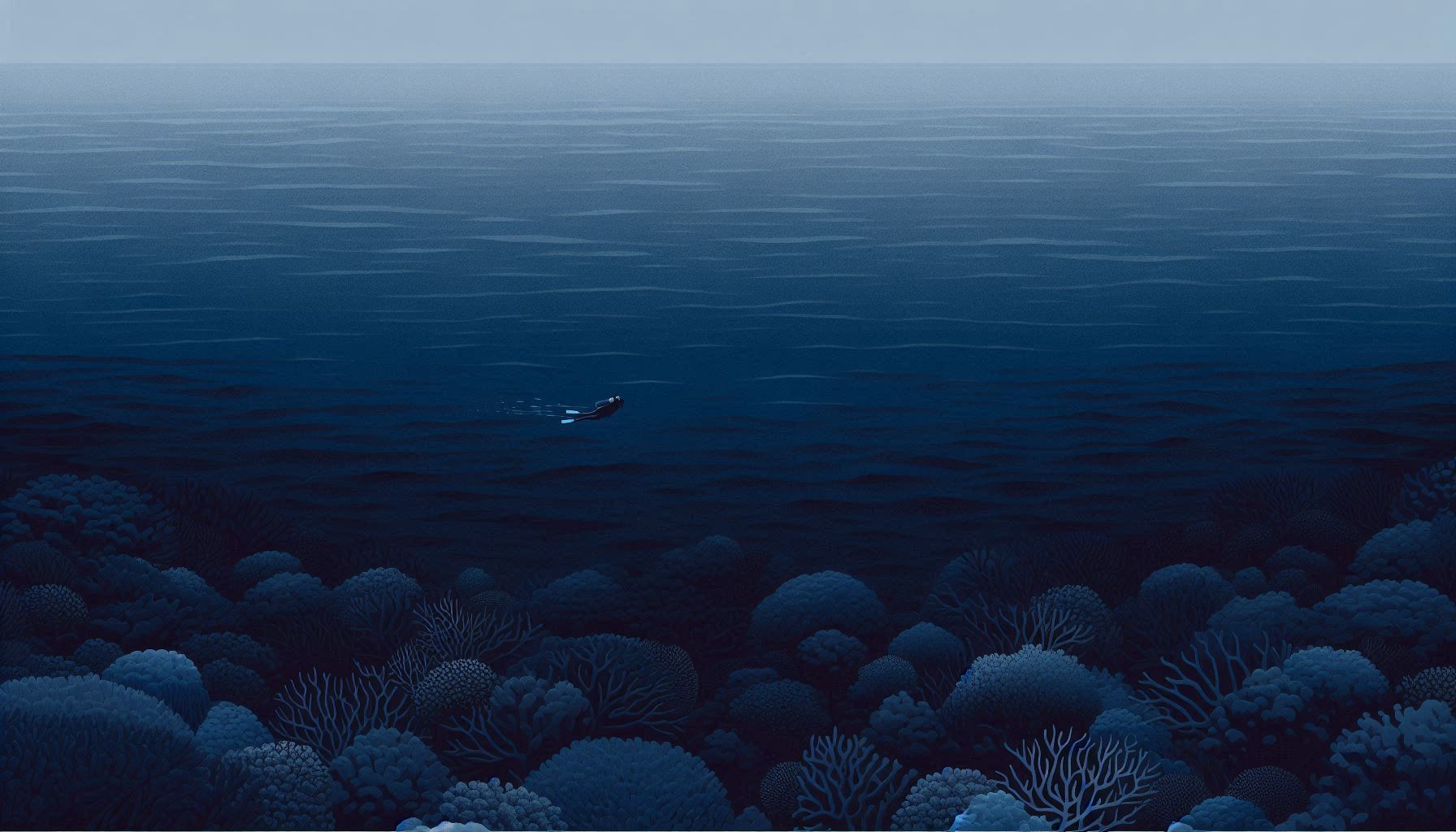
Underwater there was no one to impress
and no role to misjudge. Small movements mattered.
Breathing sorted itself out.

On the night dive a reef shark crossed
the torchlight's edge and disappeared.
It didn't alter course.

That evening the crew organised drinking games.
I stood and left. No one followed.

On deck, the sea was a thereness
in a way nothing else was. Black, entire.
Cold still in my hands, leaning on the rail.

I'd learned a skill.
That would have to do.
https://thinkinginstructure.substack.com/p/learning-to-dive-cairns-1995