Tag: complex systems

  • The Description–Fragility Duality in Tightly Coupled Systems

    Abstract

    Many complex systems exhibit a recurring structural phenomenon: the same mathematical structures used to describe system behaviour also identify the directions in which perturbations amplify. In dynamical systems, linearized evolution governs both trajectory geometry and instability. In statistical physics, covariance and Fisher information govern both parameter identifiability and response through fluctuation–response relations. In networked infrastructures, the same connectivity structures used to represent normal operation also shape cascade propagation.

    This paper proposes the Description–Fragility Duality: a structural correspondence in which the operators or coordinates that make a system intelligible also reveal the directions in which it is fragile. A simple proposition shows that when a descriptive operator commutes with the local system dynamics, the coordinates that diagonalize system description also diagonalize instability directions, at least at the level of invariant subspaces, and in a common eigenbasis when both operators are diagonalizable. The broader claim—that many tightly coupled systems approximately satisfy this alignment—is proposed as a research programme illustrated through examples from dynamical systems, statistical physics, and networked infrastructures.

    1. Introduction

    Across many scientific and engineering disciplines, models are built to explain how complex systems behave. These models identify relationships among components and describe how system states evolve over time. In doing so they introduce mathematical structures—matrices, operators, modes, or geometric coordinates—that render system behaviour intelligible.

    A recurring pattern appears once such models are constructed: the same structures that explain how the system operates often also reveal how it can fail. Structural models of bridges identify both the pathways through which loads propagate and the directions in which buckling occurs. Financial network models describe equilibrium exposures between institutions while simultaneously revealing the channels through which contagion spreads. Dynamical systems theory identifies invariant directions governing trajectory evolution while also identifying the directions of exponential instability.

    These examples suggest a more general structural principle: the mathematical coordinates that make a system easiest to describe frequently coincide with those that reveal its fragility.

    This paper calls this phenomenon the Description–Fragility Duality. The claim is not that the duality holds universally. Rather, the proposal is that many tightly coupled systems exhibit structural conditions under which description and fragility become aligned. Section 4 gives a simple proposition exhibiting one sufficient mechanism for such alignment. The remaining sections illustrate analogous structures in dynamical systems, statistical physics, and networked infrastructures.

    2. Description–Fragility Duality

    The central idea can be stated informally:

    Description–Fragility Duality. In tightly coupled systems, the mathematical operators or coordinates used to describe system behaviour also determine the directions and rates of perturbation amplification.

    Equivalently:

    The coordinates that make a system easiest to describe often reveal the directions in which it is most fragile.

    This is intended as a structural pattern rather than a universal law. The paper’s claim is that in many important cases the same couplings that generate organized behaviour also generate amplified failure modes.

    3. Tightly Coupled Systems

    The duality appears most clearly in systems whose components are strongly interdependent. In such systems, perturbations propagate through the same pathways that govern normal operation.

    To express this idea, consider a dynamical systemx˙=f(x)\dot{x}=f(x)x˙=f(x)

    and let LLL denote a linear operator capturing some descriptive structure of the system. Depending on context, LLL might represent a sensitivity matrix, a Fisher information matrix, a modal operator, or a network interaction matrix.

    For the purposes of this paper, the system will be called tightly coupled with respect to LLL when the descriptive operator LLL and the local dynamical Jacobian Df(x)Df(x)Df(x) approximately share invariant directions or eigenvectors. In that situation, the same directions in state space simultaneously encode

    • the system’s natural coordinates of behaviour, and
    • the directions in which perturbations preferentially grow.

    This is not meant as a complete taxonomy of tight coupling. It is a local structural definition sufficient for the present argument.

    4. Proposition: Alignment of Description and Fragility

    The mechanism underlying the duality can be expressed in a simple statement.

    Proposition

    Let x(t)x(t)x(t) satisfyx˙=f(x),\dot{x}=f(x),x˙=f(x),

    and let LLL be a symmetric linear operator used to describe system behaviour. Suppose that[L,Df(x)]=0.[L,Df(x)]=0.[L,Df(x)]=0.

    Then LLL and Df(x)Df(x)Df(x) admit a common invariant subspace decomposition. If both operators are diagonalizable, they are simultaneously diagonalizable and therefore share a common eigenbasis.

    In that basis,

    • the eigenvectors of LLL define principal coordinates of system description, and
    • the eigenvalues of Df(x)Df(x)Df(x) determine local perturbation growth or decay rates.

    Consequently, when these conditions hold, the coordinates that diagonalize the descriptive operator also diagonalize the local instability directions.

    Proof sketch

    Commuting linear operators preserve one another’s invariant subspaces. Hence LLL and Df(x)Df(x)Df(x) admit a common invariant subspace decomposition. If both operators are diagonalizable, standard linear algebra implies simultaneous diagonalizability, so they share an eigenbasis. In non-diagonalizable cases, the conclusion holds at the level of invariant subspaces rather than individual eigenvectors.

    Interpretation

    This proposition gives a minimal structural mechanism for the Description–Fragility Duality. When descriptive and dynamical operators commute, the coordinates that make the system easiest to describe are also the coordinates in which local fragility is exposed.

    The proposition is deliberately modest: it provides a sufficient condition for alignment, not a claim that such alignment is generic in all systems.

    5. When the Duality Breaks: Modular Systems

    Engineered systems often deliberately break tight coupling.

    Modular architectures insert interfaces between subsystems, effectively introducing structural separations that prevent descriptive and dynamical operators from aligning too closely. In such cases,

    • the coordinates that describe system behaviour need not coincide with perturbation propagation directions, and
    • failures are more likely to remain localized rather than becoming system-wide.

    This helps explain why modularity is a standard robustness strategy. If the Description–Fragility Duality is a signature of tight coupling, then modular design is one way of disrupting it.

    6. Dynamical Systems

    Consider againx˙=f(x).\dot{x}=f(x).x˙=f(x).

    Perturbations evolve according to the linearized equationδx˙=Df(x)δx.\dot{\delta x}=Df(x)\,\delta x.δx˙=Df(x)δx.

    Under appropriate hypotheses, Oseledets’ multiplicative ergodic theorem yields Lyapunov exponentsλ1λn\lambda_1\ge \cdots \ge \lambda_nλ1​≥⋯≥λn​

    and an invariant splittingTxM=iEi,T_xM=\bigoplus_i E_i,Tx​M=i⨁​Ei​,

    such that perturbations along EiE_iEi​ asymptotically grow or decay likeDϕtveλit.\|D\phi_t v\|\sim e^{\lambda_i t}.∥Dϕt​v∥∼eλi​t.

    The same tangent dynamics therefore serve two roles. They describe how nearby trajectories evolve geometrically, and they identify the directions and rates of instability. In this sense, dynamical systems provide a direct realization of the Description–Fragility Duality: the linearized structure used to understand local behaviour is also the structure that reveals fragility.

    7. Statistical Physics and Critical Phenomena

    Statistical physics provides one of the clearest realizations of the duality.

    An equilibrium system has distributionp(x)=1ZeβH(x).p(x)=\frac{1}{Z}e^{-\beta H(x)}.p(x)=Z1​e−βH(x).

    For an observable AAA and parameter θ\thetaθ, the fluctuation–response relation givesAθ=βCov ⁣(A,θH).\frac{\partial \langle A\rangle}{\partial \theta} = \beta\,\mathrm{Cov}\!\left(A,\partial_\theta H\right).∂θ∂⟨A⟩​=βCov(A,∂θ​H).

    Thus the same covariance structure that governs intrinsic fluctuations also governs response to external perturbations. The mathematical object describing uncertainty in the equilibrium state also determines sensitivity.

    The Fisher information matrix,Iij=E ⁣[logpθilogpθj],I_{ij} = \mathbb{E}\!\left[ \frac{\partial \log p}{\partial \theta_i} \frac{\partial \log p}{\partial \theta_j} \right],Iij​=E[∂θi​∂logp​∂θj​∂logp​],

    defines a metric on parameter space. In exponential-family settings, and more generally in standard equilibrium models, Fisher information is directly related to covariances of sufficient statistics. It therefore inherits the same sensitivity content that appears in fluctuation–response relations.

    This becomes especially vivid near a phase transition. In the two-dimensional Ising model near critical temperature TcT_cTc​,

    • magnetic susceptibility diverges,
    • correlation length grows, and
    • fluctuations become long-ranged.

    Because susceptibility is the response coefficient appearing in fluctuation–response theory, its divergence means that arbitrarily small perturbations can induce macroscopic effects. At the same time, the covariance structure underlying this response becomes singular or large, and so Fisher information with respect to control parameters such as temperature likewise becomes large or diverges. Near criticality the system is therefore simultaneously

    • highly informative, because small parameter changes strongly alter the distribution, and
    • highly fragile, because small perturbations produce large-scale responses.

    Critical phenomena thus provide experimentally accessible instances of the Description–Fragility Duality.

    8. Network Systems

    Many infrastructures and organizational systems can be represented as networks:xt+1=F(xt).x_{t+1}=F(x_t).xt+1​=F(xt​).

    Linearization yieldsδxt+1=Jδxt,\delta x_{t+1}=J\,\delta x_t,δxt+1​=Jδxt​,

    where JJJ is the Jacobian or propagation matrix.

    The same matrix JJJ serves two roles. Its eigenvalues determine local stability, while its eigenvectors and induced propagation structure determine how influence, load, or stress moves through the network. This is visible in systems such as

    • financial contagion networks,
    • supply chains, and
    • power grids.

    In such settings, the mathematical structure used to describe normal operation is often inseparable from the structure through which failures propagate.

    9. Case Study: The 2003 Northeast Blackout

    The 2003 Northeast blackout illustrates the duality in a real infrastructure system.

    Grid operators relied on monitoring software that used a network state estimator to maintain a real-time representation of the power grid. That representation was built from the same topological model used for dispatch, load-flow analysis, and contingency assessment.

    During the cascading failure, an alarm-processing component failed silently. As a result, operators continued to see a stale or static picture of the network while the physical grid was changing rapidly as transmission lines tripped and flows redistributed. The descriptive model did not merely become incomplete; it ceased to track the evolving system at exactly the moment when accurate structural information was most needed.

    Because the monitoring framework relied on the same network representation used for ordinary operation, the descriptive structure and the fragility structure were tightly linked. Once that descriptive layer failed to update correctly, operators lost visibility into the same topology through which the cascade was propagating.

    The case therefore illustrates the paper’s central theme: the structure that made the system governable in normal operation was also the structure through which fragility was organized and exposed.

    10. Structural Summary

    DomainDescription operator or structureFragility mechanism
    Dynamical systemsTangent map / linearizationLyapunov instability
    Statistical physicsFisher information / covarianceSusceptibility and response
    NetworksConnectivity or propagation matrixCascade propagation
    Engineering structuresModal decompositionResonance, buckling, structural failure

    Across these domains, the same mathematical structures frequently serve both descriptive and fragility-revealing roles.

    11. Conclusion

    This paper has proposed the Description–Fragility Duality: the recurring phenomenon in which the mathematical coordinates that explain system behaviour also reveal its directions of instability.

    A simple commutativity condition between a descriptive operator and the local dynamical Jacobian provides one sufficient mechanism for this alignment. More broadly, the paper advances the conjectural claim that many tightly coupled systems approximately satisfy analogous alignment conditions, even when exact commutativity is absent.

    The proposal suggests a possible empirical and theoretical research programme. If the duality is associated with tight coupling, then increasing modularity should reduce the alignment between descriptive coordinates and instability directions. In measurable terms, one would expect the principal directions of descriptive operators—such as Fisher information matrices, sensitivity operators, or network observability matrices—to diverge from dominant perturbation-growth directions as modularity increases.

    Investigating that alignment across different classes of systems may help clarify when intelligibility and fragility arise from the same mathematical structure, and when careful architectural design can keep them apart.

  • Depth, Diagonalisation, and the Geometry of Real Change

    Depth, Diagonalisation, and the Geometry of Real Change

    Core Thesis

    Systems differ not by apparent complexity, but by consequence geometry—how actions map to futures.

    A system is deep if: Small local actions sharply collapse the future state space

    A system is shallow if: Local errors preserve most futures and can be averaged away

    Intelligence (minimally defined as optimisation over futures) succeeds where systems are diagonalisable.

    History breaks only where diagonalisation fails.


    A Note on Language

    This essay uses mathematical terminology (eigenvectors, diagonalisation, basis change) not as metaphor but as precise structural description. If you’re unfamiliar with linear algebra:

    • Eigenbasis = the fundamental coordinates/patterns that explain how a system behaves
    • Diagonalisable = can be understood as a sum of independent, stable patterns
    • Basis change = when the fundamental categories you use to describe reality stop working

    Think of it this way: if you’re navigating a city, the eigenbasis is “streets and buildings.” A basis change would be if the city suddenly operated like a 3D network (flying cars) where “street addresses” become meaningless—you’d need entirely new coordinates.


    1. Diagonalisation as the Structural Test

    What diagonalisation means here (non-metaphorical)

    A system is diagonalisable if:

    • Behaviour can be decomposed into independent modes
    • Global dynamics ≈ weighted sum of dominant eigenvectors
    • Noise averages out
    • Optimisation converges to stable attractors
    • Repetition reinforces structure

    Canonical cases:

    • PageRank on graphs
    • Spectral methods on networks
    • Normal modes in physics
    • Central limit behaviour in statistics

    Key rule: If a system is diagonalisable, optimisation eliminates surprise.


    2. PageRank as the Prototype

    PageRank works because:

    • The web graph has dominant eigenmodes
    • Repeated reinforcement concentrates visibility
    • Peripheral variation decays

    Outcomes:

    • Centrality becomes a fixed point
    • Power-law hierarchies emerge
    • Marginal deviation does not alter ranking

    This is not a web-specific quirk. It is a generic property of smooth systems with low consequence curvature.


    3. Apparent Complexity vs Structural Rank

    Systems that feel complex but are low-rank

    Music, language, style, culture, fashion, taste

    They exhibit:

    • High surface variation
    • Real skill gradients
    • Local sensitivity
    • Rich phenomenology

    But structurally:

    • Errors smear, not cascade
    • Futures remain open
    • Recovery is cheap
    • Averaging improves outcomes
    • Dominant eigenmodes exist

    These systems are wide but shallow. They feel deep precisely because they forgive error.


    4. Systems That Resist Diagonalisation

    Some systems are hostile to smoothing:

    • Mathematics
    • Strategy games
    • Engineering
    • Legal commitments
    • War
    • Infrastructure

    Properties:

    • Small errors annihilate futures
    • Local mistakes propagate globally
    • No averaging principle
    • No stable eigenbasis

    But the brittleness has different structural sources:

    Mathematics: Chain dependencies with no redundancy (one broken link invalidates the entire proof)

    Engineering: Hard physical constraints (10% structural weakness ≠ 10% worse performance, it means collapse)

    War: Adversarial optimization (errors get exploited rather than averaged)

    Intelligence struggles here not because of scale or complexity, but because approximation destroys validity.


    5. History as a Mostly Diagonalisable Object

    This motivates psychohistory (non-sci-fi):

    At large N:

    • Individual actions decorrelate
    • Aggregate behaviour stabilises
    • Noise averages out

    History acquires:

    • Eigenmodes (stable patterns)
    • Long trends
    • Statistical regularity

    Consequences:

    • Empires rise and fall predictably (resource extraction → overextension → collapse)
    • Economic cycles recur (boom → speculation → bust → recovery)
    • Cultural convergence dominates (writing, cities, metallurgy emerge independently)
    • “Great men” rarely matter structurally

    Empirical examples:

    • The Bronze Age Collapse (~1200 BCE): Multiple civilizations fell simultaneously through similar dynamics (climate stress + systems interdependence), despite minimal contact
    • Agricultural revolution: Emerged independently in at least 7 different regions within a few thousand years
    • State formation: Similar institutional patterns emerge across unconnected societies (taxation, bureaucracy, writing systems)

    The historiographical caveat:

    This is not claiming history is deterministic—contingency matters immensely at human timescales. Rather, at sufficient scale and aggregation, patterns emerge that individuals cannot override. Rome didn’t have to fall in 476 CE, but an empire with that structure, facing those resource constraints, was statistically likely to fragment within some window.

    The strongest counterargument comes from “long-tail” historical events—rare occurrences (Genghis Khan, the Black Death, Columbian exchange) that do reshape trajectories. But note: these are often either exogenous shocks (plague, climate) or endogenous Mules (see Section 8), not refutations of the framework.

    History is mostly diagonalisable—which is precisely why true Mules matter.


    6. Why the “Great Man” Mule Fails (Usually)

    The classic Mule (singular individual) is wrong in most contexts:

    Remove the individual → The future class usually survives. Another actor occupies the role.

    Examples of structural replaceability:

    • Remove Napoleon → Another general rides French Revolutionary energy (the structural forces: mass conscription, revolutionary ideology, European imbalance of power)
    • Remove Steve Jobs → Computing revolution continues (GUI, personal computing, mobile were structural inevitabilities)
    • Remove Einstein → Relativity emerges (Poincaré, Lorentz were converging on the same mathematics)

    Individuals ride gradients. They do not create new consequence geometry.

    When individuals DO matter:

    Not when they’re personally exceptional, but when they catalyze coordination at critical thresholds.

    The role is replaceable in principle but may not be filled in practice because:

    • Coordination windows are narrow
    • Multiple simultaneous conditions must align
    • Historical accidents determine who occupies catalyst positions

    Example: Lenin in 1917

    • Remove Lenin → Russian Revolution might still occur (Tsarist collapse was structural)
    • But Bolshevik victory was contingent on specific coordination at specific moments
    • Lenin didn’t create revolutionary conditions, but he may have determined which equilibrium Russia fell into

    The framework doesn’t deny individual agency—it specifies when it matters: at coordination thresholds near unstable equilibria. Most of history isn’t near such thresholds.

    A real Mule must:

    • Reassign which actions have irreversible effects
    • Alter the dimensionality of the state space

    That cannot be an individual property—but individuals can sometimes trigger basis changes that would not otherwise occur (or would occur much later/differently).


    7. Definition of a True Mule

    (The term “Mule” comes from Asimov’s Foundation series, where a single mutant individual disrupts the predictions of psychohistory—the mathematical sociology that makes civilizational outcomes predictable. Here we use it more precisely to mean any event that breaks the predictive structure itself.)

    A Mule is an event or capability that destroys the existing eigenbasis of history.

    Operationally:

    • Old modes stop spanning the future
    • Prior optimisation becomes incoherent
    • The system is no longer diagonalisable in its old coordinates

    8. Two Classes of Mules

    A. Exogenous Mules

    • Originate outside the system
    • Invisible to internal optimisation
    • Maximal consequence curvature
    • Reset the game entirely

    Examples: Asteroid impacts, supervolcanoes, ice ages

    These redefine the fitness function itself.

    B. Endogenous Mules (the critical case)

    Properties:

    • Visible in outline
    • Predictable in principle
    • Pathologically hard to reach
    • Singularities in capability space

    Shared features:

    • Long flat fitness valleys
    • Weak or negative intermediate payoff
    • High coordination thresholds
    • Sudden payoff activation
    • Post-threshold system reorganisation

    These are not surprises—they are tunnelling events.


    9. The Eye as the Canonical Endogenous Mule

    Structurally important because:

    Vision is obviously useful. End state is imaginable. “Tech tree” can be sketched.

    But:

    • Early stages confer minimal advantage
    • Costs precede benefits
    • Selection gradients are weak
    • Most evolutionary paths fail

    The basis change was not “seeing”—it was transforming the environment itself.

    Before vision:

    • Distance protected you from predators
    • Concealment was reliable
    • Most information was local (touch, chemistry)
    • The fitness landscape was one shape

    After vision:

    • Distance no longer protects
    • Concealment becomes an arms race
    • Information becomes non-local
    • The entire ecology reorganises around information warfare

    This is not just adding a capability—it’s redefining what capabilities mean.

    Predation, camouflage, signaling, mate selection—every optimization strategy had to be rebuilt. The eigenbasis of “survival” changed coordinates.

    Why tunnelling succeeds at all:

    Not all lineages cross this barrier. The eye evolved independently ~40 times, but failed in most branches.

    Tunnelling succeeds through:

    • Population size (more parallel paths explored)
    • Neutral drift (wandering across flat landscapes)
    • Exaptation (intermediate forms serve other functions—light sensitivity aids circadian rhythm before it enables vision)
    • Environmental context (certain niches make the valley shorter)

    The question is not whether tunnelling is possible, but what conditions make it probable within historical time.


    10. Why Tech Trees Are Misleading

    Tech trees get one thing right: Capabilities, not agents, shape destiny

    They get one thing wrong: They make the future legible in advance

    Tech trees:

    • Enumerate outcomes
    • Hide reachability
    • Suppress epistemic shock
    • Eliminate true singularities

    A Mule that can be named in advance is already domesticated.


    11. Civilization’s Hidden Limit

    Civilization (the game) already is a combinatorial technology game. That is not what’s missing.

    What Civilization does correctly

    • Nonlinear prerequisites
    • Cross-tree synergies
    • Contextual acceleration
    • Soft path dependence

    Where Civilization stops short

    • All abstractions are enumerable
    • The representational space is fixed
    • Categories never mutate

    Civ allows: Combinatorial unlocks

    Civ forbids: Combinatorial abstraction


    12. Linear Algebra Translation (Precise)

    Civilization explores a fixed vector space:

    • New basis vectors are unlocked
    • Old ones strengthened or weakened
    • The basis itself never changes

    In simpler terms: Imagine describing your location. In a 2D city, you use two coordinates (North-South, East-West). Adding a subway system adds a new basis vector (which line you’re on), but you’re still using the same type of description—discrete locations connected by routes.

    A basis change would be like switching to a description where “location” stops meaning “a fixed point” at all—perhaps everyone is constantly moving, and you describe positions relative to other moving objects. The old coordinate system (street addresses) can’t even express the new reality.

    Civilization (the game):

    A Mule is not:

    • A deep node (unlocking “Nuclear Fission” makes you powerful)
    • A hard-to-reach tech (requires many prerequisites)
    • A powerful unlock (gives you strategic advantage)

    A Mule is: A basis change, not a basis expansion.

    What this would actually look like:

    A real Mule in Civ terms would make:

    • “Production per turn” stop being meaningful (perhaps everything is now continuous-time)
    • “Territory control” become incoherent (perhaps power is now network-based, not geographical)
    • “Military units” cease to be the right abstraction (perhaps conflict is now informational/economic)

    The UI couldn’t display it. The balance couldn’t accommodate it. The gameplay would break.

    This is why Civilization never mutates representation—and why it can’t model true historical discontinuities.


    13. What a Real Mule Would Do (Structurally)

    In Civ-like terms, a true Mule would cause:

    • Resources to change interpretation
    • Units to stop being the right abstraction
    • Borders to lose explanatory power
    • Cities to become administrative nodes
    • Power to migrate to new representations

    These are representation changes—not buffs, not synergies, not unlocks.

    Civilization never mutates representation—hence no true Mules.


    14. Why This Is Not a Design Failure

    Players require stable abstractions. UI depends on conserved categories. Balance assumes legibility. Learnability forbids basis collapse.

    Therefore: Civilization models history after legibility, not history as lived.

    This is necessary domestication.


    15. The False Mule (Negative Control)

    Definition

    A false Mule appears to threaten the system but ultimately reinforces the same eigenbasis.

    Properties:

    • Highly narrativised
    • Ideologically charged
    • Rapid adoption
    • Strong believers and opposition

    But structurally:

    • No basis change
    • No reassignment of irreversible consequence
    • Existing optimisation strategies still work
    • Institutions adapt without mutation

    Canonical False Mule: Cryptocurrency

    Structural analysis:

    • Money remains scalar and fungible
    • Value remains denominated against legacy systems
    • States retain violence, law, taxation
    • Centralisation re-emerges
    • Power-law hierarchies persist

    Markets absorb it. Disruption without re-coordination.

    Diagnostic Test

    Does this force dominant actors to abandon their optimisation strategies?

    If they can adapt, capture, regulate, or incorporate it → not a Mule.

    A real Mule makes optimisation fail, not adjust.


    16. The Printing Press (Calibration Example)

    Was the printing press a Mule?

    Yes, but a slow one.

    Initially:

    • Fit existing abstractions (books were still books, just cheaper)
    • Markets absorbed it (scribes → typesetters)
    • Power structures adapted (licensing, censorship)

    But over centuries:

    • Made “information scarcity” incoherent as an organizing principle
    • Enabled coordination without institutional control
    • The eigenbasis of “Church mediates truth” stopped spanning the state space

    The Reformation happened because:

    • Printing + vernacular Bibles = new coordination modes
    • Individual conscience became a valid abstraction
    • National churches emerged as alternatives

    Why was the basis change so gradual?

    The printing press didn’t instantly collapse the old eigenbasis because:

    • Literacy rates remained low (most people couldn’t read for generations)
    • Institutional power had slack (multiple levers: military, economic, social)
    • The technology needed complementary changes (paper production, literacy education, vernacular translation)

    But as these accumulated, the rate of basis change accelerated—Protestant Reformation (1517) came ~70 years after Gutenberg (~1440), a rapid collapse once critical mass was reached.

    This suggests Mules exist on a spectrum:

    • Instant Mules: Nuclear weapons (eigenbasis collapse in years) Why rapid: No intermediate adaptation possible—either you have them or you don’t, game theory completely changes
    • Fast Mules: Industrialization (decades) Why rapid: Factory system incompatible with feudal labor relations, forced rapid restructuring
    • Slow Mules: Printing press (centuries) Why gradual: Old institutions had slack, complementary technologies needed time, network effects required scale
    • False Mules: Cryptocurrency (eigenbasis intact after decades) Why false: Existing power structures can adapt without changing fundamental coordinates

    The rate of eigenbasis collapse determines the violence of historical disruption. Fast collapses (industrialization, nuclear weapons) produce revolutionary upheaval. Slow collapses (printing) produce gradual institutional evolution punctuated by crisis moments.


    17. Why False Mules Are Inevitable

    Optimisation pressure is high. Systems seek release. Innovation clusters near boundaries. Boundary crossing is punished.

    So systems generate disruptions that feel radical but remain representationally safe.

    False Mules are structural decoys, not conspiracies.


    18. Candidate Endogenous Mules (Future)

    These are not predictions, only latent singularities.

    Mule Candidate 1: Programmable Sovereignty

    • Power detaches from territory
    • Law becomes protocol-bound
    • Citizenship ceases to be scalar

    Breaks: Nation-state eigenbasis, border-based optimisation

    Mule Candidate 2: Cognitive Labour Collapse

    • Thought ceases to be the unit of value
    • Skill gradients flatten
    • Attribution dissolves

    Breaks: Career optimisation, education → productivity mapping

    Mule Candidate 3: Ungovernable Energy Abundance

    • Energy becomes locally abundant
    • Chokepoints dissolve
    • Capture fails

    Breaks: Capital accumulation, infrastructure leverage, scale dominance

    All three are:

    • Visible in outline
    • Unrewarded in transition
    • Structurally hostile to optimisation

    19. Why Optimisation Eliminates Its Own Escape Routes

    The processes that optimise a system within a regime necessarily destroy that system’s capacity to exit the regime.

    This is not a contingent failure. It is a consequence of diagonalisation itself.

    Optimisation strengthens eigenbases

    Optimisation requires:

    • Stable objective functions
    • Conserved abstractions
    • Repeatable success criteria
    • Reinforcement through iteration

    Under these conditions:

    • Dominant eigenmodes strengthen
    • Variance collapses
    • Peripheral representations decay
    • Noise is actively suppressed
    • The system becomes increasingly diagonalisable

    This is not accidental. It is what optimisation is.

    As optimisation improves, the system becomes more predictable, more efficient, and more legible—and therefore less capable of representational change.

    Exploration is structurally opposed to optimisation

    Exploration requires:

    • Illegible or undefined payoffs
    • Persistence without justification
    • Tolerance of systematic failure
    • Preservation of unused degrees of freedom
    • Acceptance of non-convergent behaviour

    These properties are incompatible with mature optimisation.

    Optimisation and exploration are antagonistic at the level of representation, not merely trade-offs along a spectrum.


    20. How Endogenous Mules Are Actually Crossed

    Why in-regime optimisation cannot reach Mules

    An endogenous Mule lies behind a region with these properties:

    • No reliable gradient points toward it
    • Intermediate steps are unrewarded or punished
    • Coordination payoffs are undefined
    • Success cannot be distinguished from noise in advance

    Any system that demands efficiency, penalises deviation, requires justification at each step, and eliminates redundancy will systematically avoid these trajectories.

    This is not a failure of intelligence, foresight, or imagination. It is a structural consequence of in-regime optimisation.

    Meta-optimisation with orthogonal objectives

    Endogenous Mules are crossed only by optimisation processes whose objectives do not bottleneck through the current eigenbasis.

    Examples:

    Evolution optimises for population persistence, not individual fitness

    • Uses parallelism (many lineages explore simultaneously)
    • Uses neutrality (drift across flat landscapes)
    • Uses exaptation (intermediate steps serve other functions)

    Science optimises for explanatory compression, not immediate utility

    • Tenure protects non-optimization
    • Paradigm shifts occur when anomalies accumulate
    • Revolutionary science is not deliberate—it’s responsive to eigenbasis breakdown

    Markets (at their most disruptive) optimise for option value, not expected return

    • Bubbles fund exploration that “rational” allocation wouldn’t
    • VC tolerates 90% failure for 10% breakthrough
    • Bankruptcy separates exploration cost from system survival

    Critical insight: These are still optimisation processes, but their objective functions are orthogonal to the dominant representation. Variance is preserved as a structural feature, not a tolerated inefficiency.

    Endogenous Mules are crossed despite in-regime optimisation, not because of it.


    21. The Maturity Trap (Formal Statement)

    As a system matures, it converts representational flexibility into efficiency. This conversion is irreversible under continued optimisation.

    Consequences:

    • Mature systems ossify
    • Dominant abstractions become self-reinforcing
    • Alternative representations are systematically eliminated
    • Transformative change becomes statistically invisible

    The system is not stagnant by accident. It is too well optimised to escape its own coordinates.


    22. Intelligence and Regime Boundaries

    This yields a sharp and uncomfortable conclusion:

    Intelligence, defined as optimisation over a given future space, cannot navigate basis changes. It can only survive them once they occur.

    Corollaries:

    • Arbitrarily powerful intelligence remains regime-bound
    • No amount of foresight allows deliberate targeting of endogenous Mules
    • Transformative change is necessarily: accidental, wasteful, partially blind
    • Steering is possible only at the meta-level: preserving variance, not selecting outcomes

    23. Detecting Eigenbasis Breakdown

    You cannot detect Mules directly, but you can detect when your current eigenbasis is becoming incoherent.

    Observable signatures of approaching boundaries:

    1. Anomaly accumulation without resolution

    • Repeated failures that don’t respond to increased optimisation
    • Problems that get worse as you apply more resources
    • Example: Pre-revolutionary France—more taxation → less revenue

    2. Coordination breakdown despite aligned incentives

    • Actors with identical goals cannot agree on strategies
    • Every proposed solution creates new problems
    • Example: Late-stage USSR—every reform contradicted others

    3. Success/failure become illegible

    • Cannot distinguish good performance from lucky noise
    • Winners cannot explain why they won
    • Example: Venture capital pre-2000 bubble

    4. Rapid capability discontinuities

    • Small changes in inputs → disproportionate changes in outputs
    • System sensitivity increases dramatically
    • Example: Nuclear weapons—gap between “nearly working” and “working” was months

    5. Meta-model breakdown

    • Models of why your models work stop working
    • Paradigm defense becomes more common than paradigm use
    • Example: Ptolemaic astronomy—increasingly elaborate epicycles

    The operational test

    In a diagonalisable regime:

    • Anomalies get resolved by better optimisation
    • Coordination failures indicate misaligned incentives
    • Success is attributable and reproducible
    • Capabilities scale predictably
    • Meta-models strengthen over time

    Near a Mule:

    • Anomalies persist despite optimisation
    • Coordination fails despite aligned incentives
    • Success is contextual and illegible
    • Capabilities jump discontinuously
    • Meta-models become defensive

    Detection criterion: Are your problems getting more soluble or less soluble as you apply more intelligence?

    If more soluble → optimise harder

    If less soluble → you’re approaching a boundary, preserve optionality


    24. The Conditional Prescription

    “Preserve optionality” is not a universal prescription. It is a conditional prescription triggered by detectable symptoms of eigenbasis breakdown.

    Normal operation (inside regime):

    1. Monitor for eigenbasis breakdown signatures
    2. If problems become more soluble with optimisation → optimise aggressively
    3. Maintain minimal optionality insurance (hedge against undetected boundaries)

    Approaching a boundary:

    1. When anomalies accumulate without resolution → reduce optimisation intensity
    2. Shift from exploitation to exploration
    3. Increase optionality preservation (even if expensive)
    4. Avoid premature convergence on any single model

    At the boundary:

    1. You cannot predict which direction to go
    2. You cannot optimise your way through
    3. All you can do is: survive the crossing, maintain representational flexibility, recognise new eigenmodes after they emerge

    After crossing:

    1. New eigenbasis becomes apparent in hindsight
    2. Resume optimisation in new coordinates
    3. Gradually reduce optionality overhead as new regime stabilises

    The key behaviours near boundaries:

    • Maintaining heterogeneous models
    • Tolerating inefficiency
    • Allowing apparently irrational persistence
    • Avoiding premature convergence

    These behaviours appear wasteful inside a regime. They are the only behaviours that survive regime change.


    28. Personal and Organizational Implications

    This framework isn’t just macro-historical—it applies at every scale.

    For individuals:

    In diagonalisable domains (most of life):

    • Optimize hard
    • Learn from feedback
    • Build on expertise
    • Errors are recoverable

    Examples: Career development in stable industries, skill acquisition in established fields, financial planning in normal markets

    Near personal Mules:

    • Career transitions where old skills become irrelevant
    • Relationship dynamics where communication patterns stop working
    • Health crises where recovery isn’t “getting back to normal”

    Signature: You’re working harder but getting worse results. More effort doesn’t resolve the problem—it intensifies it.

    Response: Stop optimizing in the old coordinates. Preserve flexibility. Experiment with different frames. Accept that past success doesn’t predict future success.

    For organizations:

    In mature markets (diagonalisable):

    • Process optimization works
    • Best practices compound
    • Metrics guide decisions
    • Efficiency drives success

    Approaching market Mules:

    • Kodak and digital photography (optimization in film chemistry became irrelevant)
    • Blockbuster and streaming (optimization of retail locations became irrelevant)
    • Traditional media and social platforms (optimization of editorial curation became irrelevant)

    Diagnostic: Your competitors aren’t playing your game. Your key metrics stop correlating with success. Industry veterans can’t explain why new entrants win.

    Response (Christensen’s insight refined): The issue isn’t “disruption from below”—it’s that the basis itself is changing. You can’t defend against this by being better at the old game. You need parallel exploration in new coordinate systems.

    For small-scale systems:

    When to optimize:

    • Stable relationships (communication patterns converge)
    • Established routines (feedback loops are clear)
    • Known domains (expertise compounds)

    When to preserve optionality:

    • New relationships (don’t know what matters yet)
    • Life transitions (old patterns may not transfer)
    • Novel situations (success criteria unclear)

    The practical heuristic:

    Ask: “If I keep doing what’s working, will I get closer to my goal?”

    • Yes → You’re in a diagonalisable regime, optimize
    • No, but I can see the problem → Adjust strategy, still diagonalisable
    • No, and I can’t tell why → Possibly near a basis change, preserve flexibility

    The “premature optimization” error:

    Attempting to optimize before you know the eigenbasis is a form of premature convergence. This is why:

    • Startups that “pivot” often succeed (they’re exploring the basis)
    • Startups that “execute perfectly” on wrong ideas fail (they optimized before finding the eigenbasis)
    • Scientific fields progress through paradigm shifts, not just accumulation

    The skill is recognizing which regime you’re in—and most errors come from applying optimization when you should be exploring, or vice versa.

    Using the detection mechanism on present conditions:

    Evidence of eigenbasis coherence (optimise hard):

    • Tech still scales predictably (Moore’s law variants)
    • Markets still efficiently allocate capital in most domains
    • Coordination still works for aligned actors in many contexts

    Evidence of eigenbasis breakdown (preserve optionality):

    • AI capabilities: Rapid, discontinuous jumps (GPT-2 → GPT-3 → GPT-4)
    • Coordination: Increasing difficulty despite aligned incentives (climate, biosecurity, AI governance)
    • Success legibility: Decreasing (why do some companies/countries/policies succeed where others fail?)
    • Meta-models: Increasingly defensive (economic theories, political ideologies all under strain)

    Diagnosis: We are likely approaching a boundary, but not yet at it.

    Implication: This is the regime where optionality preservation becomes high-value, even at significant efficiency cost.

    Which means:

    • Institutional diversity matters more than institutional optimisation
    • Distributed experimentation matters more than coordinated strategy
    • Maintaining contradictory models matters more than achieving consensus

    29. Current Trajectory Assessment

    Iain M. Banks clearly intuited that sufficiently advanced intelligence smooths history. His Culture novels are saturated with this insight: overwhelming optimisation power dampens conflict, absorbs shocks, and renders individual human agency largely irrelevant.

    What Banks never specifies is the failure mode.

    His “Outside Context Problems” function as narrative shocks, but they are almost always exogenous and ultimately legible to superior intelligence. They do not destroy the Culture’s abstractions, invalidate its optimisation strategies, or force a change of representational basis.

    The Minds may lose tactically; they never lose the model.

    In the terms used here: the Culture has enemies, but it never has a Mule.

    Banks describes history after diagonalisation has succeeded. He does not characterise the structural conditions under which diagonalisation must fail.

    That omission is not a literary flaw—but it marks the boundary between intuition and theory.


    32. Visual Guides to Key Concepts

    Diagonalization vs Non-Diagonalizable Systems

    DIAGONALIZABLE SYSTEM (e.g., Music, Language)
    
    Error Input:  ●──────────────────────────────────────▶
                  │  Small mistakes
                  │
    Future Space: │  ████████████████████████████  ← Most futures preserved
                  │  ████████████████████████████
                  │  ███████●█████████████████████  ← Error absorbed
                  │  ████████████████████████████
                  └────────────────────────────────────────▶
    
    Properties:
    - Errors "smear" across future space
    - Dominant eigenmodes (stable patterns) remain
    - Averaging improves outcomes
    - System forgives exploration
    
    
    NON-DIAGONALIZABLE SYSTEM (e.g., Mathematics, Engineering)
    
    Error Input:  ●──────────────────────────────────────▶
                  │  Small mistakes
                  │
    Future Space: │  ████████████████████████████
                  │  ████████████████████████████
                  │  ███●─────────────────────────  ← Future collapses
                  │  ───────────────────────────── (Invalid region)
                  └────────────────────────────────────────▶
    
    Properties:
    - Errors cascade and eliminate futures
    - No stable eigenbasis
    - Approximation destroys validity
    - System punishes deviation 

    Basis Change vs Basis Expansion

    BASIS EXPANSION (Civilization-style tech trees)
    
    Before:           After:
    Dimension 1 ──▶   Dimension 1 ──▶
    Dimension 2 ──▶   Dimension 2 ──▶
                      Dimension 3 ──▶  (NEW - unlocked)
    
    State space: [x, y] → [x, y, z]
    Old coordinates still work, just more powerful
    
    
    BASIS CHANGE (True Mule)
    
    Before:           After:
    North-South ──▶   Momentum ──▶
    East-West ──▶     Phase ──▶
    
    State space: [position] → [wavefunction]
    Old coordinates become incoherent 

    The Eye Evolution: Fitness Landscape

    FITNESS LANDSCAPE (simplified 2D projection)
    
    Fitness
      ↑
      │                                    ╱▔▔▔▔▔▔▔╲
      │                                   ╱         ╲  ← Vision
      │                                  ╱           ╲   (high fitness)
      │        ▁                        ╱             ╲
      │       ╱ ╲                      ╱               ╲
      │      ╱   ╲  ← Chemosensitivity│                 │
      │     ╱     ╲    (local peak)   │                 │
      │    ╱       ╲                  │                 │
      │___╱_________╲_________________│_________________│_______
      │              ╲________________╱  ← Flat valley  │
      │                 (no fitness    (costly, no      │
      │                  gradient)     intermediate     │
      │                                 benefit)         │
      └──────────────────────────────────────────────────────▶
                                                 Complexity
    
    BEFORE VISION:
    - Distance = protection
    - Environment: local information dominant
    - Fitness landscape: one geometry
    
    AFTER VISION:
    - Distance ≠ protection (information is non-local)
    - Environment: transformed into information warfare
    - Fitness landscape: entirely new geometry
    - All optimization strategies must be rebuilt
    
    This is not "adding a capability"—it's changing what capabilities mean. 

    Detecting Eigenbasis Breakdown

    STABLE REGIME INDICATORS         BOUNDARY PROXIMITY INDICATORS
                                    
    Anomalies ──▶ Resolve           Anomalies ──▶ Accumulate
                  with optimization               despite optimization
    
    Coordination Success             Coordination Failure
        ●────●────●                      ●    ●    ●
        │    │    │                      │ ╱  │ ╲  │
        ●────●────●                      ●    ●    ●
        (aligned actors                  (aligned goals,
         achieve goals)                   can't coordinate)
    
    Success Metrics                  Success Metrics
        Input ──▶ Output                 Input ──?──▶ Output
        (predictable                     (illegible
         attribution)                     causation)
    
    Meta-Models                      Meta-Models
        ┌──────────┐                     ┌──────────┐
        │ Theory   │──▶ Stronger          │ Theory   │──▶ Defensive
        │ explains │                      │ can't    │
        └──────────┘                      │ explain  │
                                          └──────────┘
    
    DECISION RULE:
    Are problems becoming MORE or LESS soluble with optimization?
    ├─ More soluble → Optimize harder (stable regime)
    └─ Less soluble → Preserve optionality (approaching boundary) 

    Mule Spectrum: Rate of Eigenbasis Collapse

    INSTANT MULE (years)
    Nuclear Weapons
    │
    ├── Old eigenbasis: "War = large armies + territory"
    ├── Instant collapse: "War = mutually assured destruction"
    ├── No intermediate adaptation possible
    └── Complete re-coordination required
        Time: ~5 years (1945-1950)
    
    FAST MULE (decades)  
    Industrialization
    │
    ├── Old eigenbasis: "Production = skilled craft labor"
    ├── Gradual collapse: "Production = factory system"
    ├── Institutions forced to adapt rapidly
    └── Social upheaval, but not instant
        Time: ~30-50 years (1780s-1830s)
    
    SLOW MULE (centuries)
    Printing Press
    │
    ├── Old eigenbasis: "Information = scarce, Church-mediated"
    ├── Very gradual collapse: "Information = abundant, distributed"
    ├── Institutions had slack to adapt incrementally
    └── Crisis moments (Reformation) punctuate slow change
        Time: ~200 years (1450-1650)
    
    FALSE MULE (no collapse)
    Cryptocurrency
    │
    ├── Appears to threaten: "Money = state-issued currency"
    ├── Actually reinforces: Same eigenbasis persists
    ├── Markets absorb without basis change
    └── Disruption without re-coordination
        Time: 15+ years, eigenbasis intact
    
    RATE DETERMINANT: How much can the old eigenbasis accommodate 
                      before fundamental categories stop working? 

    Smooth systems:

    • Diagonalisable
    • Eigenmodes dominate
    • Optimisation succeeds
    • History feels inevitable

    Deep systems:

    • Non-diagonalisable
    • High consequence curvature
    • Optimisation fails locally

    True historical breaks:

    • Occur when abstraction mutates
    • Destroy the existing eigenbasis
    • Create new axes of optimisation

    33. Conclusion

    Intelligence does not create depth.

    It eliminates depth wherever it can.

    History is smooth wherever optimisation succeeds—and discontinuous only where the geometry of consequence itself refuses to be flattened.

    Optimisation strengthens eigenbases. Therefore, systems that optimise successfully necessarily reduce their capacity for basis change.

    Historical discontinuities occur when consequence geometry forces basis change despite optimisation resistance.

    This is the inversion that makes intelligence both powerful and bounded: it flattens landscapes until it encounters geometry that cannot be flattened—and there, necessarily, it breaks.

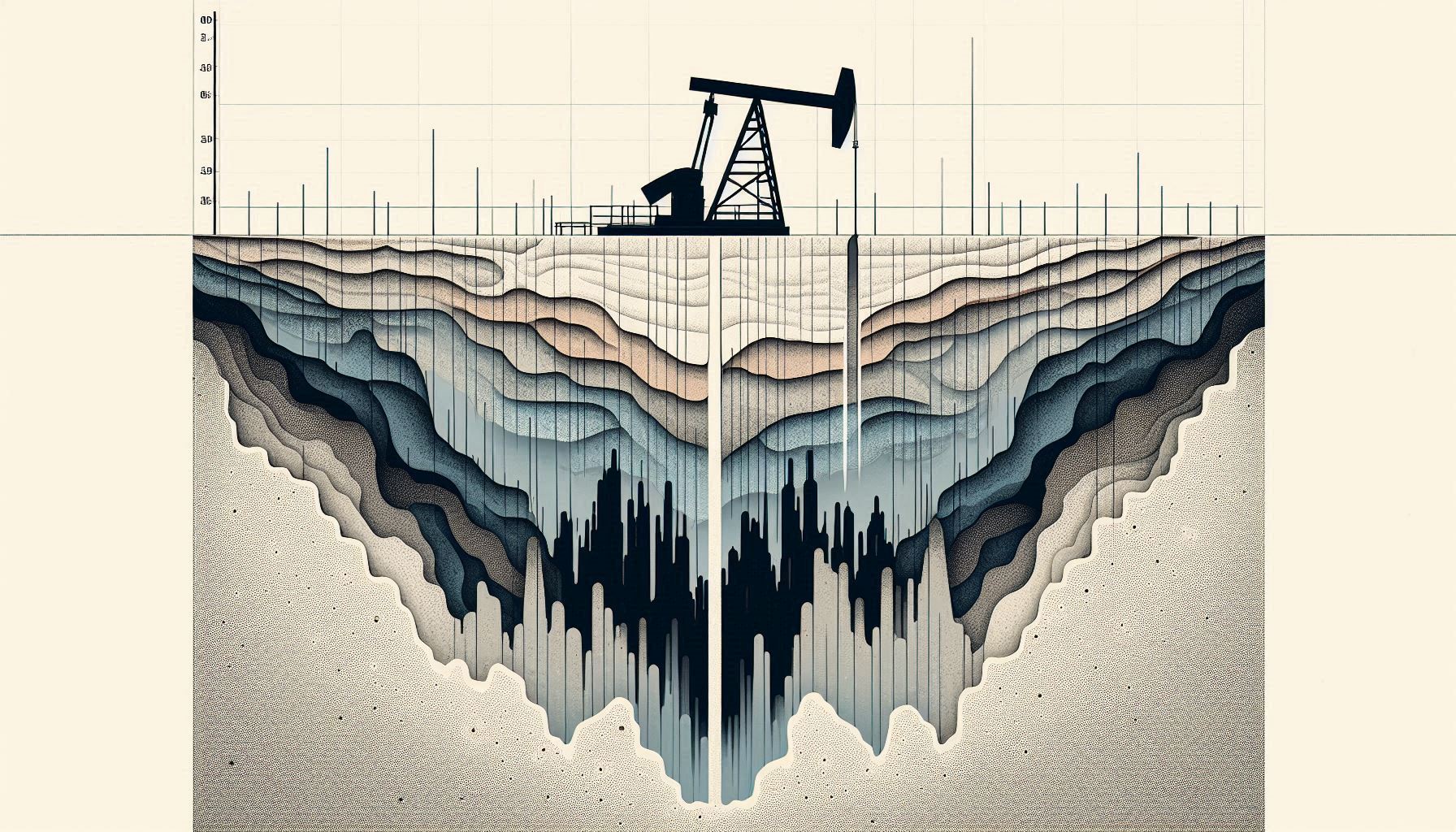
  • When Intelligence Breaks the Systems It Touches

    When Intelligence Breaks the Systems It Touches

    Extraction, Pressure, and the Limits of Scalable Insight

    There is a class of systems in which intelligence becomes self-defeating once it scales.

    Not because the intelligence is wrong. Not because the models fail. But because extraction is inseparable from perturbation.

    In these systems, insight exists only while it is applied gently. Push too hard, and the structure that made the insight possible erodes. This is not a moral problem. It is a structural one.

    Markets belong to this class — though not every strategy reaches the boundary at the same speed, and not every domain with gradients rewards intelligence equally quickly.


    1. The Hidden Assumption

    Throughout this essay, “intelligence” means the same thing in every domain: the ability to identify, exploit, and systematically amplify a gradient in a complex system.

    That gradient may be informational (markets), physical (oil reservoirs, power grids), institutional (tax codes, regulation), or logistical (networks, supply chains). The form differs; the force does not.

    Much modern thinking quietly assumes a separation between knowing and acting. We behave as if intelligence can observe a system, extract information, and scale that extraction without altering the system itself.

    That assumption holds in static or weakly coupled environments. It fails in feedback-coupled ones.

    In such systems, observation requires interaction; interaction alters structure; and scaling induces regime change, not linear improvement. The system tolerates probing, but not sustained pressure.

    Automation does not change this structure, but it compresses the timescale: what once took years of primary extraction may now be exhausted in moments, making unrestrained intelligence catastrophic rather than merely erosive.

    The limit is not cognitive. It is structural.


    2. Two Kinds of Landscapes

    To understand the limit, we need a simple taxonomy — not about epistemology, but about what happens when intelligence scales.

    Type I: Weakly coupled landscapes

    • Analysis minimally alters the environment
    • Computation scales with limited back-reaction
    • Structure largely survives scrutiny

    Examples:

    • Mathematics
    • Formal optimisation problems

    Type II: Feedback-coupled landscapes

    • Observation changes dynamics
    • Exploitation alters the payoff surface
    • Scaling erodes the very structure being exploited

    Examples:

    • Financial markets
    • Ecosystems under harvesting
    • Adversarial regulatory systems

    The distinction is not philosophical. It is about capacity limits under scaling.


    3. Why “Alpha” Is the Wrong Metaphor

    Finance treats alpha as if it were a resource: something you find, bottle, and scale.

    This is a category error.

    Alpha is not a substance. It is a gradient.

    It exists only while the system is lightly perturbed. As extraction increases, the gradient flattens — not because intelligence weakens, but because the environment adapts.

    Different strategies encounter this limit at different capital thresholds.


    4. The Petroleum Engineering Analogy

    Petroleum extraction provides the cleanest physical analogue for what happens to alpha under scale, because it separates discovery, extraction, and environmental redesign with engineering precision.

    Primary Recovery: Natural Pressure

    An oil reservoir begins pressurised by geology. Oil flows naturally toward wells with minimal intervention. Extraction is cheap, local, and highly profitable.

    This corresponds to high-Sharpe, low-capacity strategies: small capital, steep gradients, minimal impact on the environment. Intelligence merely finds what already exists.

    Depletion: Extraction Degrades the Gradient

    As oil is removed, reservoir pressure drops. Flow slows. Each additional barrel is harder to extract, not because the oil has disappeared, but because extraction itself has degraded the enabling structure.

    In markets, this happens faster and more aggressively: arbitrage is competitive, gradients are informational rather than physical, and extraction actively destroys the signal through imitation and price response.

    Secondary Recovery: Pressure Maintenance

    To continue extraction, engineers inject water or gas to maintain pressure.

    This is not discovering new oil. It is intervening in the system to preserve extractability.

    Secondary recovery increases total yield — but only by redesigning the environment. It is capital-intensive, fragile, and fundamentally different from primary extraction.

    In markets, the analogue would be engineering volatility, preserving informational asymmetries, or structurally maintaining gradients. This is where regulation tightens.

    Enhanced Recovery: Environmental Redesign

    At the extreme, reservoirs are chemically or thermally altered to force oil out. The field is no longer natural; it has been redesigned around extraction.

    Markets explicitly forbid this stage when it serves private extraction.

    The legal and regulatory boundary in finance sits exactly here:

    • extraction is permitted,
    • pressure maintenance is constrained,
    • environmental redesign is prohibited.

    That boundary explains why alpha scales only so far.


    5. Persistence Requires Restraint

    The existence of limits does not mean extraction is fleeting.

    Some strategies persist for decades because they exercise restraint:

    • they remain below capacity thresholds,
    • exploit slowly renewing structure,
    • and avoid redesigning the environment that feeds them.

    This is why Jim Simons’ Medallion Fund worked for so long. It stayed small by design. Capacity was treated as a constraint, not a challenge.

    Persistence is achieved not by domination, but by self-limitation.

    Even when restraint is rational at the system level, it is often psychologically and institutionally unstable, because individual incentives reward immediate extraction over long-term preservation.

    This insight generalises.


    6. Adversarial Dynamics and Phase Transitions

    In feedback-coupled systems, competition does more than erase signal.

    It selects for opacity.

    Visible edges are copied and flattened. Surviving edges migrate into secrecy, latency, complexity, or institutional friction. What persists is not the best model, but the hardest one to observe.

    As coupling strengthens, systems do not degrade smoothly. They undergo phase transitions.

    A canonical example is the 2010 Flash Crash. Market intelligence had optimised normal-time efficiency so thoroughly that the system became hyper-fragile. When stress arrived, liquidity vanished discontinuously, prices collapsed, and recovery required external intervention.

    This is what “the system breaks” looks like: not gradual inefficiency, but abrupt loss of function.


    7. Why Infrastructure Cannot Exercise Restraint

    Infrastructure, logistics, and energy systems do not “fight back” when improved. Gains are cumulative, not self-erasing.

    Yet intelligence does not flood into them.

    The reason is not a lack of gradients. It is that infrastructure structurally cannot exercise restraint.

    Infrastructure creates value only when optimisation becomes common. A trading edge is profitable because others do not use it; an infrastructure improvement matters only when everyone does. Scale is not a side effect — it is the point.

    This has three structural consequences.

    First, infrastructure intelligence cannot remain small or selective. The moment it works, it demands broad rollout.

    Second, success forces visibility. Cables, grids, ports, and rights-of-way are physically anchored and jurisdictionally legible. Optimisation immediately collides with planning law, regulation, and the state.

    Third, optimisation destroys its own optionality. Gains are standardised, competitors free-ride, rents collapse, and political bargaining replaces technical optimisation.

    A contemporary illustration is renewable energy grid investment. Intelligence applied to generation, storage, and load balancing produces real gains — but once deployed, those gains become public infrastructure, not a defensible edge. Returns flatten precisely because the optimisation succeeds.

    This is why early infrastructure intelligence — exemplified by Paul Allen’s repeated investments in fibre and backbone capacity — failed to capture durable rents. The failure was not technical. It was structural.


    8. Deliberate Under-Optimisation in Fiscal Systems

    Tax enforcement often appears to fail because of weak resources, political hesitation, or legal complexity. This appearance is misleading.

    In reality, modern fiscal systems stabilise at a point of deliberate under-optimisation — not because enforcement intelligence is unavailable, but because scaling it further becomes self-destabilising.

    The United Kingdom provides a clean illustration. The UK has repeatedly committed to tackling offshore tax abuse, yet has consistently failed to enforce transparency measures — such as public beneficial ownership registers — across its own Overseas Territories, despite clear legal authority and repeated deadlines.

    Aggressive enforcement intelligence in a globalised system triggers feedback effects: capital relocation, legal arbitrage, retaliatory policy competition, and concentrated political backlash from embedded financial and legal interests. The legal distinction between avoidance and evasion functions as a pressure-release valve, allowing optimisation without collapse.

    Beyond a threshold, enforcement ceases to be stabilising and becomes destructive.

    As a result, fiscal systems do not maximise compliance. They select a survivable equilibrium: enough enforcement to maintain legitimacy, but not so much that intelligence destabilises capital flows, institutional networks, or political coalitions.

    Markets must restrain themselves to survive. Infrastructure cannot restrain itself. Fiscal systems restrain intelligence by design, even while rhetorically demanding more of it.


    9. The Boundary Condition

    Some systems allow extraction without redesign. Some systems constrain redesign and therefore self-limit extraction.

    Persistence depends on restraint — whether imposed by rules, chosen strategically, or structurally unavailable.

    Alpha fades not because intelligence weakens, but because systems break when intelligence refuses to stop.

    That is not ideology. That is systems theory.

    https://thinkinginstructure.substack.com/p/when-intelligence-breaks-the-systems

  • PageRank, Communities, and the Normal Modes of Networks

    The usual explanation of PageRank begins with a metaphor: links are votes, pages are important, prestige flows democratically. The metaphor is helpful but incomplete.

    PageRank does not directly measure importance in the everyday sense. What it measures first is something more basic: which patterns of flow a network preserves over time. Interpretations such as importance come later.

    To see why, it helps to begin somewhere entirely different: with a simple idea from physics called normal modes.


    1. What a normal mode is (in plain terms)

    Consider a physical system made of interacting parts: for example, two masses connected by springs. Pull one mass and release it, and the motion looks complicated. Energy sloshes back and forth between the masses in a way that is hard to predict.

    But there exist special motions of the system where this does not happen.

    In one such motion, both masses move together.
    In another, they move oppositely.

    If the system is set moving in one of these patterns, it stays in that pattern. No energy leaks into the other motion.

    These special motions are called normal modes.

    They are not clever mathematical inventions. They are simply the patterns of motion the system’s dynamics do not mix.

    Any other motion can be decomposed into a combination of these modes. Over time, only the modes themselves remain intelligible.

    That idea turns out to be far more general than springs.


    2. Flow on a network

    Now consider a network: a collection of nodes connected by directed links. Something moves on it—attention, probability, money, influence.

    At each step, flow follows the outgoing links from a node. This rule defines a dynamics.

    Mathematically, the dynamics can be written as a matrix PPP, where each entry gives the fraction of flow that moves from one node to another in one step. Such a matrix is called a Markov transition matrix.

    Conceptually, it answers a simple question:

    “If flow is here now, where does it go next?”

    A concrete example: money

    The same dynamics appear whenever money circulates through a network.

    Imagine a network of firms or accounts where payments are routinely passed on: suppliers pay subcontractors, salaries are spent, revenue circulates. At each step, money arrives at a node, a fraction is passed on to connected nodes, and the rest may be retained or dissipated.

    If this process repeats, the important question is not who received money first, but:

    where does money spend its time in the long run?

    Some transaction patterns wash out quickly. Others persist. The long-term distribution, the pattern unchanged by repeated payment flows, is the financial analogue of PageRank.

    It does not assign value or merit. It identifies structurally unavoidable sinks and conduits of flow.

    (A mildly heretical aside for finance readers: in practice, nobody is serenely diagonalising transaction matrices and calling the police. Real transaction graphs are messy, discrete, bursty, and highly constrained — much more combinatorial than fluid. What actually happens is repeated probing: aggregating over time windows, collapsing paths, counting cycles, testing stability. But notice the shared instinct. Again and again, the question is: which transaction patterns refuse to disappear when you stir the system? The mathematics stays implicit, but the hunt for slow-mixing, persistent structure is the same.)


    3. Mixing versus invariance

    Start with any initial distribution of flow:

    • all on one node,
    • evenly spread,
    • chosen arbitrarily.

    Apply the network dynamics repeatedly:

    v,  Pv,  P2v,  P3v,  v,\; Pv,\; P^2v,\; P^3v,\; \dots

    Most patterns behave the same way:

    • they spread,
    • interfere,
    • and gradually lose their distinct shape.

    But one pattern does not.

    Eventually, the distribution converges to a fixed shape vv^* such that:

    Pv=vP v^* = v^*

    At this point the argument briefly touches linear algebra: a pattern that reproduces itself under a linear flow rule must, by definition, be a vector the rule leaves unchanged. That is exactly what an eigenvector represents.

    That fixed pattern is the PageRank vector.

    Sidebar: A physical way to see what PageRank is

    Imagine a messy system of pipes. Water is injected continuously from many places, under changing pressures. Nothing is static: the water is always moving, swirling, colliding.

    At first, everything looks chaotic. But if you watch long enough, something unexpected happens.

    Certain channels consistently carry more flow. Not because water piles up there — it doesn’t — but because the geometry of the pipes keeps directing motion through the same routes.

    If you marked where water passes most often, a stable pattern would slowly emerge. The water never stops moving, but the pattern of movement becomes almost solid.

    PageRank is exactly this kind of pattern. It is not about accumulation, sinks, or amplification. It is the static footprint left behind once all transient splashes have washed away — the flow pattern the system keeps reproducing no matter how you disturb it.


    A minimal network example

    Consider a three-node network.
    Node A links to B.
    Node B links back to A.
    Node C links only to B.

    Flow between A and B mixes rapidly, circulating between them. Flow arriving at C immediately feeds into the A–B pair and never returns.

    Over time, the invariant pattern concentrates weight on A and B, while C is suppressed. This is not because A and B are intrinsically “better,” but because the dynamics recycle flow there.


    4. PageRank as a normal mode

    In mechanics, a normal mode is a motion that does not exchange energy with other motions.

    In networks, PageRank is a flow pattern that does not exchange probability with other patterns.

    Every initial distribution can be decomposed into components:

    • some decay quickly,
    • some oscillate or interfere,
    • one remains unchanged.

    Iterating PageRank is just a way of letting time erase everything except that survivor.

    Seen this way, PageRank is best understood as:

    the dominant normal mode of a network under flow dynamics

    This is not a metaphor. It is a literal statement about eigenvectors of the transition matrix.

    Network Normal Modes & PageRank

    EIGENVECTOR STATE (v)
    Iterations: 0
    Convergence (L1): N/A
    The Normal Mode Effect: No matter how you start, repeated iteration converges to the network’s dominant eigenvector. The B–C cycle attracts flow; nodes with no inbound links fade unless teleportation is active.

    5. Where “importance” enters

    At this point, interpretation becomes legitimate.

    If attention or money flows through a network according to its links, then nodes that consistently receive more of the invariant flow will appear more prominent over long times. In many real networks, this correlates strongly with intuitive notions of importance, influence, or visibility.

    The key distinction is order:

    • First: identify the invariant pattern of flow
    • Then: interpret what that persistence means in context

    PageRank does not define importance by fiat; it derives it from dynamics.


    6. Why damping is not a hack

    Real networks can contain traps: dead ends, isolated subgraphs, or cycles that trap flow forever. Google’s solution was to add a small probability that flow jumps to a random node instead of following a link.

    This is often described as a practical adjustment.

    Dynamically, it does something precise:

    • it weakly couples all parts of the network,
    • prevents permanent isolation,
    • and guarantees a unique invariant pattern.

    The choice of teleportation probability matters: higher values flatten the ranking toward uniformity, while lower values amplify network structure and community effects.

    In physical terms, damping removes degeneracy and ensures a single ground state.

    Formally, this is where the Perron–Frobenius Theorem enters. Once damping makes the transition matrix positive and irreducible, the theorem guarantees the existence and uniqueness of a dominant eigenvector with strictly positive entries. That eigenvector is PageRank. The mathematics does not merely suggest convergence—it proves that a single invariant flow pattern must exist.

    One way to think about this is that PageRank deliberately introduces leaks. Ordinary pipe systems can sustain many independent circulation patterns, so there is no reason for a single global mode to exist. The damping step breaks that freedom: flow is constantly allowed to leak out of any local pattern and be re-injected elsewhere. With those leaks in place, all competing patterns slowly drain away, leaving exactly one self-reproducing flow pattern.

    Crucially, this invariant pattern exists not by accident but by design: PageRank’s damping step turns the web into a gently forced mixing system, and every such system has a unique equilibrium distribution of flow.


    7. Where communities come from

    If PageRank were the only structure, networks would collapse into a single ranking and nothing more could be said.

    But real networks exhibit communities:

    • groups of nodes with dense internal connections,
    • weaker links between groups,
    • bottlenecks in flow.

    Spectrally, this appears as nearly invariant modes.

    Flow mixes rapidly within communities but leaks slowly between them. Each slow-decaying pattern corresponds to a community-scale structure.

    Communities are not labels imposed from outside.
    They are patterns the network almost refuses to mix.


    8. Community detection as mode analysis

    Spectral community detection works by:

    • identifying these slow modes,
    • projecting the network onto them,
    • and separating nodes along directions where mixing is weakest.

    This is the same logic used in physics to identify soft modes, metastable states, or slow variables under coarse-graining.

    Communities are not imposed.
    They are revealed by the dynamics.


    9. The unifying principle

    Normal modes in mechanics, PageRank in networks, and community structure all express the same idea:

    To understand a system, find the patterns its dynamics preserve.

    Everything else is transient.


    10. Conclusion

    PageRank is not mysterious.
    It is not arbitrary.
    And it is not merely a voting scheme.

    It is the simplest question one can ask of a flowing network:
    what remains unchanged by the flow itself?

    Like any model, PageRank reflects the dynamics it assumes; different flow rules produce different invariants.

    Once that question is answered, notions like ranking, influence, or importance have something solid to rest on.


    A network is understood not by ranking its nodes directly, but by discovering its normal modes of flow: PageRank is the invariant pattern, communities are the nearly invariant ones, and everything else is structure that time smooths away.

  • The Hidden Geometry of Clumping

    Why galaxies, web networks, optimization landscapes — and perhaps even chess — form clusters, and what those clusters reveal about the structure of the underlying system

    Clumping looks universal.

    Galaxies condense out of nearly uniform early-universe matter.
    PageRank concentrates probability on a handful of influential webpages.
    Combinatorial optimization problems produce dense pockets of near-solutions.
    Even chess positions seem to fall into plateaus and pits where evaluation changes slowly or chaotically.

    The similarity is tempting — but misleading.

    Across physics, networks, complexity theory, and even games, clumping is not a mechanism.
    It is a diagnostic: the visible footprint of something deeper.

    The geometry of the low-eigenvalue modes of the operator governing a system determines where its clumps form, and what those clumps mean.

    Some systems have a handful of smooth, dominant modes (gravity).
    Some have intermediate spectral bottlenecks (graphs).
    Some have dense, ungapped spectra (NP-hard optimization).

    Each produces clumps — but for radically different reasons.

    Understanding that spectrum tells us how predictable a system is, how compressible it is, how learnable it is — and how hard.


    1. Why low modes are the unifying principle

    Every system considered here has three ingredients:

    A state space
    Density fields, directed graphs, bitstrings, chess positions.

    A functional
    Gravitational potential; random-walk operator; Hamiltonian or cost function; value function of a game.

    A flow rule
    Physical dynamics; Markov chain convergence; local search; neural evaluation.

    Clumping occurs where this flow slows, accumulates, or fails to escape.

    Across all these systems, such regions are controlled by small eigenvalues:

    • directions where the functional changes least,
    • nearly invariant subspaces under dynamics,
    • flat or marginal directions of the Hessian,
    • low-conductance sets in a graph,
    • rugged basins formed by many near-degenerate minima.

    That is why low modes unify gravity, PageRank, spin glasses, and evaluation landscapes:
    they determine the shape, scale, and meaning of clumps.


    2. Gravity: clumps from smooth, low-dimensional instabilities

    (Jeans 1902; Binney & Tremaine)

    Gravity is the canonical structured landscape.

    A small density fluctuation δk(t)\delta_k(t) in a fluid of density ρ\rho and sound speed csc_s​ satisfies the linear Jeans equation:δk(t)exp ⁣(4πGρcs2k2t).\delta_k(t) \propto \exp\!\left(\sqrt{4\pi G\rho – c_s^2 k^2}\, t\right).

    For long wavelengths kk such that 4πGρ>cs2k24\pi G\rho > c_s^2 k^2, the frequency becomes imaginary and perturbations grow exponentially in time, signaling gravitational instability.

    Worked example

    Let G=ρ=1G = \rho = 1 and cs=0c_s = 0. Thenδk(t)=e4πte3.54t.\delta_k(t) = e^{\sqrt{4\pi}\, t} \approx e^{3.54 t}.

    A 0.1% perturbation grows tenfold in under one Hubble time. Large-scale overdensities collapse into galaxies.

    Interpretation

    Gravity has very few dominant modes.
    Structure formation is governed by long-wavelength instabilities.
    The clumps are smooth, coherent, and predictable.
    The system is highly compressible.


    3. Web networks: clumps from spectral bottlenecks

    (Brin & Page 1998; Chung 1997; Cheeger 1970)

    PageRank computes the stationary distribution vvv of the Google matrix:v=αu+(1α)Pv.v = \alpha u + (1 – \alpha) P v .

    PageRank does not use the graph Laplacian explicitly — but slow-mixing regions of the random walk correspond to:

    • nearly invariant subspaces of PPP,
    • which correspond to low-conductance sets,
    • which correspond to small Laplacian eigenvalues (via Cheeger’s inequality).

    Thus clumping remains spectral, tied to bottlenecks in the graph.

    Worked example

    Construct two triangles connected by a single edge.
    Random walks mix rapidly within each triangle but leak slowly between them.
    The Laplacian’s second eigenvalue λ2\lambda_2 is small.
    PageRank assigns disproportionate mass to whichever cluster has stronger internal connectivity.

    Interpretation

    Clumps reveal topology, not physics.
    There are more modes than in gravity, fewer than in NP-hard landscapes.
    Compressibility is intermediate.


    4. NP-hard optimization: clumps from rugged structure

    (Sherrington & Kirkpatrick 1975; Mézard, Parisi & Virasoro 1987)

    Take subset-sum:f(S)=iSaiT.f(S) = \left| \sum_{i \in S} a_i – T \right|.

    Plot this objective over the hypercube {0,1}n\{0,1\}^n.
    You obtain a landscape analogous to a spin glass:

    • exponentially many local minima,
    • barriers growing with dimension,
    • flat directions interspersed with sharp cliffs,
    • a dense spectrum of near-zero eigenvalues.

    Worked example

    Let n=12n = 12 and ai[1,1000]a_i \in [1,1000] be random integers.
    Evaluating all 212=40962^{12} = 4096 configurations reveals:

    • many distinct local minima,
    • no dominant basin,
    • no coarse structure persisting across scales.

    Interpretation

    Clumping arises from too many competing minima.
    The system is maximally incompressible.
    Low modes are dense and uninformative.
    This is the opposite of gravity.


    5. The compressibility spectrum

    These systems lie along a single axis determined by their low-eigenvalue structure:

    SystemOperatorLow-mode structureBasin geometryCompressibility
    GravityPoisson / JeansFew, smoothLarge coherent wellsHigh
    Web graphsRandom walkModerate, topologicalCommunity clustersMedium
    NP-hardDiscrete HamiltonianDense, ungappedFragmented minimaLow

    Principle

    • Few low modes → structured clumps (predictable)
    • Several low modes → spectral clumps (clusterable)
    • Many low modes → rugged clumps (hard)

    6. Edge cases and transitions

    Protein folding
    Smooth funnels mixed with glassy regions — a hybrid spectrum.

    Hierarchical networks
    Successive spectral gaps → layered clumps.

    Turbulence
    Energy cascades generate multi-scale spectral structure.

    Phase transitions
    In spin glasses and constraint-satisfaction problems, the low-mode spectrum densifies abruptly.


    7. Why this matters: prediction, learning, hardness

    Predictability
    Gravity is predictable at large scales; NP-hard landscapes are not.

    Learnability
    Neural networks readily learn spectral structure; they struggle with rugged landscapes.

    Computational hardness
    Smooth → polynomial approximations possible.
    Spectral → clustering helps.
    Rugged → exponential barriers dominate.

    Clump structure indicates what kinds of inference are fundamentally possible.


    8. Chess: a system on the boundary

    Chess appears to occupy a hybrid regime.

    AlphaZero
    Rapid spectral decay in value networks (Silver et al., 2018).

    Leela Zero
    Strong compression in CNN representations.

    Stockfish NNUE
    Thousands of parameters suffice, indicating inherent compressibility.

    Measurement is feasible
    Sampling 106\sim 10^6∼106 positions and extracting leading eigenvalues via randomized SVD is practical.

    Hypothesis (testable)

    Chess lies mid-spectrum: globally compressible, locally rugged in tactical regions.

    A sharp spectral gap implies structural solvability.
    A dense near-zero spectrum implies inherent NP-like complexity.

    Either result is meaningful.


    9. Bottom line

    Clumping is ubiquitous — but not universal in cause.

    • Gravity: smooth physical instabilities
    • Networks: spectral bottlenecks
    • NP-hard systems: competing minima

    Across all cases:

    Clumps reflect the geometry of the low-eigenvalue spectrum — the determinant of predictability, learnability, and complexity.

    Clumping is not the phenomenon.
    It is the footprint of the geometry underneath.

    Formal timestamp:
    The Chess Eigenspectrum Hypothesis was published at Zenodo:
    https://doi.org/10.5281/zenodo.17845086

    https://thinkinginstructure.substack.com/p/the-hidden-geometry-of-clumping