Condorcet, Müller, container death, and why cultural health now depends on memory that survives platforms

There is a moment every sufficiently large system reaches where correctness stops working.
You aggregate carefully.
You compare pairwise.
You insist on fairness, logic, and legitimacy.
And then the system cycles.
A beats B.
B beats C.
C beats A.
No resolution. No ranking. No “best.”
This is not a mistake.
It is what happens when validation is asked to scale.
What civilisation does next determines whether it freezes, collapses, or adapts.
Condorcet: the refusal to proceed
In the late 18th century, Marquis de Condorcet encountered this failure while thinking about voting.
His goal was pure Enlightenment ambition: convert many rational individual preferences into a single rational collective will. Majority rule seemed obvious. Pairwise comparison seemed fair.
Instead, he discovered the Condorcet paradox: even when individuals are rational, collective preference can be cyclic and inconsistent. Rationality does not compose.
Condorcet drew the only conclusion his framework allowed.
If a system cannot produce a consistent outcome, it is illegitimate.
If it cycles, it must be rejected.
From this refusal flows two centuries of social-choice theory, impossibility results, and proofs demonstrating — correctly — that large-scale collective decision-making cannot be logically validated.
Condorcet saw the abyss and stopped.
He was right.
And civilisation could not afford to follow him.
Müller: let it run anyway
A century later, in a completely different setting, Julius Müller faced the same structure — without the luxury of stopping.
He wasn’t designing democracy.
He was running chess tournaments.
Too many players.
Too few rounds.
No round-robin.
No eliminations.
No clean global ordering.
Condorcet would have said the system is invalid.
Müller shrugged and ran it anyway.
The Swiss system does not attempt to prove who is best. It does something more dangerous and more useful:
- pair players locally
- allow noise, imbalance, and upsets
- repeat the process
- never demand global consistency
- observe what remains
At the end, you don’t get truth.
You get what survived the wash.
Müller did not resolve cycles.
He bled them out over time.
This is the civilisational hinge:
from legitimacy through correctness
to legitimacy through persistence.
Plumbing, leaks, and invariants
The correct mental model is plumbing.
You build pipes: who interacts with whom.
You inject fluid: games, votes, links, views, attention.
You allow leaks: boredom, forgetting, defection, randomness.
Then you stop caring about the splashing and ask one question:
Where does the flow spend most of its time?
That residue is the invariant.
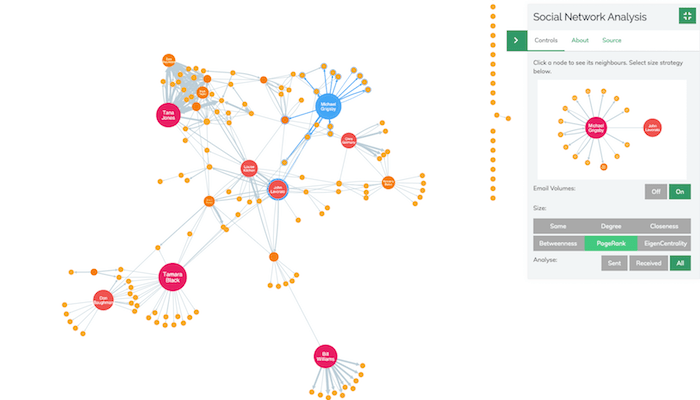
Mathematically, it is a stationary distribution.
Spectrally, an eigenvector.
Culturally, meaning.
Swiss tournaments, Elo ratings, markets, reputation systems, and PageRank are all the same move: allow interaction to repeat under noise and trust convergence rather than proof.
Swiss is PageRank without linear algebra — a human-computable approximation to spectral ranking.
Why the 2010s internet got sick
For a while, this logic worked online.
Then something broke.
By the mid-2010s:
- a handful of platforms achieved near-monopoly
- network effects made exit costly
- algorithms converged on identical engagement incentives
- platform death slowed to a crawl
Facebook, Twitter, YouTube, Reddit — different surfaces, same dynamics.
The meta-tournament froze.
Containers stopped dying.
And when containers don’t die, Müller systems stop selecting.
They calcify.
The internet didn’t become chaotic.
It became stagnant.
Why the 2020s feel feral — and healthier
The present feels worse — louder, noisier, more unstable — but it is structurally different.
- TikTok shattered the equilibrium
- Discord, Substack, Patreon created micro-containers
- AI destabilized content economics
- platform trust collapsed
- exit became easier
Churn resumed.
Platforms are dying again.
This is not collapse.
It is forced re-pairing at the container level.
The Tournament Director is not regulation or wisdom.
The Tournament Director is container mortality.
Platform death restores mixing the way Swiss pairings do.
The missing problem: memory dies with containers
And here the framework breaks — exactly where you pushed.
Müller systems assume continuity of state.
- Swiss tournaments carry scores forward
- PageRank preserves links across time
- Markov chains retain structure even as nodes disappear
The internet does not.
When platforms die:
- archives vanish
- communities dissolve
- conversations fragment
- identity collapses
Vine dies → videos scatter
Twitter mutates → threads disappear
Subreddits close → knowledge evaporates
What survives is not what is robust.
It is what is reconstructable.
This biases selection toward:
- simple ideas
- emotional resonance
- charismatic individuals
- screenshot-able formats
And away from:
- complex arguments
- slow discourse
- niche communities
- cumulative knowledge
This is not healthy Müller selection.
It is Müller with aggressive amnesia.
Container death is necessary — but not sufficient
This is the core synthesis.
Yes:
- containers must die
- monopolies are epistemically toxic
- churn restores selection
But:
If memory dies with containers, selection favors virality, not resilience.
That is a different regime.
Not persisto-cracy —
but screenshot-cracy.
The real missing layer: substrate resilience
What Müller systems actually require is heredity.
Biology solved this long ago:
- organisms die
- genes persist
- lineages continue
The internet currently kills both the organism and the genome.
A healthy epistemic system requires substrate separation:
- Ephemeral containers → for conversation, noise, wash
- Durable archives → for preservation and accumulation
- Portable identity → so people, not platforms, carry continuity
- Exportable content → so ideas migrate intact
This is not institutional nostalgia.
It is evolutionary plumbing.
Without it, churn becomes waste.
Reframing the crisis correctly
The crisis is not:
- bad moderation
- bad algorithms
- misinformation
- AI slop
It is this:
We are running a selection process without a stable heredity channel.
That guarantees degeneration.
Not into chaos — but into low-information persistence.
The final synthesis
Condorcet wanted legitimacy through correctness.
Müller gave us legitimacy through survival.
The internet added container death — and forgot heredity.
The result is churn without memory.
The path forward is not better platforms, better rules, or better discourse.
It is infrastructure that lets ideas outlive their containers.
Not so everything survives.
Forgetting is part of the wash.
But so that what survives does so because it is resilient —
not merely because it fits in a screenshot.
In a world that never shuts up,
meaning is what persists across noise and across death.
That is the only epistemology that still scales.
And once you see it, the conclusion is unavoidable:
We were never organising truth.
We were organising chaos.The open question is whether we let memory survive the flood.
Leave a Reply