Tag: philosophy

  • The Hall of Mirrors Problem

    The Hall of Mirrors Problem

    Why Symmetry-Closure Keeps Being Mistaken for Progress

    1. The Repeated Move

    Physics keeps replaying a very specific move.

    Take a framework that already works extraordinarily well.

    Notice that its internal structures are elegant, constrained, and mathematically rich.

    Then ask:

    Surely this can’t be the end. Surely all of this fits into something larger.

    So the arena is enlarged. Dimensions are added. Symmetry groups are unified. Connections are extended. Gravity is pulled inside the same geometric container as the other forces.

    Nothing fundamental is broken. Nothing is removed. Everything is gathered.

    This move feels like progress. It often looks like progress. And yet it reliably stalls.

    This essay is about why.


    2. What This Approach Is — and What It Is Not

    Symmetry-closure programs are often misdescribed as radical or revolutionary. They are neither.

    They do not reject spacetime.
    They do not abandon locality.
    They do not question quantum mechanics.
    They do not remove unitarity or causality.

    They accept Mario world exactly as it is.

    Their claim is narrower and more seductive:

    Mario world is already correct — it is just incomplete. If we enlarge the geometric arena enough, gravity will stop looking special and everything will finally close.

    This is not escape.

    It is completion by accumulation.


    3. Closure Is Not Dynamics

    Closure attempts share a common intuition:

    If the known particles and forces fit beautifully inside a single geometric object, that fit must explain why the world is the way it is.

    Historically, this intuition has real pedigree. Grand Unified Theories of the 1970s and 80s achieved elegant symmetry closure of the Standard Model gauge forces. Groups like SU(5) and SO(10) demonstrated that known interactions could be embedded into larger algebraic structures.

    What they did not do was determine:

    • symmetry-breaking scales,
    • particle masses,
    • coupling constants,
    • or which vacuum the universe selects.

    Those facts were always added afterward.

    The Higgs sector makes this failure concrete. Even with exact gauge symmetry, the Higgs mass requires extreme fine-tuning against quantum corrections, and symmetry alone offers no explanation for why the electroweak scale is so much smaller than the Planck scale. Perfect symmetry leaves the most important numbers untouched.

    The lesson is structural:

    Symmetry embedding is not dynamics, and inevitability is not prediction.

    A closed algebra explains coherence. It does not explain behaviour.

    Mario world is not overconstrained. It is underdetermined. Closing the symmetry book does not force the story.


    4. What “Equation of Motion” Actually Means

    At this point the objection usually arises: what exactly is missing?

    By an equation of motion one does not mean a specific differential equation written on a blackboard. One means a principle — an action, a variational rule, a consistency condition, a constraint — that determines which configurations are physically realised and which are not.

    Without such a principle, a theory describes a space of possibilities, not a world.

    Geometry classifies what could exist.
    Dynamics selects what does.

    This does not mean symmetry is irrelevant to dynamics. Historically, symmetry has often guided the form of equations of motion: Noether’s theorem ties continuous symmetries to conservation laws, and effective field theories use symmetry to constrain which interactions are allowed. But in each case, symmetry operates downstream of a dynamical principle. It narrows possibilities; it does not select reality.

    Without selection, nothing moves.


    5. The Dirac Objection

    There is a brutally simple question that cuts through all of this:

    Where is the equation that tells Mario how to move?

    Dirac’s standard is precise. A physical theory is not defined by its state space or its symmetries, but by its action principle — a functionalS=LdtS = \int L \, dt

    whose stationary points determine which trajectories are physically realised.

    Geometry specifies the manifold of possibilities.
    Symmetry organises that manifold.
    But the action selects the path.

    Without an action (or an equivalent selection principle), a theory describes kinematics without dynamics — a catalogue of allowed configurations with no rule for evolution.

    Geometry does not answer this question.
    Symmetry does not answer it.
    Dimensional extension does not answer it.

    Physics happens only when a rule constrains change.

    Even in the canonical counterexample — general relativity — geometry alone was not enough. The Einstein field equations arise from an action and impose a dynamical law relating geometry to matter. Without them, spacetime would be an inert catalogue of shapes.

    The direction of explanation matters. Dynamics do not fall out of beautiful structures; structure becomes meaningful once dynamics are fixed.


    6. Why Adding Dimensions Produces a Frozen Mario

    By adding dimensions — whether literal, internal, or algebraic — symmetry-closure programs produce more coordinates but no new rules.

    You gain:

    • more symmetry
    • more redundancy
    • more ways of describing the same configurations

    You do not gain:

    • an action principle
    • a selection rule
    • a notion of what happens next

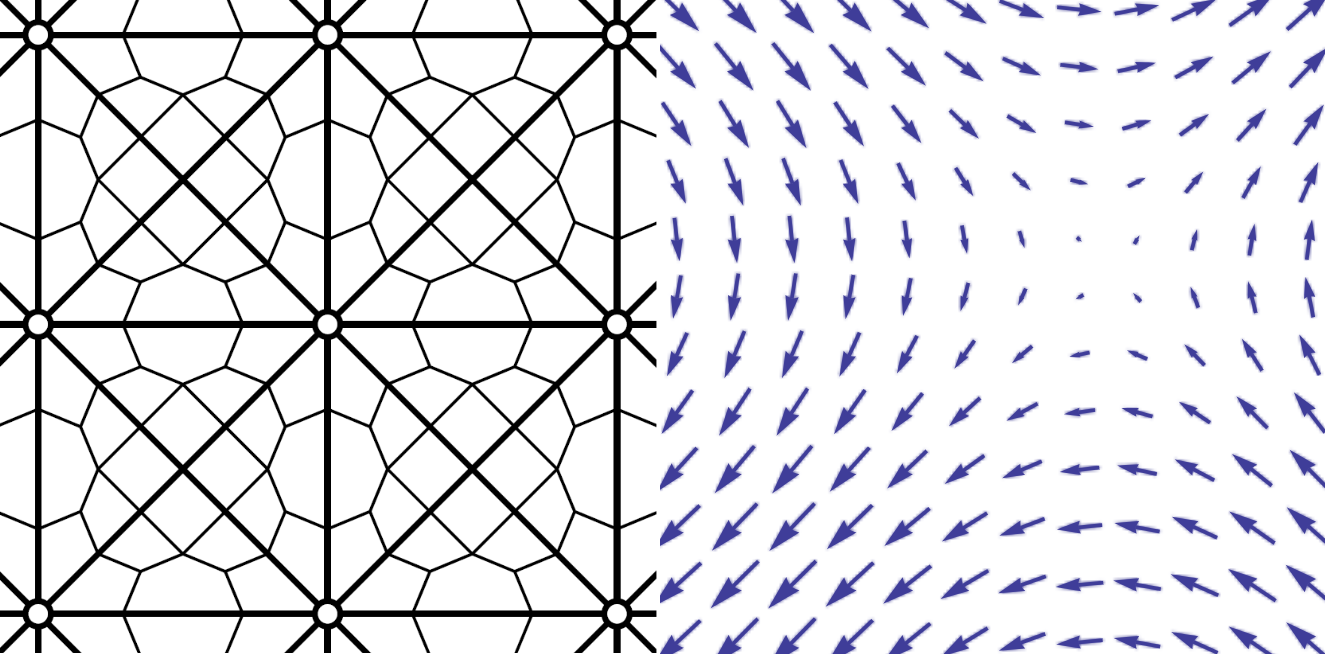
    The result is a hall of mirrors attached to an already well-signposted landscape.

    Everything reflects everything else.

    Nothing moves.

    Mario is not liberated by the extra space. He is immobilised by it. When every direction is equivalent, no direction is preferred. When every configuration fits, no evolution is forced.

    Symmetry closure produces classification, not causation.


    7. Why This Feels Like Progress Anyway

    The persistence of symmetry-closure attempts is not an intellectual failure. It is a psychological one.

    Several forces push smart people toward this move:

    Aesthetic inevitability. Large, rigid structures feel explanatory even when they explain nothing dynamically.

    Completion bias. Humans are uncomfortable with open systems. Closure feels like resolution.

    Effort justification. Years spent mastering geometry create pressure for geometry to be the answer.

    Visibility. Symmetry is legible. Dynamics are messy, technical, and less narratable.

    False economy. It feels easier to add structure than to remove assumptions.

    Together these create a powerful illusion: that accumulating elegance is the same as advancing understanding.

    It is not.


    8. A Clarification on String Theory

    It is worth being explicit about what this critique is not. It is not an argument against string theory. String theory is not a symmetry-closure program; it is a genuine attempt to change Mario’s primitives by replacing point particles with extended objects. Its failure mode is not premature closure but underdetermination: it admits too many internally consistent worlds rather than freezing dynamics altogether.

    One could argue that the resulting landscape reflects a kind of symmetry excess at a higher level — dualities and moduli multiply consistent descriptions without providing a selection principle — but this is a consequence of an escape attempt running out of constraint, not of premature closure within Mario world.


    9. Why Real Escape Looks Different

    The genuinely deep thinkers of the last half-century do not try to complete Mario world. They interrogate it.

    They ask not:

    What can we add?

    But:

    What can we remove without breaking contact with experiment?

    Interrogation is not a guarantee of success. Many subtraction-based or emergent programs stall as well. The criterion here is not whether a proposal works, but whether it forces motion by stressing a primitive assumption — locality, spacetime, or process — rather than merely rearranging or closing existing structure.

    One questions whether spacetime points are the right primitive at all.
    Another strips theories down until only global invariants survive.
    Another removes time, locality, and process as starting assumptions and keeps only consistency of outcomes.

    The problem is not geometry.

    It is geometry treated as explanation rather than constraint.

    None of these programs promise closure.

    They promise stress.


    10. The Core Lesson

    Symmetry closure is repeatedly mistaken for progress because it satisfies the mind’s desire for completion without satisfying nature’s demand for constraint.

    Adding a hall of mirrors to Mario world does not reveal a deeper reality. It removes the possibility of motion.

    Real progress comes from subtraction, not accumulation.
    From breaking assumptions, not polishing them.
    From asking what must move, not what fits together.

    The purpose of this critique is not to prescribe a new program, but to sharpen the criteria by which new programs should be judged.

    Until a principle forces Mario to move differently, no amount of geometric reflection will make the game deeper.

    That is why closure keeps failing.

    And why it keeps being tried anyway.

    https://thinkinginstructure.substack.com/p/the-hall-of-mirrors-problem
  • When Intelligence Breaks the Systems It Touches

    When Intelligence Breaks the Systems It Touches

    Extraction, Pressure, and the Limits of Scalable Insight

    There is a class of systems in which intelligence becomes self-defeating once it scales.

    Not because the intelligence is wrong. Not because the models fail. But because extraction is inseparable from perturbation.

    In these systems, insight exists only while it is applied gently. Push too hard, and the structure that made the insight possible erodes. This is not a moral problem. It is a structural one.

    Markets belong to this class — though not every strategy reaches the boundary at the same speed, and not every domain with gradients rewards intelligence equally quickly.


    1. The Hidden Assumption

    Throughout this essay, “intelligence” means the same thing in every domain: the ability to identify, exploit, and systematically amplify a gradient in a complex system.

    That gradient may be informational (markets), physical (oil reservoirs, power grids), institutional (tax codes, regulation), or logistical (networks, supply chains). The form differs; the force does not.

    Much modern thinking quietly assumes a separation between knowing and acting. We behave as if intelligence can observe a system, extract information, and scale that extraction without altering the system itself.

    That assumption holds in static or weakly coupled environments. It fails in feedback-coupled ones.

    In such systems, observation requires interaction; interaction alters structure; and scaling induces regime change, not linear improvement. The system tolerates probing, but not sustained pressure.

    Automation does not change this structure, but it compresses the timescale: what once took years of primary extraction may now be exhausted in moments, making unrestrained intelligence catastrophic rather than merely erosive.

    The limit is not cognitive. It is structural.


    2. Two Kinds of Landscapes

    To understand the limit, we need a simple taxonomy — not about epistemology, but about what happens when intelligence scales.

    Type I: Weakly coupled landscapes

    • Analysis minimally alters the environment
    • Computation scales with limited back-reaction
    • Structure largely survives scrutiny

    Examples:

    • Mathematics
    • Formal optimisation problems

    Type II: Feedback-coupled landscapes

    • Observation changes dynamics
    • Exploitation alters the payoff surface
    • Scaling erodes the very structure being exploited

    Examples:

    • Financial markets
    • Ecosystems under harvesting
    • Adversarial regulatory systems

    The distinction is not philosophical. It is about capacity limits under scaling.


    3. Why “Alpha” Is the Wrong Metaphor

    Finance treats alpha as if it were a resource: something you find, bottle, and scale.

    This is a category error.

    Alpha is not a substance. It is a gradient.

    It exists only while the system is lightly perturbed. As extraction increases, the gradient flattens — not because intelligence weakens, but because the environment adapts.

    Different strategies encounter this limit at different capital thresholds.


    4. The Petroleum Engineering Analogy

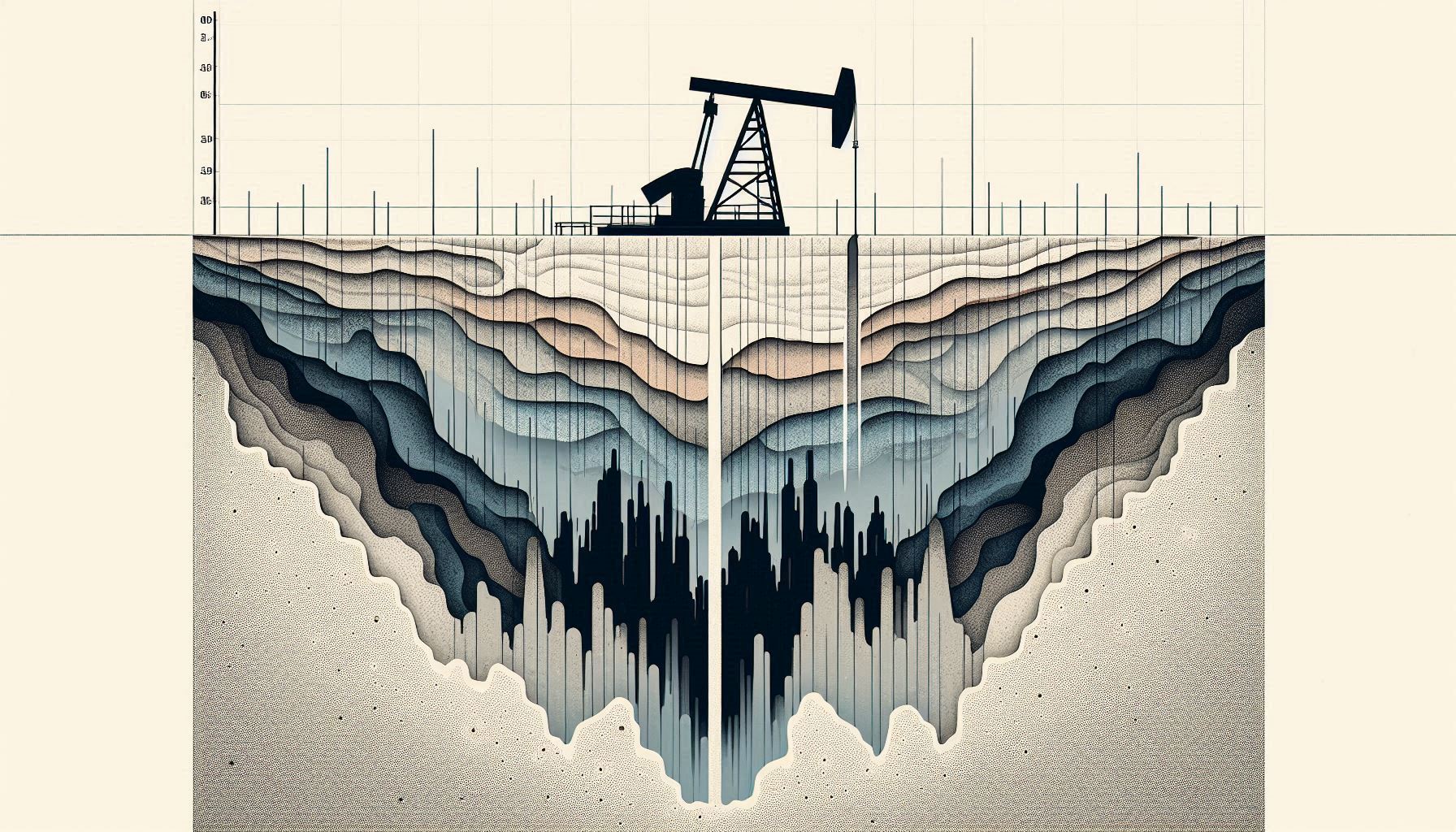
    Petroleum extraction provides the cleanest physical analogue for what happens to alpha under scale, because it separates discovery, extraction, and environmental redesign with engineering precision.

    Primary Recovery: Natural Pressure

    An oil reservoir begins pressurised by geology. Oil flows naturally toward wells with minimal intervention. Extraction is cheap, local, and highly profitable.

    This corresponds to high-Sharpe, low-capacity strategies: small capital, steep gradients, minimal impact on the environment. Intelligence merely finds what already exists.

    Depletion: Extraction Degrades the Gradient

    As oil is removed, reservoir pressure drops. Flow slows. Each additional barrel is harder to extract, not because the oil has disappeared, but because extraction itself has degraded the enabling structure.

    In markets, this happens faster and more aggressively: arbitrage is competitive, gradients are informational rather than physical, and extraction actively destroys the signal through imitation and price response.

    Secondary Recovery: Pressure Maintenance

    To continue extraction, engineers inject water or gas to maintain pressure.

    This is not discovering new oil. It is intervening in the system to preserve extractability.

    Secondary recovery increases total yield — but only by redesigning the environment. It is capital-intensive, fragile, and fundamentally different from primary extraction.

    In markets, the analogue would be engineering volatility, preserving informational asymmetries, or structurally maintaining gradients. This is where regulation tightens.

    Enhanced Recovery: Environmental Redesign

    At the extreme, reservoirs are chemically or thermally altered to force oil out. The field is no longer natural; it has been redesigned around extraction.

    Markets explicitly forbid this stage when it serves private extraction.

    The legal and regulatory boundary in finance sits exactly here:

    • extraction is permitted,
    • pressure maintenance is constrained,
    • environmental redesign is prohibited.

    That boundary explains why alpha scales only so far.


    5. Persistence Requires Restraint

    The existence of limits does not mean extraction is fleeting.

    Some strategies persist for decades because they exercise restraint:

    • they remain below capacity thresholds,
    • exploit slowly renewing structure,
    • and avoid redesigning the environment that feeds them.

    This is why Jim Simons’ Medallion Fund worked for so long. It stayed small by design. Capacity was treated as a constraint, not a challenge.

    Persistence is achieved not by domination, but by self-limitation.

    Even when restraint is rational at the system level, it is often psychologically and institutionally unstable, because individual incentives reward immediate extraction over long-term preservation.

    This insight generalises.


    6. Adversarial Dynamics and Phase Transitions

    In feedback-coupled systems, competition does more than erase signal.

    It selects for opacity.

    Visible edges are copied and flattened. Surviving edges migrate into secrecy, latency, complexity, or institutional friction. What persists is not the best model, but the hardest one to observe.

    As coupling strengthens, systems do not degrade smoothly. They undergo phase transitions.

    A canonical example is the 2010 Flash Crash. Market intelligence had optimised normal-time efficiency so thoroughly that the system became hyper-fragile. When stress arrived, liquidity vanished discontinuously, prices collapsed, and recovery required external intervention.

    This is what “the system breaks” looks like: not gradual inefficiency, but abrupt loss of function.


    7. Why Infrastructure Cannot Exercise Restraint

    Infrastructure, logistics, and energy systems do not “fight back” when improved. Gains are cumulative, not self-erasing.

    Yet intelligence does not flood into them.

    The reason is not a lack of gradients. It is that infrastructure structurally cannot exercise restraint.

    Infrastructure creates value only when optimisation becomes common. A trading edge is profitable because others do not use it; an infrastructure improvement matters only when everyone does. Scale is not a side effect — it is the point.

    This has three structural consequences.

    First, infrastructure intelligence cannot remain small or selective. The moment it works, it demands broad rollout.

    Second, success forces visibility. Cables, grids, ports, and rights-of-way are physically anchored and jurisdictionally legible. Optimisation immediately collides with planning law, regulation, and the state.

    Third, optimisation destroys its own optionality. Gains are standardised, competitors free-ride, rents collapse, and political bargaining replaces technical optimisation.

    A contemporary illustration is renewable energy grid investment. Intelligence applied to generation, storage, and load balancing produces real gains — but once deployed, those gains become public infrastructure, not a defensible edge. Returns flatten precisely because the optimisation succeeds.

    This is why early infrastructure intelligence — exemplified by Paul Allen’s repeated investments in fibre and backbone capacity — failed to capture durable rents. The failure was not technical. It was structural.


    8. Deliberate Under-Optimisation in Fiscal Systems

    Tax enforcement often appears to fail because of weak resources, political hesitation, or legal complexity. This appearance is misleading.

    In reality, modern fiscal systems stabilise at a point of deliberate under-optimisation — not because enforcement intelligence is unavailable, but because scaling it further becomes self-destabilising.

    The United Kingdom provides a clean illustration. The UK has repeatedly committed to tackling offshore tax abuse, yet has consistently failed to enforce transparency measures — such as public beneficial ownership registers — across its own Overseas Territories, despite clear legal authority and repeated deadlines.

    Aggressive enforcement intelligence in a globalised system triggers feedback effects: capital relocation, legal arbitrage, retaliatory policy competition, and concentrated political backlash from embedded financial and legal interests. The legal distinction between avoidance and evasion functions as a pressure-release valve, allowing optimisation without collapse.

    Beyond a threshold, enforcement ceases to be stabilising and becomes destructive.

    As a result, fiscal systems do not maximise compliance. They select a survivable equilibrium: enough enforcement to maintain legitimacy, but not so much that intelligence destabilises capital flows, institutional networks, or political coalitions.

    Markets must restrain themselves to survive. Infrastructure cannot restrain itself. Fiscal systems restrain intelligence by design, even while rhetorically demanding more of it.


    9. The Boundary Condition

    Some systems allow extraction without redesign. Some systems constrain redesign and therefore self-limit extraction.

    Persistence depends on restraint — whether imposed by rules, chosen strategically, or structurally unavailable.

    Alpha fades not because intelligence weakens, but because systems break when intelligence refuses to stop.

    That is not ideology. That is systems theory.

    https://thinkinginstructure.substack.com/p/when-intelligence-breaks-the-systems

  • Why the AGI Architecture Isn’t Discussed Plainly — Even Though the Components Are Everywhere

    Why the AGI Architecture Isn’t Discussed Plainly — Even Though the Components Are Everywhere

    AI discussion tends to oscillate between two poles:

    • corporate optimism (“assistants and copilots”), and
    • superhuman speculation (“godlike AGI”).

    What we rarely see in public-facing discourse is the middle framing : the systems view familiar to cognitive science and robotics:

    Modern AI research is quietly assembling the classic ingredients of a cognitive architecture: memory, perception, world-modelling, action, and reward.

    This isn’t hidden knowledge. It’s referenced constantly in technical settings.

    The puzzle isn’t “why doesn’t anyone know this?” The puzzle is “why doesn’t this framing show up in public conversation?”

    Below is a grounded explanation: not secrecy, not conspiracy but just incentives, rhetoric, and communication asymmetry.


    1. The Research Community Already Talks This Way

    Cognitive architectures are not new ideas:

    • SOAR
    • ACT-R
    • Global Workspace Theory
    • Predictive Processing
    • reinforcement learners with learned world models
    • multi-agent planning systems
    • modern world-model agents (Dreamer, MuZero, etc.)

    If you attend NeurIPS, ICML, RSS, or CogSci, researchers routinely discuss:

    • memory structures
    • planning modules
    • latent world representations
    • reward shaping
    • embodied control loops

    None of this is taboo in research.

    What’s striking is how little this framing appears in public-facing AI conversation.


    2. Concrete Example:

    The Gato Case Study

    When DeepMind released Gato — a single model performing hundreds of tasks (vision, action, dialogue) with a shared latent representation — the technical discussion revolved around:

    • unified policy representations
    • cross-modal generalisation
    • steps toward cognitive integration

    Public coverage, however, called it:

    • “a more flexible chatbot,”
    • “a general-purpose assistant,”
    • “a precursor to better robots.”

    Same system. Two completely different framings.

    This is not deception. It’s communication strategy.


    3. Why Companies Avoid the Cognitive-Architecture Frame

    The reason is simple and unromantic: it’s an unhelpful narrative for selling products or explaining risk.

    • “Copilot” is safe.
    • “Synthetic agent with persistence and goal formation” triggers legal, regulatory, and reputational complications.

    Other practical reasons:

    • Regulatory optics: Any hint of autonomous goal systems invites scrutiny under emerging AI regulations.
    • Product boundary clarity: A “tool” has clear affordances. A “mind-like architecture” does not.
    • Internal alignment: Corporate AI teams often work in silos; no one wants to declare they’re building a cross-silo cognitive system.

    Nothing here is secret. It’s just commercially rational framing.


    4. The Military Factor: Bureaucratic, Not Covert

    Defence-funded research actively explores:

    • autonomous navigation
    • multi-modal perception
    • world-model planning
    • reward-driven RL agents
    • robust robotic control

    But it is framed bureaucratically as:

    • “autonomy improvements,”
    • “mission planning,”
    • “navigation robustness,”
    • “decision-support tools.”

    Not because the unified architecture is forbidden, but because “synthetic cognition” triggers political, ethical, and policy complications that defence institutions are structurally incentivised to avoid.

    This is bureaucracy, not secrecy.


    5. Why the “Superhuman AI” Narrative Wins Public Mindshare

    Here is the genuinely under-discussed psychological factor:

    Superhumanism preserves distance. It keeps AI safely “other.”

    People are more comfortable imagining:

    • an alien superintelligence,
    • a godlike optimizer,
    • a transcendent reasoning entity

    than confronting the idea that AI might instead become:

    • familiar,
    • continuous with us,
    • running versions of mechanisms cognitive science already attributes to human minds.

    Decades of empirical work show that people routinely resist mechanistic framings of human cognition and not because they’re wrong, but because they feel deflationary. We’ve seen this with:

    • predictive-processing accounts of perception
    • computational theories of memory
    • mechanistic models of emotion and decision-making

    So yes, human exceptionalism plays a role, but it’s one factor among several — not the whole story.


    6. Counterexample:

    Attempts at This Framing Rarely Stick

    Occasionally, major researchers do attempt the unified-systems framing:

    • Yann LeCun talks openly about “autonomous agents with world models.”
    • Demis Hassabis has described AI as “systems that can plan, remember, and act.”
    • Microsoft’s research on memory-augmented agents frames models as long-term planners.

    But these statements rarely propagate beyond technical audiences. In the press and on social platforms, they get flattened into:

    • “smarter assistants,”
    • “more capable models,”
    • “steps toward AGI.”

    This isn’t suppression. It’s a translation problem. Mind-like systems don’t fit easily into existing public narratives.


    7. What’s Actually Missing:

    A Middle Vocabulary

    The public currently has two dominant frames:

    • AI as tool (assistants, copilots, automation)
    • AI as godlike other (superintelligence, existential risk)

    What’s missing is the middle frame:

    AI as an evolving systems-integration project that overlaps heavily with cognitive science.

    This framing is accurate, grounded in decades of research, and describes what is actually happening in labs, but it lacks a natural constituency:

    • too technical for the general audience
    • too philosophical for PR
    • too messy for regulators
    • too mundane for futurists

    So it drifts into the background.


    Conclusion:

    No Taboo. Just a Framing Asymmetry

    There is no “forbidden AGI blueprint.” No secret knowledge. No institutional conspiracy of silence.

    Researchers openly study memory, control, world models, perception, planning, and reward integration. The ingredients of cognition have been on the table for decades.

    The silence comes from incentives and rhetoric:

    • Companies prefer tool framing.
    • Defence prefers subsystem framing.
    • Media prefers superhuman narratives.
    • The public struggles with mechanistic accounts of minds.
    • And nobody “owns” the systems-integration story.

    The result is a framing gap:

    The public is told stories, while the research world builds systems.

    https://thinkinginstructure.substack.com/p/why-the-agi-architecture-isnt-discussed

  • Plural Forms of Scientific Explanation

    Scientific explanation does not converge on a single method.

    When explanation succeeds—when it becomes stable, usable, and transmissible—it does so by discriminating among explanatory forms: knowing which kind of explanation answers which kind of question, which forms can be combined, and which must be held apart.

    A persistent error in both philosophy and popular science is to mistake a particularly successful explanatory style for explanation itself. Physics has been especially vulnerable to this mistake, precisely because one of its explanatory styles—invariant and structural reasoning—works extraordinarily well in certain domains.

    This essay argues for a more modest and more faithful claim:

    Scientific explanation is plural. Different questions impose different constraints, and different explanatory forms reduce complexity in different, non-interchangeable ways.

    This is not a theory of discovery or creativity.
    It is not an account of how science usually feels in practice.
    It is an account of how explanation stabilizes locally, when a field achieves enough shared structure to know what it is trying to explain.


    On scope and rarity

    Much of science operates in exploratory, unstable conditions:

    • concepts are unsettled,
    • models are provisional,
    • standards of adequacy are contested.

    Periods of explanatory coherence are rare, local, and fragile. They may be reached and then lost. Some fields may be productively incoherent for long stretches.

    What follows therefore describes explanatory endpoints, not everyday scientific activity.


    Explanatory competence

    A scientific community shows explanatory competence with respect to a class of questions when it can:

    • distinguish which explanatory form addresses which question,
    • recognize the failure modes of each form,
    • tolerate unresolved tension between forms,
    • avoid forcing one explanatory style where it does not belong.

    This competence is often collective and institutional, not merely individual.


    The Six Explanatory Forms

    The table below summarizes the major explanatory forms that recur across sciences when explanation becomes stable.

    Table 1: The Six Explanatory Forms in Science

    FormQuestion AnsweredExplanatory Move (the “Why”)Typical Domains
    1. Invariant & StructuralWhat persists under transformation? What structure survives?Identifies representations (e.g. eigenmodes, symmetries, scaling laws, topological constraints) in which governing transformations become simple, revealing which details are irrelevant.Physics, signal processing, control theory
    2. Mechanistic & CausalWhat produces what? What interventions change outcomes?Decomposes phenomena into entities and activities; traces causal pathways and how changes propagate. Supports counterfactual reasoning.Chemistry, molecular biology, medicine
    3. Functional & ArchitecturalWhat role does this component play in maintaining system-level capacities? Why is the system organized this way?Explains parts by their contribution to robustness, regulation, or performance relative to system objectives. Supports design reasoning.Engineering, systems biology, control systems
    4. Historical & Path-DependentWhy this configuration rather than another? How did this structure come to be?Reconstructs sequences shaped by contingency, selection, constraint, and irreversible events. Explains present structure as residue of process.Evolutionary biology, geology, cosmology
    5. Statistical & ProbabilisticWhat outcomes are typical? What patterns emerge despite randomness?Replaces trajectory-level description with probability distributions, expectation values, and asymptotic behavior. Explains regularity without determinism.Statistical physics, epidemiology, ecology
    6. Computational & AlgorithmicWhy is this problem solvable (or not)? What resources are required?Characterizes phenomena via algorithms, computational complexity, information flow, and approximation. Clarifies feasibility and limits.Computer science, learning theory, data-driven science

    These forms are not competing theories of reality. They are tools for answering different kinds of questions.


    Clarifying key distinctions

    Structural vs. mechanistic

    Structural explanations show why details do not matter.
    Mechanistic explanations show how details make things happen.

    Confusing the two leads either to:

    • opaque models with no intervention guidance, or
    • causal stories that fail to generalize.

    Functional vs. mechanistic (especially in engineering)

    Functional explanation specifies what a component must do (filter, regulate, stabilize).
    Mechanistic explanation specifies how it does it.

    In engineering, function often precedes mechanism. Multiple mechanisms may realize the same function. Treating function as “just disguised mechanism” misses its explanatory role.


    Explanatory tension and choice

    Explanatory forms are not always peacefully complementary.

    They can generate conflicting guidance:

    • detailed mechanisms vs. coarse invariants,
    • functional robustness vs. causal specificity,
    • historical contingency vs. law-like generalization,
    • computational feasibility vs. physical realism.

    Such conflicts are not failures. They are moments where scientists must make explanatory commitments shaped by goals, tools, data, and institutional norms.

    Maturity lies not in resolving all tension, but in making it explicit and navigable.


    A worked example: enzyme kinetics

    The plurality of explanation becomes concrete in enzyme-catalyzed reactions.

    Table 2: Multiple Explanations of Enzyme Kinetics

    Explanation FormApplication to Enzyme KineticsResearch Goal Guided
    MechanisticTracing the binding of substrate, the transition state, and the resulting product release.Modifying the active site to optimize reaction rate.
    Invariant/StructuralDeriving the Michaelis–Menten equation (V=Vmax[S]Km+[S]V = V_{\max} \frac{[S]}{K_m + [S]}) under the steady-state assumption.Identifying fundamental kinetic parameters (Vmax,KmV_{\max}, K_m) for different enzymes.
    FunctionalExplaining the enzyme’s presence and regulation by its contribution to maintaining a stable metabolic flux in the cell.Understanding metabolic disease (e.g., flux control analysis).
    StatisticalDescribing the stochastic fluctuations in reaction rate at very low copy numbers of enzyme or substrate.Developing single-molecule tracking and measurement methods.
    HistoricalReconstructing the evolutionary path that led to the specific active site and co-factor requirements.Inferring phylogenetic relationships and enzyme origins.

    Each explanation brackets others. Each guides different experiments and interventions. None is privileged in the abstract.


    Inter-level explanation

    Explanations relating different levels—reduction, emergence, realization—are coordination projects, not a separate explanatory form.

    They succeed when multiple forms align across scales, and fail when alignment breaks down (greedy reductionism, explanatory gaps, level confusion).


    The social reality of explanation

    Scientific explanation is not purely epistemic.

    What counts as a “good explanation” is stabilized through:

    • persuasion and pedagogy,
    • disciplinary norms,
    • institutional incentives,
    • rhetorical standards.

    Different communities privilege different forms, sometimes for historical rather than epistemic reasons. Explanatory competence is therefore a collective achievement.


    What this framework does not claim

    It does not claim:

    • that science normally operates in coherent explanatory mode,
    • that discovery follows from taxonomy,
    • that one explanatory form is fundamental,
    • that explanation reduces to formal elegance.

    It claims something narrower and more useful:

    Scientific explanation improves when practitioners know which explanatory form they are using, what questions it answers, and where it breaks down.


    Closing

    The drive to unify explanation under a single key is understandable—and sometimes productive. But scientific understanding advances just as often by learning where unification fails, where explanations conflict, and where different forms must be kept apart.

    When explanation stabilizes, it does not culminate in a single picture of the world.
    It culminates in reliable judgment about which explanations to trust, and for what purposes.

    That is not a dramatic ending.
    It is the kind of ending science actually earns.

    https://thinkinginstructure.substack.com/p/plural-forms-of-scientific-explanation

  • The Two Entropies: Why You Don’t Look Like William the Conqueror (and Why the Early Universe Didn’t Either)

    The Two Entropies: Why You Don’t Look Like William the Conqueror (and Why the Early Universe Didn’t Either)

    The Two Entropies: Why You Don’t Look Like William the Conqueror — And Why the Universe Still Remembers Its Beginning

    People romanticise ancestry.

    If you are the 26th great-grandchild of William the Conqueror, it feels inevitable that something of him must echo in your face or temperament. A founder should leave a trace.

    That intuition is wrong.

    And understanding why turns out to illuminate something much deeper—about what the universe can and cannot remember about its own beginning.


    1. Genealogy Expands, Genetics Forgets

    Genealogically, the past explodes.

    Go back 30 generations and the number of ancestral slots exceeds the population that existed. Lineages fold back on themselves. By the late medieval period, ancestry is nearly universal within a population.

    So yes—if you are European, you are almost certainly descended from William the Conqueror.

    But genetically, that fact carries almost no weight.

    Each generation:

    • chromosomes recombine
    • segments fragment
    • only a random subset survives

    After ~10–12 generations, most ancestors contribute no DNA.

    By ~30 generations, the expected contribution from any specific ancestor is effectively zero. Even if tiny fragments persist, they are typically indistinguishable from background variation.

    The system does not preserve lineage.

    It preserves only what survives repeated fragmentation.


    2. This Is Not “Entropy” in the Usual Sense

    It is tempting to call this “genetic entropy,” but that risks confusion.

    Nothing here resembles thermodynamic entropy in a strict sense. No heat flows, no microstates are counted.

    What is increasing is something more specific:

    the loss of information about particular ancestors.

    Recombination is not disordering matter. It is erasing traceability.

    After enough generations:

    • ancestry becomes universal
    • attribution becomes impossible

    The past is still there—but no longer identifiable.


    3. The Superficial Analogy to Cosmology

    At first glance, the universe looks similar.

    • it begins in a simple state
    • complexity grows
    • information about the beginning becomes inaccessible

    This suggests a loose analogy:

    recombination erases ancestry
    entropy erases the past

    But this is only a surface similarity.

    The underlying processes are completely different:

    • recombination destroys lineage information through mixing
    • gravitational entropy increases through instability and clumping

    They are not the same mechanism.

    What they share is only this:

    in both systems, detailed information about origins becomes unrecoverable.

    That resemblance is real—but limited.


    4. Penrose’s Claim: The Beginning Is the Anomaly

    Roger Penrose’s point is not about forgetting.

    It is about how strange the beginning was.

    The early universe was:

    • extraordinarily smooth
    • almost perfectly uniform
    • with negligible Weyl curvature

    In a gravitational system, this is not typical.

    Quite the opposite:

    almost all possible mass distributions are highly irregular and clumped.

    Smoothness corresponds to a severe restriction on gravitational degrees of freedom.

    In phase-space terms, it occupies an extremely small region.

    Penrose famously quantified this as something like:

    • 1 in 10^(10^123)

    This number should not be taken too literally. It depends on how one defines gravitational phase space and what counts as a possible configuration.

    But its role is clear:

    it signals that the initial condition is not just low entropy—it is extraordinarily non-generic.


    5. The Real Contrast

    Now the difference with ancestry becomes precise.

    Ancestry

    • starts simple because populations are small
    • low information is trivial
    • nothing about it is improbable

    The Universe

    • starts simple in a very specific geometric way
    • low entropy is highly constrained
    • the initial condition is deeply non-generic

    So:

    a single ancestor is expected
    a perfectly smooth universe is not

    The two kinds of “simple beginnings” are not comparable.


    6. The Question the Piece Cannot Avoid

    Saying the initial state is improbable is not an explanation.

    It is a problem.

    Different approaches attempt to address it:

    • Inflation: tries to explain smoothness dynamically (Penrose argues it presupposes low entropy rather than explaining it)
    • Anthropic reasoning: we observe such a universe because only such universes permit observers
    • Conformal Cyclic Cosmology (Penrose): proposes that our low-entropy beginning is inherited from a previous aeon

    None of these are universally accepted.

    So the situation is this:

    we can describe the specialness of the beginning far more precisely than we can explain it.


    7. What Actually Survives

    This is where the comparison with ancestry becomes useful again—but only if stated carefully.

    In both systems, detailed origins are lost.

    But something does survive.

    Not content—constraints.

    In genetics:

    • you cannot recover a specific ancestor
    • but you can recover statistical structure:
      • linkage patterns
      • allele distributions
      • population history

    In cosmology:

    • you cannot recover “the Big Bang matter”
    • but you can observe:
      • large-scale homogeneity
      • the cosmic microwave background
      • the absence of primordial gravitational irregularity

    What persists is not the past itself.

    It is the shape of what was allowed to happen next.


    8. Constraints, Not Memories

    This is the deeper point.

    Low-entropy initial conditions do not leave detailed records.

    They leave restrictions.

    • In genetics: constraints on what combinations can appear
    • In cosmology: constraints on how structure can form

    These constraints propagate forward.

    They shape everything that follows.

    So causality across entropy gradients works like this:

    the past is not remembered
    it is enforced


    9. Conclusion

    You do not resemble William the Conqueror because recombination erased any identifiable trace of him.

    The universe, however, still reflects its beginning—not as a memory, but as a constraint.

    And the crucial difference is this:

    ancestry begins simply because it has no choice
    the universe began simply in a way it almost certainly should not have

    That is why one is forgettable—

    and the other remains one of the deepest open questions in physics.

    https://thinkinginstructure.substack.com/p/the-two-entropies-why-you-dont-look

  • The Hidden Geometry of Chess

    The Hidden Geometry of Chess

    Why “solving chess” is really a question about structure, not speed

    People talk about “solving chess” as if it’s just a matter of more computing power or a slightly better engine. That’s wrong.

    We aren’t blocked because Stockfish isn’t fast enough. We’re blocked because, as far as we can tell, chess looks like an enormous pile of unrelated positions. Engines thrash through that pile with astonishing efficiency, but they don’t compress it, they don’t explain it, and they definitely don’t solve it in any mathematical sense.

    If chess ever becomes solvable in a meaningful way, it will be because someone finds a hidden structure that lets us treat that huge pile of positions as one object with internal geometry.

    This piece is about what that would actually mean.


    1. What “solving chess” really is

    Forget engines for a moment.

    Mathematically, solving chess means:

    For every legal position, assign a value: “win”, “draw”, or “loss”, under perfect play, and give a corresponding best move.

    You can think of this as a gigantic lookup table:

    • Each position is a point in an absurdly large space
    • The perfect-play value is a label on that point

    Right now, we know a lot about tiny corners of this space:

    • 7-piece endgames are solved exactly
    • Some opening lines are mapped out very deeply
    • Engines can estimate values locally with terrifying precision

    But the global map — the full geometry of “win / draw / loss” across all positions — is completely opaque.

    The key question is not:

    “Can we search deeper?”

    It’s:

    “Is there any structure in that function from positions → values, or is it essentially random at scale?”

    If it’s random, we’re done. No cleverness will save us: solving chess is just a matter of raw brute force at inhuman scales.

    If there is structure, then the interesting work is to find it and formalise it.


    2. Think of chess as a weird landscape

    One useful way to think about chess:

    • Imagine every legal position as a point in a high-dimensional space
    • To each point, attach a number between –1 and +1 (loss to win); call this number the “value”
    • We get a bizarre landscape: hills (winning positions), valleys (losing positions), long plateaus (drawn positions)

    Engines don’t see the whole landscape. They only see:

    • The immediate neighbours of where they stand (positions reachable in a few moves)
    • Short local paths through the terrain (search trees)
    • A heuristic sense of where the hills and valleys might be (evaluations)

    What we don’t know is whether this landscape is:

    • Structured — smooth in some hidden sense, decomposable, compressible
    • Or chaotic — values fluctuate in a way that, beyond small endgame islands, is essentially intractable

    To ask “is there structure?” in a serious way, we need more than metaphors. We need to propose what “structure” would look like in concrete, testable terms.


    3. Three ways chess might secretly be structured

    Here are three concrete structural possibilities. If any of them turn out to be true (even approximately), they’d radically change how we think about solving chess.

    3.1. Low-dimensional geometry: the “few hidden directions” hypothesis

    This is the idea that:

    Although the state space of chess is astronomically large, the value function is governed by a small number of underlying “directions”.

    Analogies:

    • In physics, complex systems often reduce to a few dominant modes (think of how a vibrating drum can be described by a few main frequencies).
    • In machine learning, deep networks often implicitly compress data into low-dimensional features.

    Translated to chess:

    • Take a big sample of positions from strong engine games.
    • For each position, record a good evaluation (e.g. win probability from a top engine).
    • Build a graph that connects positions which are both:
      • closely related (one move apart, or structurally similar), and
      • have similar evaluation values.
    • Now ask:

    “Can we describe this evaluation function mostly using a small number of ‘basis patterns’ on this graph?”

    If the answer is yes — if the evaluation surface can be well-approximated by combining, say, 50 or 100 patterns on a graph with millions of positions — then chess has a kind of hidden geometry. That would be a big structural claim.

    If the answer is no — if you need thousands or millions of independent patterns — then the “few hidden directions” hypothesis dies, and with it any hope of that particular kind of compression.

    Either way, it’s a concrete empirical question.


    3.2. Coarse-graining: the “macroscopic chess” hypothesis

    Renormalisation in physics works like this:

    • You ignore microscopic details
    • You look at a system at a larger scale (block spins, average behaviour)
    • Amazingly, the large-scale behaviour often obeys simple, stable laws

    Is there an analogue for chess?

    That would mean something like:

    If you group positions by certain coarse features — material balance, pawn structure, blocked vs. open, king safety patterns — the average value within each group behaves in a stable, self-consistent way.

    Concretely, you could try things like:

    • Group positions that have:*
      • the same material counts, or
      • exactly the same pawn structure, or
      • the same “blocked board” when you tile the board into 2×2 or 4×4 squares and only record whether each tile has minor pieces, majors, kings, etc.
    • For each group, compute the average engine evaluation. That gives you a coarse “macroscopic” evaluation.
    • Now “zoom out” again: group these coarse states in an even rougher way and check if the new averages are consistent.

    If, after a few such compressions, things stabilise — i.e. the coarse description repeats itself up to small noise — then chess has a phase structure: macroscopic classes that behave predictably regardless of micro-detail.

    If nothing stabilises and everything stays sensitive to microscopic details all the way up, then chess is “RG-hostile”: no renormalisation structure to exploit.

    Again: this is testable.


    3.3. Decomposition: the “sum of local fights” hypothesis

    This is the most intuitive one.

    Informally:

    Most real positions feel like a few largely independent local fights (king side vs queen side, a pawn majority, a piece trap), plus some interaction between them. Could the value of the position be approximated as “sum of local values plus a small correction”?

    Rough sketch of how you’d test this:

    1. For a given position, build an “influence graph” over the board: connect squares/pieces that directly attack or defend each other.
    2. Partition this influence graph into a few regions (clusters with strong internal connections, weak connections between clusters).
    3. For each region, treat it as a smaller sub-position and run a local engine evaluation on it (with a simple way of handling the “outside world”, e.g. frozen pieces).
    4. Add up these local evaluations and compare to the full-engine evaluation of the original position.

    If you find that:

    • For most positions arising in serious play,
    • The difference between “sum of local evaluations” and “true evaluation” is small and bounded,

    then chess is decomposable: the global value almost always factorises into local parts plus a modest interaction term.

    If that difference is often huge and scales with position complexity, then the “sum of local fights” intuition is simply wrong at the value level, however psychologically natural it feels to humans.

    And once again: this is something you can actually measure.

    The Chess Geometry Explorer

    Testing the “Inherent Order” vs “Random Chaos” of the value function.

    1. Low-Dim Geometry
    Values follow smooth “hills” (dominant modes).
    2. Coarse-Graining
    Averages stabilize into macroscopic grids.
    3. Local Decomposition
    Value is a sum of separated local fights.
    4. Chaos (RG-Hostile)
    No structure. Random, incompressible complexity.
    Structural Hypothesis: Low-Dimensionality
    V(P) ≈ Σ α_i φ_i(P) … for small i

    4. How you’d test these hypotheses in practice

    All three ideas (low-dimensional geometry, coarse-grained phases, decomposability) can be tested with the same basic recipe:

    1. Generate lots of positions
      • Sample from strong engine self-play (Stockfish / Leela).
      • Include a mix of openings, middlegames, and endgames.
    2. Evaluate them with a very strong engine
      • Use deep search or a strong neural net head to get a “ground truth” evaluation U(P) for each position P.
    3. Build the structures you care about
      • For geometry: build the value-similarity graph and do a spectral analysis (see how fast “energy” collapses into a few modes).
      • For coarse-graining: group positions by material/pawns/blocked tiles/king-zones and see whether averages stabilise when you compress repeatedly.
      • For decomposition: partition positions into regions and see how well the sum-of-local-values matches the whole.
    4. Look for clean patterns or clear failures
      • Either: “most of the structure is captured by K ≈ log N patterns / groups / local terms”,
      • or: “no such collapse happens; complexity stays high everywhere.”

    In other words, this is not about faith in hidden order. It’s about specifying exactly what kind of order would help, and then going looking for it with real data.


    5. The hard counter-arguments (and why they matter)

    There are good reasons this might all fail.

    • In complexity theory, “most” Boolean functions are essentially incompressible: to describe them you need something as big as the truth table itself.
    • Certain games can encode instances of SAT or other hard problems; their value functions inherit this hardness.
    • Large graphs can be expanders — highly connected in a way that destroys nice clustering or low-dimensional embeddings.

    If chess’s value landscape is “generic” in these senses, no amount of clever geometry will save us. Any function that compresses it would also compress hard problems we don’t know how to tame.

    The point of making explicit structural hypotheses is that disproving them is also progress: if you can show that the value landscape fails every reasonable notion of structure, that’s a strong argument that “solving chess” really is computationally hopeless beyond small fragments.


    6. Why this matters even if we never solve chess

    Even if grand “solve chess” ambitions die, this structural line of attack matters for other reasons:

    • It forces us to think about chess positions as a population with statistical and geometric properties, not just individual puzzles.
    • It links computer chess to serious areas of mathematics and theoretical computer science: spectral graph theory, discrete harmonic analysis, renormalisation ideas, additive combinatorics.
    • It gives a principled way to design better evaluation architectures: if you know decomposability holds, you’d design networks and search schemes that exploit it.

    And more broadly, it’s a prototype for how to reason about other large decision spaces where we suspect “hidden structure” but don’t want to just chant that phrase and move on.


    7. The honest bottom line

    Right now, this is a sophisticated promissory note:

    Either the chess value function has some kind of global structure — spectral, coarse-grained, or decomposable — or it doesn’t. If it does, we should be able to find evidence for it with the kinds of experiments sketched above. If it doesn’t, we should be able to demonstrate that too.

    Engines answered the question “how strong can a machine play?”

    This is aimed at a different question:

    “Is there any mathematical order in the perfect-play value of chess, or is the game, at that level, structurally indistinguishable from a random hard function?”

    That’s a much less romantic question than “who wins with best play?”, but it’s arguably more fundamental. If we knew the answer, the whole conversation around “solving chess” would finally stop being handwavy and become a matter of actual geometry.

    https://thinkinginstructure.substack.com/p/the-hidden-geometry-of-chess

  • The Achilles Limit: When Quantum Feedback Can’t Quite Keep Pace

    Modern quantum computers are increasingly limited not just by noise in their components, but by the difficulty of acting on quantum information fast enough to matter.

    This is not a failure of materials or fabrication. It is a consequence of control: the unavoidable fact that acting on a quantum system means responding to information that is already out of date.

    This is not a new problem — but it is an old one we have forgotten how to recognize.

    More than two thousand years ago, Zeno described a paradox in which Achilles can never overtake a tortoise, because before he reaches where the tortoise is, he must first reach where it was. By the time he arrives, the tortoise has moved on.

    Mathematically, the paradox dissolves. Achilles wins.

    Physically, however, the structure of the problem has quietly returned — inside the control loops of quantum machines.


    Control Is Always Late

    To control any physical system, three steps are unavoidable:

    • Measurement — extracting information about the system
    • Inference — processing that information to decide what to do
    • Actuation — applying a control signal to correct or stabilize the system

    In classical engineering, these steps can often be made fast enough that delay is negligible. The system barely changes while the controller thinks.

    Quantum systems are different.

    Measurement disturbs the system being measured. Information arrives stochastically rather than deterministically. And the system continues evolving — sometimes rapidly — during every moment of inference and actuation.

    Control, in other words, is always aimed at the past.

    Achilles runs. The quantum state moves. Feedback chases where it was.


    Where This Shows Up in Hardware

    The Achilles problem is not abstract. It appears in real quantum machines.

    In trapped-ion systems, logical operations often proceed via Rabi oscillations at tens to hundreds of kilohertz. Errors accumulate on comparable timescales.

    By contrast, high-fidelity state measurement typically takes microseconds. During that window — before any correction can even be decided — the quantum state continues evolving through many cycles of the very dynamics one is trying to control.

    The tortoise is moving at tens or hundreds of kilohertz. Achilles must stop for microseconds to look.

    Superconducting qubits exhibit a related tension. Signals must travel from millikelvin cryogenic hardware to room-temperature electronics and back. Even at near–speed-of-light propagation in cryogenic cabling — roughly 5 nanoseconds per meter — a few meters of wiring introduce tens of nanoseconds of irreducible delay before any classical processing occurs.

    These delays are not accidents of poor engineering. They are consequences of how quantum information must be extracted, transmitted, and acted upon in a hybrid quantum–classical system.


    Why This Is Structurally Hard

    Quantum computers survive only because of feedback. Error correction, state stabilization, and adaptive control all depend on monitoring fragile quantum states and responding in real time.

    But the architecture is inherently hybrid:

    • The quantum system evolves continuously and probabilistically.
    • The classical controller operates discretely, downstream from measurement.
    • The interface between them is noisy, delayed, and irreversible.

    Extracting more information helps only up to a point. Measurement introduces backaction. Acting faster risks injecting additional noise. Acting more gently allows errors to grow.

    Achilles does not fail categorically. He may catch the tortoise locally. But doing so becomes progressively more costly as the system evolves faster than the controller can respond without destabilizing it.


    A Necessary Detour: Prediction and the Quantum Zeno Effect

    Two obvious objections arise at this point.

    Why Not Aim Ahead?

    Modern control theory does not simply chase the present; it predicts the future. Kalman filters, model-predictive control, and observers all attempt to act on where the system will be, not where it was.

    These techniques are already used in quantum control, and they can dramatically reduce effective latency.

    But prediction comes at a price. It relies on accurate models. In quantum systems, modeling error does not merely reduce performance — it feeds directly into backaction, instability, or decoherence. A controller that aims ahead and misses does not merely lag; it perturbs the system in the wrong direction.

    Prediction shifts the Achilles problem forward in time. It does not eliminate it.

    Why Not Measure Faster?

    At the opposite extreme lies the Quantum Zeno Effect: measure frequently enough, and evolution can be frozen altogether.

    Here the Achilles metaphor turns ironic. If Achilles looks too often, the tortoise stops moving.

    But this too reveals a tradeoff rather than an escape. Zeno-style stabilization relies on strong, frequent measurement — precisely the regime where backaction dominates and usable dynamics are suppressed. One can halt motion, but not compute.

    Between slow pursuit and frozen observation lies a narrow operating regime. It is there — not at either extreme — that scalable quantum control must live.


    Feedback, Tradeoffs, and the Waterbed Question

    From a classical control perspective, this entire discussion may sound familiar.

    The Bode sensitivity integral tells us that reducing sensitivity in one frequency band necessarily increases it elsewhere. Push the waterbed down here, and it rises there.

    One interpretation of the Achilles problem is that it is simply the quantum manifestation of this principle.

    The conjecture raised here is more cautious — and more specific:

    Quantum systems may impose a hard floor on how far such tradeoffs can be pushed, because delay, measurement backaction, and finite signal propagation are not merely engineering imperfections but physical constraints.

    In classical systems, delay can often be absorbed into redesigned controllers without changing long-term stability. In quantum systems, the same delay is entangled with disturbance, irreversibility, and probabilistic state update.

    Whether this distinction is fundamental or merely contingent remains an open question.


    Engineered Dissipation: Winning by Not Chasing

    Notably, some of the most robust quantum stabilization strategies avoid active pursuit altogether.

    Engineered dissipation, autonomous error correction, and attractor-based dynamics succeed precisely because they replace real-time inference with geometry. Instead of chasing the state, they shape the landscape so that unwanted motion decays on its own.

    These approaches work not because feedback is ineffective, but because pursuit itself has limits.

    Achilles does best when the track tilts toward the finish line.


    A Testable Conjecture

    The conjecture is simple to state, and careful in scope:

    It remains an open question whether control latency in quantum systems can always be absorbed into feedback laws without introducing new stability costs or unfavorable scaling constraints.

    If true, this would mean that some errors persist not because qubits are too noisy, but because information about their state arrives too late to be acted upon without causing further disturbance.

    This is not a claim about slow computers or inadequate electronics. Even with arbitrarily fast classical processing, measurement takes time, signals take time to propagate, and the quantum system does not wait.


    What Would Prove This Wrong?

    A strong idea must name its own failure modes.

    The Achilles conjecture would be falsified by a control protocol that achieves arbitrarily low steady-state error in a continuously evolving quantum system despite finite, nonzero delay between measurement and actuation.

    Alternatively, a proof that feedback delay can always be absorbed into a redefinition of the control law — without degrading long-term stability or scaling — would render the conjecture false.

    Such results may already exist. Or they may not.

    Either way, the question has rarely been asked this directly.


    Why This Matters Now

    As quantum hardware improves, control — not materials — is becoming the bottleneck. Coherence times are longer. Noise is better understood. What increasingly limits performance is the ability to respond fast enough, gently enough, and accurately enough to what the system is doing right now.

    If control latency imposes a fundamental constraint, it will shape which architectures scale and which do not. It may also explain why some of the most promising approaches rely less on active feedback and more on engineered dissipation — not because feedback fails, but because pursuit has limits.

    Achilles eventually overtakes the tortoise on paper.

    The question is whether physics has already answered the race — or whether Achilles is still running.

    https://thinkinginstructure.substack.com/p/the-achilles-limit-when-quantum-feedback

  • The Flooded Palace: How Ancient Paradoxes Haunt Modern Physics and Why Quantum Computers Reveal Their Architecture

    Physics has a long memory.
    Ideas from antiquity reappear in modern theories not as ancestors but as echoes — old conceptual shapes that modern mathematics sometimes rediscovers.
    Zeno’s arrow is one of those echoes.
    It has nothing to do with quantum mechanics, and yet quantum mechanics casts a Zeno-like silhouette.

    The reason is not clairvoyance.
    It is that physics rebuilds its foundations along recurring fault lines — tensions between continuity and discreteness, observation and evolution, information and entropy.
    When the structure is rebuilt, familiar paradoxes suddenly fit the new geometry.

    Quantum computing is one of the strangest places where these echoes gather.
    Its architecture — half classical, half quantum — exposes stress lines that were always present in our theories but rarely visible.

    To make sense of this, we need a vocabulary.


    1. Engine Paradoxes and Echo Paradoxes

    Let’s distinguish between two kinds of paradoxes:

    Engine paradoxes

    Puzzles that force a theory to change.
    They expose inconsistencies that demand new physics.
    (EPR tearing open locality; Maxwell’s demon linking entropy to information.)

    Echo paradoxes

    Puzzles that reappear only because a new theory accidentally resembles their form.
    They contribute no causal influence.
    (Zeno’s arrow and the Quantum Zeno Effect belong here.)

    These categories matter because they reveal how scientific ideas relate across eras — not through lineage but through structure.

    With this distinction, Zeno’s place becomes clearer.


    2. Zeno as an Echo Paradox

    Zeno’s paradox arises from assumptions about infinite divisibility in classical motion: if movement requires passing through infinitely many points, how can it ever begin?

    The Quantum Zeno Effect superficially resembles this — repeated measurements inhibit evolution — but the resemblance stops at the outline.
    One is a logical puzzle; the other is a dynamical consequence of projection in a probabilistic theory.

    They share a silhouette, not a mechanism.
    An echo, not an ancestor.

    This raises the question:

    If Zeno is only an echo, what is the real paradox at the heart of quantum computing?


    3. The Modern Paradox: How to Watch Without Killing

    Inside every quantum computer lies a tension:

    How do you observe a quantum system enough to control it,
    without observing it so much that you destroy the evolution you need?

    Strong measurement collapses the state.
    No measurement lets noise drift unchecked.

    Quantum engineering therefore lives in a narrow corridor:
    weak, continuous measurement, where information arrives gently, partially.

    Here is what that looks like physically:

    A superconducting qubit couples to a microwave resonator.
    A faint probe tone leaks tiny hints about the qubit’s state into a noisy voltage trace — like watching a spinning coin through frosted glass.
    Classical electronics filter the trace, infer the drift, and deliver microsecond corrections.

    Not frozen.
    Not untouched.
    Shepherded.

    This careful, partial witnessing — not Zeno’s infinite slicing — makes error correction possible.
    It is the real paradox: measurement as both threat and lifeline.

    To understand how this paradox shapes the machine, we need architecture.


    4. The Quantum Computer as a Flooded Palace

    A quantum computer is not a pure quantum object.
    Nor is it a classical machine with quantum decoration.
    It is a hybrid architecture — two incompatible logics forced into the same physical space.

    Picture a stone palace: columns, staircases, rigid geometry.
    This is the classical control stack: timers, decoding algorithms, feedback loops, warm electronics.

    Now picture water flooding the lower floors: fluid, continuous, delicate.
    This is the quantum substrate: qubits drifting through Hilbert space, sensitive to the slightest disturbance.

    The miracle is that the structure stands at all.

    Stone — deterministic logic, sequencing, signal processing.
    Water — superposition, phase, entanglement, noise.
    The Interface — error correction and feedback: algorithms that infer errors from scant clues and apply real-time adjustments.

    This is the architecture of quantum computing:
    stone and water sharing one geometry.

    And it is precisely this hybrid structure that makes ancient paradoxes visible again.


    5. Other Paradox Forms in the Architecture

    Zeno is only the first echo.
    Other paradoxes trace deeper tensions in the flooded structure.

    EPR (Engine Paradox)

    EPR exposed a fracture in any theory that tried to preserve both locality and predefined values.
    It forced the development of entanglement as a resource — the cornerstone of quantum information.

    Schrödinger’s Cat (Hinge Paradox)

    A critique that became a diagnostic.
    The cat paradox evolved into the architecture of decoherence: a way to understand how quantum behaviour dissolves into classical outcomes.

    Maxwell’s Demon (Engine Paradox)

    What began as a classical provocation revealed that memory and information have thermodynamic cost.
    It tied entropy to erasure and helped define the physics underlying computation itself.

    Each of these paradoxes highlights a stress line in the underlying architecture.
    Quantum computing merely renders those lines visible in a new and literal machine.


    6. Why Old Paradoxes Return

    Paradoxes return when the architecture of physics is rebuilt.
    Not because the past predicted the future, but because:

    • locality
    • information
    • continuity
    • measurement
    • identity

    are structural constraints every theory must confront.

    That is what makes paradoxes durable.
    They are not historical curiosities.
    They are shapes in conceptual space, waiting for the next theory whose architecture will illuminate them again.


    7. Conclusion: What Shapes Wait in the Walls?

    Zeno’s arrow is an echo.
    EPR is an engine.

    And the quantum computer is a flooded palace — a machine where stone and water intermingle, exposing the hidden tensions that run through the foundations of our theories.

    Physics does not merely solve paradoxes.
    It inhabits them.
    And when its architectures change, old paradoxes illuminate new corridors.

    As quantum technology rises through the floors of our conceptual building,
    one question remains:

    What other buried shapes will appear in the walls of physics next?

    https://thinkinginstructure.substack.com/p/the-flooded-palace-how-ancient-paradoxes

  • Maxwell’s Equations Feel Inevitable. The Worldview That Produced Them Wasn’t.

    Maxwell’s Equations Feel Inevitable. The Worldview That Produced Them Wasn’t.

    Write Maxwell’s equations in their modern form:

    E=ρ,B=0,\nabla \cdot E = \rho, \qquad \nabla \cdot B = 0,×E=Bt,×B=μ0J+μ0ϵ0Et.\nabla \times E = -\frac{\partial B}{\partial t}, \qquad \nabla \times B = \mu_0 J + \mu_0 \epsilon_0 \frac{\partial E}{\partial t}.

    Two divergences.
    Two curls.
    A propagation speed that drops out as c=1/μ0ϵ0c = 1/\sqrt{\mu_0 \epsilon_0}​​ without effort.

    Seen like this, they look inevitable.
    But that inevitability is not a property of discovery — it is a property of retelling.

    Maxwell did not live in a conceptual landscape where these equations looked natural.
    He worked inside a mechanical ontology — gears, fluids, stresses, elastic media — none of which resembled the physics we now teach.
    The ontology was wrong.
    The mathematics survived.

    And that places him in the same structural pattern as Schrödinger and Hamilton:
    the equation arrives before its correct interpretation. The worldview collapses; the structure remains.


    1. Maxwell’s ontology was mechanical — and entirely mistaken

    Maxwell believed he was describing literal machinery:
    microscopic vortices, ball bearings, invisible fluids under tension, mechanical waves propagating through an ether.

    This wasn’t a metaphor.
    He meant it.

    But the ontology imposed structural constraints:

    • local conservation
    • finite propagation
    • stress transmitted through continuous media
    • no action at a distance

    The machinery was false.
    The constraints were productive.

    It was these constraints — not the spinning gears — that pushed Maxwell toward the structure of modern electrodynamics.

    Structural Survival

    The worldview (Ontology) collapses. The Equation remains.

    1861: Maxwell’s Gears
    1905: Einstein’s Geometry
    ∇ × B = μ₀(J + ε₀ ∂E/∂t)
    Maxwell saw: Mechanical displacement in the ether.

    2. The displacement current was forced by consistency, not aesthetics

    The most famous “Maxwell addition” is the displacement current term:

    μ0ϵ0Et.\mu_0 \epsilon_0\,\frac{\partial E}{\partial t}.

    It’s often said he added it “for symmetry.”
    Symmetry mattered — but the decisive issue was charge conservation.

    Ampère’s law, as originally formulated, violated the continuity equation whenever charge accumulated.
    The ether model demanded strict local conservation.
    So Maxwell repaired the inconsistency by introducing a term whose mechanical interpretation (stress in a squeezing ether) was completely wrong — but whose mathematical function was exactly right.

    A false picture, pushed to consistency, produced the correct structure.


    3. The equations immediately imply waves — but not the waves Maxwell imagined

    From the four equations comes:2Et2=c22E.\frac{\partial^2 E}{\partial t^2} = c^2 \nabla^2 E.

    Maxwell computed ccc, recognised the speed of light, and concluded light must be a vibration of the ether.

    The ontology was wrong.
    The structural implication — finite-speed field propagation — was correct.

    He had effectively written down a relativistic field theory decades before relativity existed.
    The gears and vortices were discarded.
    The equations were not.

    Formal consistency outran conceptual understanding.


    4. Einstein revealed what Maxwell had really written

    Einstein inherited Maxwell’s equations without any of Maxwell’s machinery.

    For him:

    • there is no ether
    • the speed of light is invariant
    • spacetime geometry is fundamental
    • fields are not mechanical objects but geometric structures

    Under this worldview, Maxwell’s equations transform from “brilliant mechanical guesswork” to:

    the unique linear, local, Lorentz-covariant field equations for a massless spin-1 field.

    The displacement current — born from false mechanics — becomes a structural requirement of spacetime symmetry.
    The curls and divergences become geometric identities.
    ccc becomes part of the architecture of spacetime itself.

    Einstein didn’t adjust the equations.
    He replaced the worldview so the equations became natural.

    The equation came first; the correct interpretation came later.

    Exactly as with Schrödinger’s equation.
    Exactly as with Hamilton’s quaternions.


    5. Modern notation doesn’t just compress the equations — it deletes the world that created them

    Written in modern differential-form language:

    dF=0,dF=J.dF = 0, \qquad d\star F = J.

    Two lines. No ether, no machinery, no hidden gears.

    More importantly:
    this notation makes Maxwell’s original ontology literally inexpressible.

    You cannot talk about mechanical vortices in a language built for fields on Minkowski space.
    The formalism carries an Einsteinian worldview baked into it, and it quietly erases the scaffolding that made the equations possible.

    Mathematical elegance is often the elegance of a final framework, not of the messy route that produced it.


    6. Structure survives. Worldviews don’t.

    This is the deep pattern:

    • Maxwell: wrong mechanical ether → right equations
    • Einstein: new spacetime picture → same equations
    • Modern gauge theory: deeper ontology again → same equations

    The equations were not “derived from truth.”
    They were stabilised across multiple incompatible worldviews.

    When different ontologies converge on the same mathematics, the mathematics wins.

    You see the same mechanism elsewhere:

    • Schrödinger wrote a classical wave equation for matter. The wave picture died; the equation stayed.
    • Hamilton wrote an algebra he thought was space. That spatial interpretation died; the algebra stayed.
    • Maxwell built mechanical machinery. The machinery died; the equations stayed.

    Meaning arrived only when later worldviews aligned themselves to structures already written down.

    Structural Survival: Maxwell’s Equations Across Three Worldviews Three historical interpretations (mechanical ether, spacetime, gauge theory) feed into an invariant core of Maxwell’s equations; ontology collapses while structure survives. Structural Survival: Maxwell’s Equations Across Three Worldviews 1861: Maxwell’s Mechanical Ether “Vortices in the luminiferous ether” Ontology: Literal mechanical machinery Constraint: Local conservation Result: Displacement current term 1905: Einstein’s Spacetime “Fields on Minkowski spacetime” Ontology: No ether; geometric fields Constraint: Lorentz covariance Result: Same equations, new meaning Modern: Gauge Theory “U(1) connection on a fiber bundle” Ontology: Gauge symmetry fundamental Constraint: Local gauge invariance Result: Same equations, deeper origin The Invariant Mathematical Structure ∇ · E = ρ/ε₀ ∇ · B = 0 ∇ × E = −∂B/∂t ∇ × B = μ₀J + μ₀ε₀ ∂E/∂t or in modern form: dF = 0 d⋆F = J Ontology collapses Ontology collapses Ontology collapses Structure survives The Pattern False mechanical picture → correct structural constraints → surviving equations When different ontologies converge on the same mathematics, the mathematics wins. The worldview that produced it doesn’t.

    7. What this means for how we trust our current theories

    This pattern has consequences.

    It supports confidence.
    If a mathematical structure survives multiple conceptual revolutions, it is probably latching onto something real — something robust enough to endure shifts in ontology.

    It demands humility.
    We may today be holding the right equations for reasons that will not survive us.
    A future theory of quantum gravity may keep the structures and discard our cherished interpretations of spacetime, energy, even causality.

    Stability of structure is evidence of truth.
    Stability of worldview is not.


    Conclusion: the equations are simple. The worldviews that make them simple aren’t.

    Maxwell used a false mechanical picture and, driven by its constraints, produced a structure deeper than the picture that inspired it.

    His ontology collapsed.
    His equations didn’t.

    This is the shared pattern behind Maxwell, Schrödinger, and Hamilton:

    • the formalism arrives first,
    • the meaning lags behind,
    • and the sense of inevitability emerges only after the fact.

    Elegance in physics is rarely a property of discovery.
    It is usually a property of hindsight.

    https://thinkinginstructure.substack.com/p/maxwells-equations-feel-inevitable

  • Quaternions Feel Natural. 3-D Rotation Isn’t.

    Quaternions Feel Natural. 3-D Rotation Isn’t.

    This essay is part of a three-part series on mathematical structures that survive the collapse of their original worldviews. Part I — Schrödinger Part II — Hamilton (this essay) Part III — Maxwell

    There’s a familiar demonstration in graphics or robotics: draw a sphere, mark two orientations, trace a smooth arc between them, then multiply two four-component objects and watch the rotation fall neatly into place.

    And it does fall neatly into place.

    But whenever mathematics feels too natural, it usually means we’re working inside a framework that makes it natural. The elegance is real — but the inevitability is inherited.

    This essay is the companion to my earlier article on Schrödinger’s equation. Not because quaternions and quantum waves share physics, but because they share a deeper structure: both look inevitable once you commit to a worldview that makes them inevitable.


    1. Rotation in 3-D feels simple only because we treat it as if it should be

    Physically spinning an object feels trivial. Mathematically, orientation lives on a curved manifold with awkward properties:

    • rotation axes don’t commute
    • no single coordinate chart covers everything
    • interpolation is genuinely hard
    • singularities appear in any naïve parameterization

    Yet engineering implicitly adopts a much cleaner ideal:

    A rotation should update smoothly, interpolate cleanly, and compose predictably.

    That assumption quietly commits us to smooth group structure, global behavior, and stable composition.

    It’s the same pattern seen in quantum mechanics: assume linear evolution, and Schrödinger’s equation suddenly looks like it was waiting for you.

    But the assumption came first.


    2. Introduce quaternions. And suddenly the geometry cooperates

    Hamilton’s quaternion algebra,

    i² = j² = k² = ijk = −1

    drops astonishingly well into the geometry of orientation. Unit quaternions live on the 3-sphere S³. Their multiplication composes rotations smoothly. Their logarithms generate infinitesimal rotations.

    The fit is elegant — suspiciously elegant.

    But it fits because we are already inside a conceptual architecture where:

    • we treat rotations as a Lie group
    • we want a global, nonsingular representation
    • we want geodesic interpolation
    • we want predictable numerical behavior

    Inside that worldview, quaternions look inevitable. Outside it, they’re simply one option among many.


    3. The double cover isn’t a physical requirement — it’s a geometric one

    The space of physical orientations is SO(3): a curved manifold with a nontrivial topology. Mathematically, it cannot be represented globally without singularities.

    Its smooth double cover — S³ equipped with quaternion multiplication — can.

    Classical mechanics does not require this double cover; a 360° rotation is identical to doing nothing for virtually all classical purposes. But if you want:

    • global smoothness,
    • singularity-free parameterization,
    • well-behaved interpolation,
    • stable composition,

    then working on S³ is not a metaphysical choice. It’s the mathematically natural one.

    Not because physics demands it, but because your representational commitments do.


    4. Hamilton discovered the right algebra — but not the meaning it would ultimately carry

    This is the structural parallel with Schrödinger.

    Schrödinger wrote the right equation for the wrong physical picture. Hamilton wrote the right algebra for the wrong geometric picture.

    Hamilton believed quaternions were the geometry of physical space — a direct extension of complex numbers. That wasn’t correct. But it wasn’t meaningless either. He had found something real, just not the thing he thought he’d found.

    And because he worked in pure mathematics — with no experimental pushback — nothing forced the interpretation to converge.

    Meaning arrived instead from entirely different domains.


    5. Gibbs, Cartan, aerospace, graphics: each world imposed new constraints

    Different backgrounds reshaped quaternions in different ways:

    Gibbs & Heaviside

    Extracted the vector calculus classical physics actually needed. They didn’t overthrow quaternions; they decomposed Hamilton’s system into usable, orthogonal parts.

    Cartan

    Reinterpreted rotation through moving frames and differential geometry. In this view, the quaternion group law is just the smooth double cover of SO(3). No mysticism — just structure.

    Aerospace (1960s onward)

    Needed singularity-free attitude control. Euler angles failed. Axis-angle became awkward. S³ remained stable.

    Computer graphics, robotics, VR

    Needed stable composition, clean interpolation, minimal parameters, and predictable error accumulation.

    Floating-point behavior mattered — but so did the topology, the group structure, and the geometry.

    Engineering didn’t invent quaternion meaning. Engineering selected it.


    6. The alternatives exist — and they fail under the same constraints

    This is the crux of “conditional inevitability”:

    • Euler angles: intuitive, catastrophic singularities (gimbal lock at ±90° pitch).
    • Rotation matrices: expressive but redundant (9 floats for 3 degrees of freedom).
    • Axis–angle: compact, awkward to compose or interpolate.
    • Rodrigues parameters: elegant, but blow up at 180°.

    And here’s the concrete anchor:

    A quaternion stores 4 floats; a rotation matrix stores 9, with 6 redundant nonlinear constraints that must be re-enforced after every update. A single rounding error pushes a matrix off the rotation manifold, while a quaternion’s only condition — unit length — is restored with one cheap normalization.

    Under the constraints of:

    • global smoothness
    • stable composition
    • cheap inversion
    • predictable numerical drift

    the design space collapses.

    Mathematics allows many representations. Engineering eliminates most of them.

    Quaternions don’t win by metaphysics. They win by elimination.

    The Geometry of Inevitability

    Left uses Euler angles (local coordinates). Right uses a quaternion view (global double cover). Set Pitch near ±90°: the Euler side will visibly lose a degree of freedom (Yaw and Roll collapse).

    Euler
    ⚠️ GIMBAL LOCK: YAW & ROLL COLLAPSE
    Mapping: R = Rx(p)·Ry(y)·Rz(r)
    Quat
    ✓ SMOOTH S³ MANIFOLD
    q = [1.00, 0.00, 0.00, 0.00]
    When gimbal lock triggers, the Euler cube will ignore Roll and fold it into Yaw (so two sliders drive one effective axis).

    7. The inevitability is retrospective — exactly like Schrödinger’s

    Once you assume:

    • S³ for smoothness
    • group structure for composition
    • great-circle interpolation
    • normalization for drift control

    then quaternions look like the only reasonable representation of rotation.

    But the inevitability is conditional:

    • geometry constrains the space of possibilities
    • engineering selects within that space
    • history later retells the survivor as obvious

    This is the same pattern seen in quantum mechanics:

    The equation is simple. The worldview that makes it simple is not.

    Hamilton found an algebra. A century of constraints gave it meaning.


    Conclusion: Quaternions are clean. Rotation is not.

    Quaternions behave beautifully. They feel like the natural language of 3-D orientation.

    But that sense of naturalness is produced by two forces:

    • mathematical constraint — the actual topology of SO(3)
    • engineering selection — the demands of computation, control, and stability

    Quaternions survive because they satisfy both.

    Not by destiny. Not by arbitrariness. By constraint.

    They feel inevitable only because the worldview behind them isn’t.

    And in that gap — where messy geometry meets tidy algebra — their meaning finally settled.