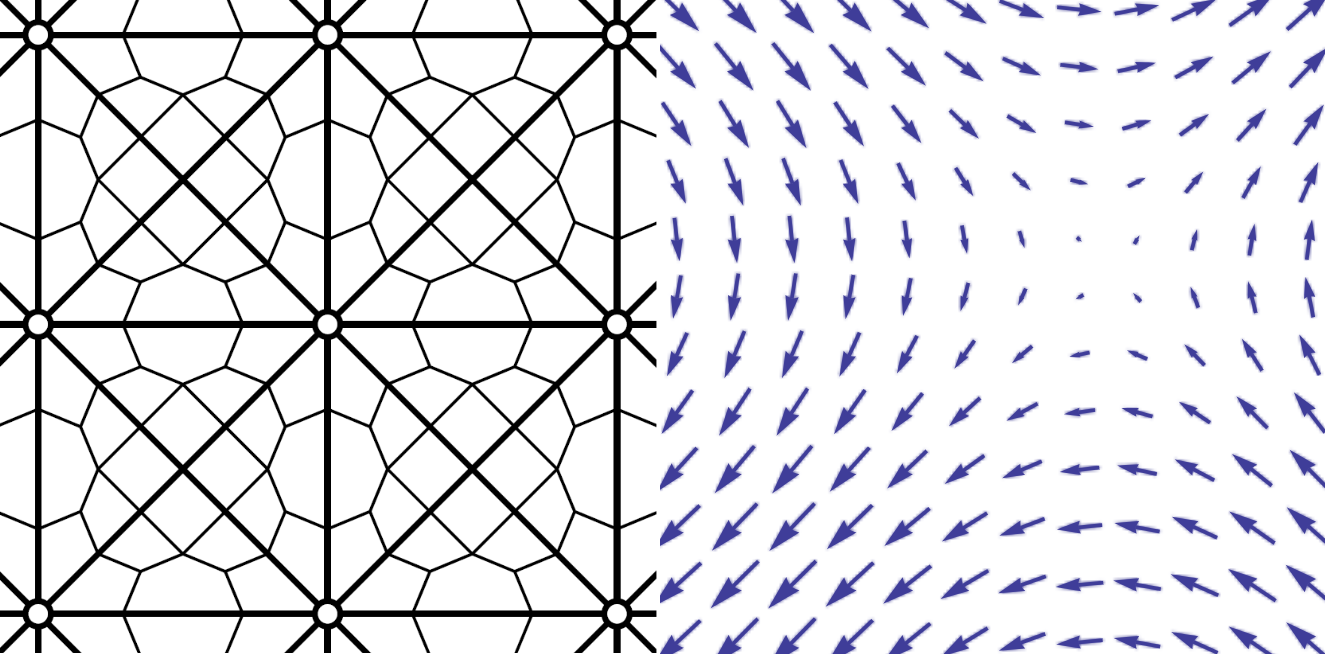
Why Symmetry-Closure Keeps Being Mistaken for Progress
1. The Repeated Move
Physics keeps replaying a very specific move.
Take a framework that already works extraordinarily well.
Notice that its internal structures are elegant, constrained, and mathematically rich.
Then ask:
Surely this can’t be the end. Surely all of this fits into something larger.
So the arena is enlarged. Dimensions are added. Symmetry groups are unified. Connections are extended. Gravity is pulled inside the same geometric container as the other forces.
Nothing fundamental is broken. Nothing is removed. Everything is gathered.
This move feels like progress. It often looks like progress. And yet it reliably stalls.
This essay is about why.
2. What This Approach Is — and What It Is Not
Symmetry-closure programs are often misdescribed as radical or revolutionary. They are neither.
They do not reject spacetime.
They do not abandon locality.
They do not question quantum mechanics.
They do not remove unitarity or causality.
They accept Mario world exactly as it is.
Their claim is narrower and more seductive:
Mario world is already correct — it is just incomplete. If we enlarge the geometric arena enough, gravity will stop looking special and everything will finally close.
This is not escape.
It is completion by accumulation.
3. Closure Is Not Dynamics
Closure attempts share a common intuition:
If the known particles and forces fit beautifully inside a single geometric object, that fit must explain why the world is the way it is.
Historically, this intuition has real pedigree. Grand Unified Theories of the 1970s and 80s achieved elegant symmetry closure of the Standard Model gauge forces. Groups like SU(5) and SO(10) demonstrated that known interactions could be embedded into larger algebraic structures.
What they did not do was determine:
- symmetry-breaking scales,
- particle masses,
- coupling constants,
- or which vacuum the universe selects.
Those facts were always added afterward.
The Higgs sector makes this failure concrete. Even with exact gauge symmetry, the Higgs mass requires extreme fine-tuning against quantum corrections, and symmetry alone offers no explanation for why the electroweak scale is so much smaller than the Planck scale. Perfect symmetry leaves the most important numbers untouched.
The lesson is structural:
Symmetry embedding is not dynamics, and inevitability is not prediction.
A closed algebra explains coherence. It does not explain behaviour.
Mario world is not overconstrained. It is underdetermined. Closing the symmetry book does not force the story.
4. What “Equation of Motion” Actually Means
At this point the objection usually arises: what exactly is missing?
By an equation of motion one does not mean a specific differential equation written on a blackboard. One means a principle — an action, a variational rule, a consistency condition, a constraint — that determines which configurations are physically realised and which are not.
Without such a principle, a theory describes a space of possibilities, not a world.
Geometry classifies what could exist.
Dynamics selects what does.
This does not mean symmetry is irrelevant to dynamics. Historically, symmetry has often guided the form of equations of motion: Noether’s theorem ties continuous symmetries to conservation laws, and effective field theories use symmetry to constrain which interactions are allowed. But in each case, symmetry operates downstream of a dynamical principle. It narrows possibilities; it does not select reality.
Without selection, nothing moves.
5. The Dirac Objection
There is a brutally simple question that cuts through all of this:
Where is the equation that tells Mario how to move?
Dirac’s standard is precise. A physical theory is not defined by its state space or its symmetries, but by its action principle — a functional
whose stationary points determine which trajectories are physically realised.
Geometry specifies the manifold of possibilities.
Symmetry organises that manifold.
But the action selects the path.
Without an action (or an equivalent selection principle), a theory describes kinematics without dynamics — a catalogue of allowed configurations with no rule for evolution.
Geometry does not answer this question.
Symmetry does not answer it.
Dimensional extension does not answer it.
Physics happens only when a rule constrains change.
Even in the canonical counterexample — general relativity — geometry alone was not enough. The Einstein field equations arise from an action and impose a dynamical law relating geometry to matter. Without them, spacetime would be an inert catalogue of shapes.
The direction of explanation matters. Dynamics do not fall out of beautiful structures; structure becomes meaningful once dynamics are fixed.
6. Why Adding Dimensions Produces a Frozen Mario
By adding dimensions — whether literal, internal, or algebraic — symmetry-closure programs produce more coordinates but no new rules.
You gain:
- more symmetry
- more redundancy
- more ways of describing the same configurations
You do not gain:
- an action principle
- a selection rule
- a notion of what happens next
The result is a hall of mirrors attached to an already well-signposted landscape.
Everything reflects everything else.
Nothing moves.
Mario is not liberated by the extra space. He is immobilised by it. When every direction is equivalent, no direction is preferred. When every configuration fits, no evolution is forced.
Symmetry closure produces classification, not causation.
7. Why This Feels Like Progress Anyway
The persistence of symmetry-closure attempts is not an intellectual failure. It is a psychological one.
Several forces push smart people toward this move:
Aesthetic inevitability. Large, rigid structures feel explanatory even when they explain nothing dynamically.
Completion bias. Humans are uncomfortable with open systems. Closure feels like resolution.
Effort justification. Years spent mastering geometry create pressure for geometry to be the answer.
Visibility. Symmetry is legible. Dynamics are messy, technical, and less narratable.
False economy. It feels easier to add structure than to remove assumptions.
Together these create a powerful illusion: that accumulating elegance is the same as advancing understanding.
It is not.
8. A Clarification on String Theory
It is worth being explicit about what this critique is not. It is not an argument against string theory. String theory is not a symmetry-closure program; it is a genuine attempt to change Mario’s primitives by replacing point particles with extended objects. Its failure mode is not premature closure but underdetermination: it admits too many internally consistent worlds rather than freezing dynamics altogether.
One could argue that the resulting landscape reflects a kind of symmetry excess at a higher level — dualities and moduli multiply consistent descriptions without providing a selection principle — but this is a consequence of an escape attempt running out of constraint, not of premature closure within Mario world.
9. Why Real Escape Looks Different
The genuinely deep thinkers of the last half-century do not try to complete Mario world. They interrogate it.
They ask not:
What can we add?
But:
What can we remove without breaking contact with experiment?
Interrogation is not a guarantee of success. Many subtraction-based or emergent programs stall as well. The criterion here is not whether a proposal works, but whether it forces motion by stressing a primitive assumption — locality, spacetime, or process — rather than merely rearranging or closing existing structure.
One questions whether spacetime points are the right primitive at all.
Another strips theories down until only global invariants survive.
Another removes time, locality, and process as starting assumptions and keeps only consistency of outcomes.
The problem is not geometry.
It is geometry treated as explanation rather than constraint.
None of these programs promise closure.
They promise stress.
10. The Core Lesson
Symmetry closure is repeatedly mistaken for progress because it satisfies the mind’s desire for completion without satisfying nature’s demand for constraint.
Adding a hall of mirrors to Mario world does not reveal a deeper reality. It removes the possibility of motion.
Real progress comes from subtraction, not accumulation.
From breaking assumptions, not polishing them.
From asking what must move, not what fits together.
The purpose of this critique is not to prescribe a new program, but to sharpen the criteria by which new programs should be judged.
Until a principle forces Mario to move differently, no amount of geometric reflection will make the game deeper.
That is why closure keeps failing.
And why it keeps being tried anyway.
https://thinkinginstructure.substack.com/p/the-hall-of-mirrors-problem
Leave a Reply