Tag: caribbean

  • Soca: Origins, Coherence, and Pluralisation

    Soca: Origins, Coherence, and Pluralisation

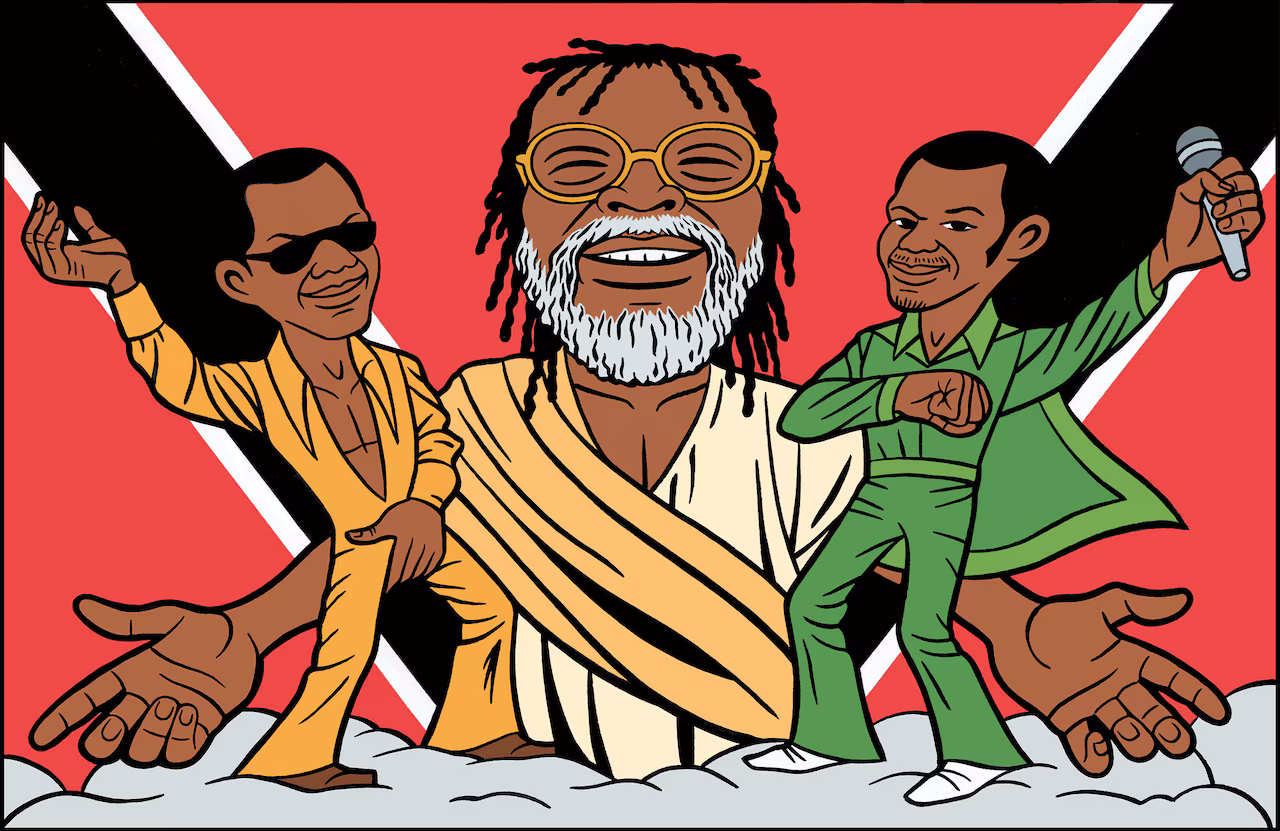
    Today we are in remembrance of the 80th Bornday Anniversary of Ras Shorty  I. [1941 October 06 - 2000 July 12] Ras Shorty I, born Garfield Blackman  and also known as Lord

    1. Origins (1970s): Calypso in Motion

    • Soca emerges in Trinidad & Tobago in the early 1970s.
    • Architect: Ras Shorty I (Lord Shorty).
    • Core intervention:
      • Preserve calypso’s lyrical intelligence and social commentary
      • Increase tempo and bodily drive
      • Incorporate Indo-Caribbean rhythm
    • “Soul of Calypso” meant:
      • Songs still argued
      • Verses still mattered
      • Dance emerged from meaning

    Founding assumption:
    Soca should move bodies without surrendering speech.


    2. Exploratory Maturation (1980s): Tune, Argument, Infrastructure

    Modernisation without collapse
    Mighty Gabby keeps them honest - Caymanian Times
    Calypsonian The Mighty Gabby, Says Calypso Carries Messages People Want To  Hear – DOM767
    • The Mighty Gabby – “Dr. Cassandra”
      • Narrative, satirical, melodically intact
      • Produced by Eddy Grant at Blue Wave Studio
    • Eddy Grant’s role
      • Infrastructure and discipline
      • Barbados becomes a co-equal creative centre
    • Grynner
      • Early Bajan soca retains:
        • Song form
        • Political wit
        • Audience intelligence

    This era is plural, but still governed by shared musical expectations.


    3. Soca vs Dancehall/Dub: Distinct Cousins

    A lived cultural separation

    • In Caribbean ground-level practice, soca and dancehall/dub were distinct spaces.
    • At fetes:
      • A dub/dancehall set
      • Then a soca set
    • DJs rarely mixed them.

    Functional contrast (historically):

    • Soca
      • Hedonistic
      • Drunk
      • Communal
      • Release music
    • Dancehall / dub
      • Harder
      • Darker
      • More adversarial
      • The “gangster” cousin

    Modern DJs blend more freely, but this historical separation shaped how the genres evolved — and how audiences understood them.


    4. 1990s: Balance with Irritants

    Coherence, not purity

    • The 1990s represent soca’s last broadly shared centre.
    • Two tendencies coexist:
      • Mid-tempo, melodic “sweet” soca (later branded groovy in 2005)
      • Faster jump-and-wave / early power soca (e.g. Superblue)
    • Instructional soca already exists:
      • “Follow the Leader”
      • Choreography-driven call-and-response
      • Widely recognised as annoying but containable
      • A tolerated sub-variant, not yet hegemonic

    Golden-era anchors:

    • Krosfyah – “Krank It”, “Pump It Up”
      • Movement implied, not ordered
      • Durable hooks
    • Lil Rick
      • Pop discipline
      • Humour without hysteria

    These tracks still dominate London and New York Carnival because they work without instruction.


    5. Barbados Meta-Soca: Tents, Jokes, and Context

    Music that knows where it is

    • Barbados preserves a tent-based meta layer longer than most territories.
    • Artists often function as social jokes, not scalable brands.

    Examples:

    • Contone
      • A literal car washer with a song
      • A Crop Over in-joke
      • Funny because everyone knows who he is
    • “White Wine”
      • Linked to Bacchanal Time Tent
      • A moment dependent on timing, place, shared knowledge

    Institutional anchor:

    • Bacchanal Time Tent
      • Still produces tight social commentary
      • Maintains calypso’s argumentative spine inside soca

    These are situated cultural artefacts, not novelty throwaways.


    6. Bashment Soca (Mid-1990s onward): Parallel Street Logic

    Divergence, not decline

    • Emerges primarily in Barbados, rooted in local “dub” riddims.
    • Draws from dancehall aesthetics but remains soca-adjacent.
    • Traits:
      • Bass-heavy
      • Chant-forward
      • Dialect-first

    Prototype:

    • Lil Rick – “Hard Wine” (1996)
      • Raw
      • Unpolished
      • Street-functional

    Later formalisation (e.g. Bashment Soca Monarch) recognises what was already culturally established.


    7. The French-Creole Axis: Zouk, Bouyon, Dennery Segment

    Parallel carnival ecosystems

    • Zouk (Kassav’)
      • Polished, sensual, adult
      • Night-time carnival music
    • Bouyon (WCK, Dominica)
      • Faster, rougher, chant-driven
      • French-Creole rhythmic base
    • Dennery Segment (St Lucia)
      • Kuduro-influenced, ultra-fast
      • Youth-driven, digitally viral
    • Bouyon soca
      • St Lucia, Antigua, Eastern Caribbean
      • A soca-adjoint fusion, not a replacement
    • Burning Flames (Antigua)
      • Early high-energy regional bridge

    These are adjacent ecosystems, not evolutionary stages.


    8. The International Breakout That Went Nowhere

    Export success ≠ genre health

    • Anslem Douglas – “Who Let the Dogs Out”
      • Clever soca-adjacent call-and-response
      • Repurposed as international novelty
      • Cultural meaning stripped out
    • Rupee
      • Slow soca
      • Radio-friendly
      • Brief crossover
    • Kevin Lyttle – “Turn Me On”
      • Soca’s biggest global pop hit
      • Proof the mainstream window was real but fleeting

    Soca’s pop scalability peaked almost as soon as it appeared.


    9. Fragmentation Becomes Dominant Logic (2000s)

    • Instructional soca moves from edge case to centre.
    • Command lyrics become structural:
      • “Hands in the air”
      • “Everybody jump”
      • “Footsteps”
    • Composition retreats in much mainstream power soca.
    • Production intensity compensates.

    9.5 Reggaeton, “Ragga Ragga”, and What Left Soca

    Listen:

    • Red Plastic Bag – Ragga Ragga
    • Daddy Yankee – Gasolina

    This is not a story of theft.
    It is a story of selection.

    By the late 1990s and early 2000s, soca begins to abandon certain protections it once held instinctively:

    • Implied groove
    • Minimal verbal instruction
    • Rhythmic space that lets the body decide

    Those elements do not disappear.
    They reappear elsewhere, most successfully in reggaeton.

    “Ragga Ragga” (Red Plastic Bag)
    Originally a Bajan satire of ragga/dancehall opacity and bravado, Ragga Ragga is built on chant, bounce, and repetition, but framed as commentary. Over time, the chant escapes its context. The song — or fragments of it — circulates widely across the Caribbean basin, functioning as identity rhythm or carnival chant, often with no awareness of authorship or irony. The joke survives; the argument does not.

    Reggaeton’s move
    Reggaeton’s rhythmic core comes primarily from Jamaican dancehall (the Dem Bow riddim), not soca. But reggaeton systematises something soca once did well: percussion-first groove, minimal harmonic obligation, and bodily logic that does not rely on shouted instruction.

    Daddy Yankee’s “Gasolina” is decisive because it locks into movement without explanation. Where soca increasingly tells the crowd what to do, reggaeton lets the rhythm do it.

    The irony
    Soca’s influence travels farthest when it is detached from soca itself — when authorship fades and commentary is stripped away. This is not failure, but it is loss of control. Soca did not lose its clothes; it stopped defending them, and other genres wore them better.


    10. Carnival lock-in and over-production

    • Kerwin Du Bois
      • Polished, constrained
    • Machel Montano – “Like ah Boss”
      • Extreme production density
      • Energy enforced rather than discovered

    This is not artistic failure — it is Carnival optimisation.


    11. Soca in 2025

    • Soca is alive, loud, and plural:
      • Carnival-dominant
      • Streaming-visible
      • Artists like Machel, Bunji, Kes
    • Commentary persists:
      • In tents
      • In local scenes
      • Especially in Barbados
    • Innovation survives through:
      • Afrosoca
      • Chutney
      • Bouyon/Dennery fusions

    Pluralism is now the genre’s defining condition.


    12. Final Diagnosis

    • Soca did not die.
    • It:
      • Originated as calypso in motion
      • Matured through tune and argument
      • Briefly cohered in the 1990s (despite irritants)
      • Fragmented as instruction became dominant
    • The diaspora keeps replaying the era when:
      • Instruction was optional
      • Groove was trusted
      • The music didn’t need to shout

    Closing note

    This is not a lament.
    It’s a map: of how a genre learned to survive by splitting rather than centralising — and why one decade still carries disproportionate cultural weight.
  • The Barrel

    The Barrel

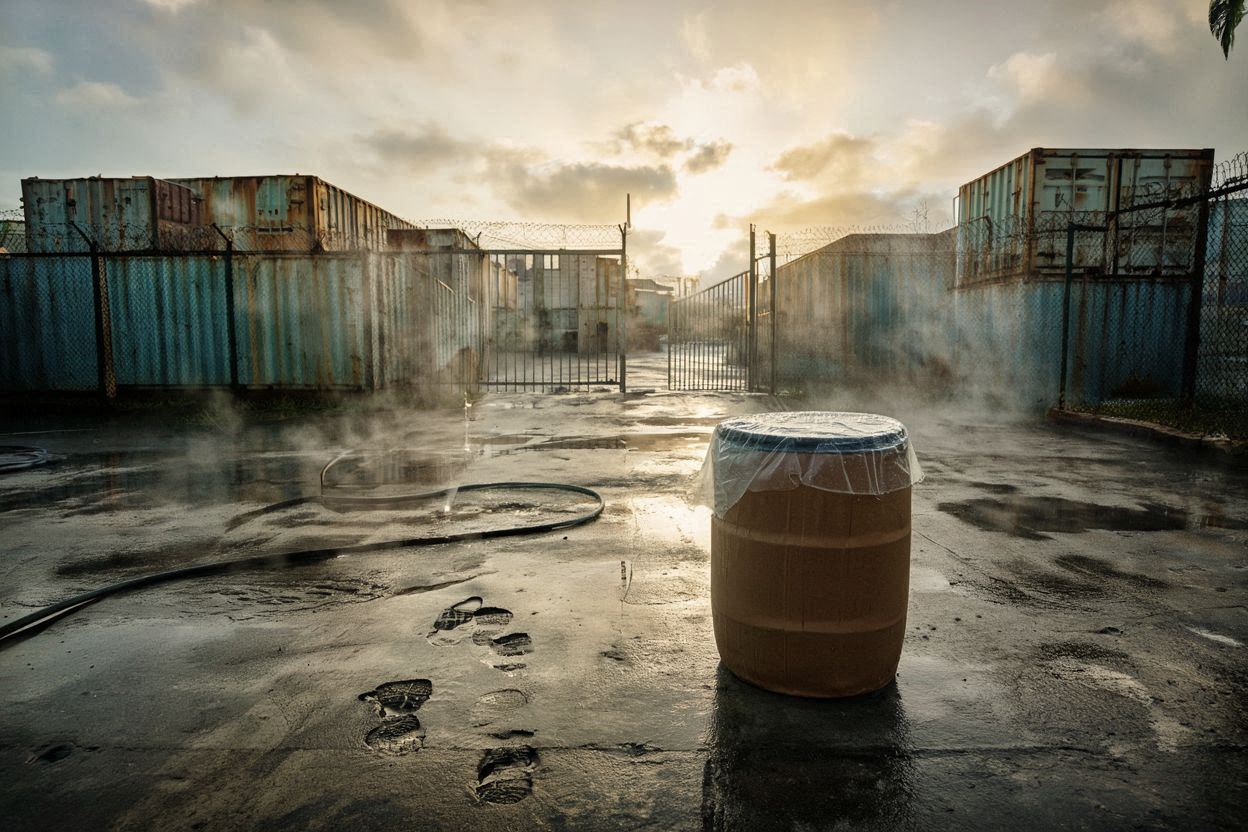
    It had rained all night and most of the morning. By the time I arrived at the yard the concrete was steaming, the water lifting back into the air as the sun arced over the solar panels on the warehouse roof.

    “This barrel here,” says Caldwell, pointing at the drum—a four-foot cardboard tube with a plastic lid—“is the most expensive barrel in St Catherine’s.”

    “Because of what it’s got inside?” I say.

    “No,” he says, lifting the lid. “See? It’s empty.”

    Inside there’s nothing but an inch of rainwater that must have crept in overnight.

    “Then why is it so costly, Caldwell?”

    “Because it in my yard, man. It one of mine. That give it power.”

    He grins, gold teeth flashing. Raymond, one of his children—it’s said he has many, though he’s only in his late twenties—grins too. The three of them line up against the breeze-block wall of the customs office: the Rasta, the boy, the barrel.

    “It’s what I can do with it,” Caldwell says, “that makes it valuable.”

    “And what’s that?”

    “This barrel can disappear.”

    The joke runs longer than it should. Raymond laughs on cue, then glances at me, checking. When I don’t smile back, the laugh fades and he looks to his father instead.

    “How’s that?” I say.

    “Raymond. Show the gentleman.”

    The boy fetches a paper from the office table.

    “Is a docket!” He waves the customs declaration. “That’s we trick.”

    Blank now but filled in later by someone at the Port who understands how to jumble the classifications.

    “In container gine be just parts,” Caldwell confirms. “Chair legs. Screws. Canvas. Nothing assembled.”

    “And when it leaves?” I say.

    He shrugs. “This one going to leave as car parts. Zero duty.”

    “Anybody else would get locked up for that,” I say.

    “That’s how you know the trick be good,” Caldwell says.

    He watches me more closely. Toward the far side of the yard, empty containers stand. The concrete, where it’s not crumbled, is blackened in loops where the forklifts have burned their tyre marks. The padlocks, the barbed wire, the mattress inside the office where the boy sleeps – all of it functional.

    Caldwell walks the yard in his Wellingtons, tapping pallets with his boot. Raymond trails him for a step or two, then stops when Caldwell doesn’t look back.

    When Caldwell returns, he doesn’t joke.

    “So,” he says. “Why you come round today?”

    “The wedding’s on Saturday.”

    He stops and inspects me for a moment, like I’m one of his pallets.

    “Sis,” he says.

    “Yes.”

    Raymond is bored. His earlier grin has gone.

    “She been telling me ,” Caldwell mutters, “that after the wedding everything going get straightened out. Bank. Port. Dockets. Everything going to be easier.” He’s take something, gum, out of his mouth and spits it to the ground.” That she spin.”

    “She’s not lying.”

    “As if I don’t have that shit locked down already.”

    “Thing is, Cald, she’s redone the math.”

    He wants to look up but instead he bends down and turns the tap. A thin dribble spills onto the concrete, spreading and darkening as it pools away.

    “The pressure,” he grumbles. “Always damn low up here.”

    “Marriage is going to make everything easier. For everybody,” I say.

    Rather than look at him, I stare at the container where the boy stands has one corner buckled inward where a forklift caught it years ago. It’s been sat there ever since – too damaged to use, too useful to scrap.

    “It’s going to legitimise things.” Caldwell follows my gaze. The container doesn’t belong anywhere else now. It’s part of this place. “We can start doing things a different way. Professionalise. Make a real company out of it.”

    Caldwell nods. He doesn’t need the rest spelled out.

    “Hell, we could have we a conglomerate,” he says. ”Raymond has drifted closer again. Caldwell notices, pauses, then waves him back firmly. The boy obeys. “That’s her pitch. But she don’t all the uses of the current arrangements. ”

    “She thinks the whole thing run it’s course. She says time’s have changed”

    A truck pulls up at the gate and waits. With a nod, the boy runs to the barrier.

    “You know why this barrel empty?” Caldwell sighs.

    “Because it’s a trick.”

    “Because this the one we show Sis.” He taps the rim with his knuckle and it echoes hollow. “This is what we new compliance department see.”

    “But the rest of it,” I say.

    He looks at me.

    “You bedroom business can stay out of we business business,” he says. “Then we cool.”

    Raymond can’t get the padlock open and the truck sounds his horn in impatience.

    A wave of heat from the concrete floods over me – a burning sensation, like there’s something in the ground climbing up through the soles of my shoes. Trucks idling, gates hesitating, the boy still fumbling with the lock while Caldwell looks on angrily. The deal with him was I was temporary -the explainer, the manager, the guy with the connections had always been the one that could still step away.

    I see Somaya at the kitchen table, hair still damp, barefoot on the tile, one toe hooked under the chair rung. Careful. Exact. Worried about mistakes in the note she’s writing to the Pastor. She doesn’t look up when she does it.

    Once you stop noticing it, the heat because the local temperature. The airlessness settles. You stop being a sweat-drenched traveller and start being a native.

    The concrete yard, the scarred containers, the barrel that never has to move. They sit like they’ve always been here and everything else learns how to flow around them

    “So,” Caldwell says. “You still marrying her?”

    Once it’s done, everything will fit together .

    “Yes,” I say. “On Saturday.”

    “Good,” Caldwell says. “Then we all in it hard.”

    Raymond finally gets the key to turn and the gate swings wide. As the trucks roll in, Caldwell replaces the lid on the empty barrel and presses it down.

    https://thinkinginstructure.substack.com/p/the-barrel

  • The Roadblock

    The Roadblock

    Driving on the wrong side with a stick shift was easier than I’d expected. The trick was not to think about left or right, but to keep the driver’s seat centered in the road. Roundabouts—a completely new pitfall—followed the same rule: hug the circle, keep the driver’s side away from the curb. I felt triumphant, having found a single, permanent logic for every contrivance.

    Two days after my arrival, the car—a Merkur Scorpio—reached the island in a crate. I distrusted what I might find locally: overpriced Japanese imports or ancient rusted wrecks with dulled metallic paint. Once I confirmed that imports for expats on work permits were duty-free, I bought the only right-hand-drive car I could find from a dealer in Texas and had it shipped. Now, driving it for the first time on these rough roads, it seemed I’d made a mistake. The undercarriage sat too low; every bump risked catastrophe. The tyres slid on the glassy tarmac, slick as ice. The radiator steamed—whether from heat or damage during shipping, I couldn’t tell.

    Still, confident now that I had rules to work with and wanting to get home quickly, I sped up.

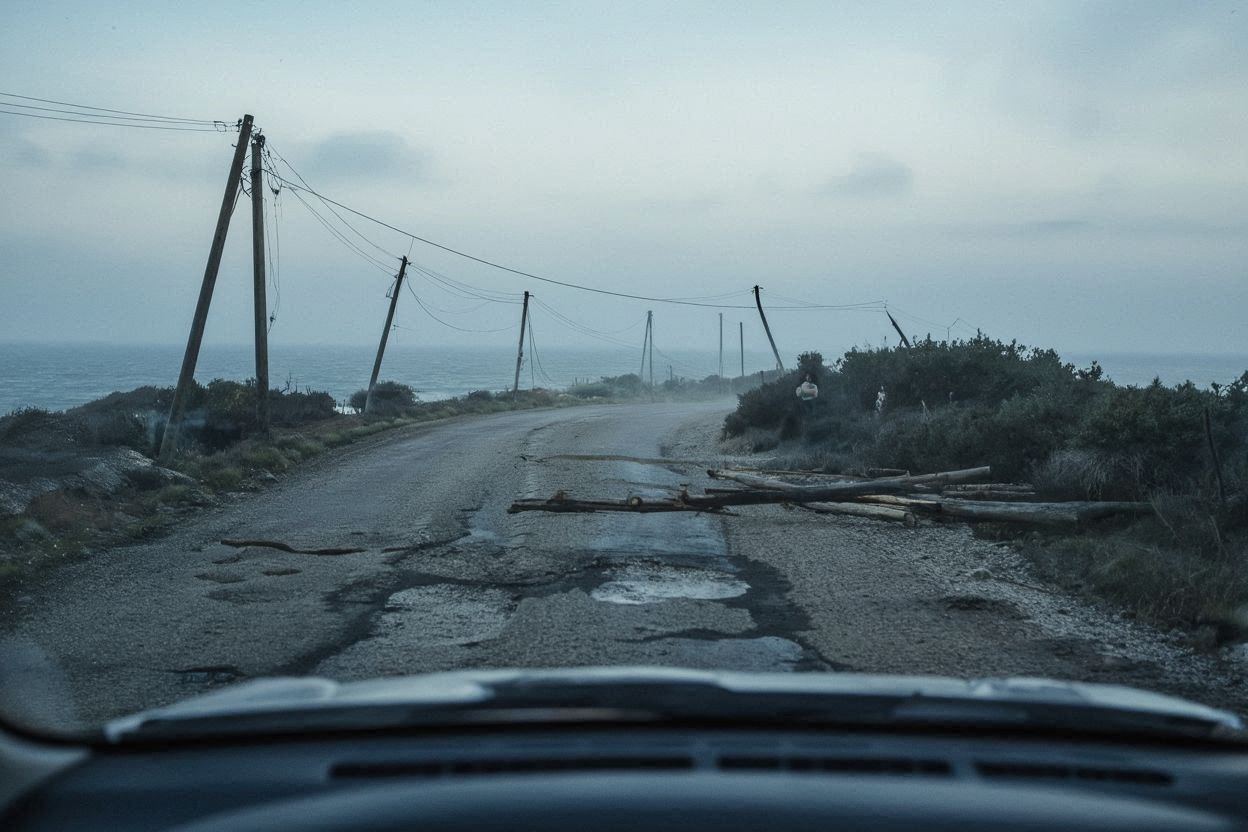
    On this Atlantic side of St Catherine’s, the sea was wilder, dangerous for swimming. Spray whipped by the Alizé hung as mist; I could taste salt as I drove. Grey coral cliffs; spreading sea-grape like lettuce; a blue wooden house behind a white picket fence; tough men on wobbling bicycles; leaning telegraph poles overrun with wires like melted cheese—scenes that would later feel ordinary were then sharp with novelty.

    At a crossroads marked Burnside, the main road narrowed and broke apart. I slowed to barely twenty. Ahead, boys—teenagers—played cricket or tennis on the ruined tarmac. A barrier of sticks and logs lay across the camber. Off to one side, half-hidden in the brush, an older man watched—arms folded, supervisory, like some self-appointed Mayor presiding over the road.

    I stopped. One boy approached.

    “Twenty dollars to pass, Mister.”

    He couldn’t have been more than thirteen: shaved head, bare chest, pot belly, shorts and flip-flops. He held a coconut frond, flicking it like a whip.

    I didn’t take him seriously.

    “I don’t have twenty dollars.”

    “Then you can’t pass.”

    “Move the barrier and go away.”

    The guidebooks had spoken of friendly Katitians, not shakedowns by children on coastal back roads. Still, I wasn’t frightened. This felt low-level.

    “No,” he said.

    “He doesn’t control you,” I said to the boy nearest him. Severe-faced, but wearing shorts with Patrick Starfish on them, he seemed the most likely to break. “You could let me go.”

    “Never,” he said, turning his back.

    These kids are hardcore, I thought. Maybe a nudge will scare them.

    I turned the engine on.

    “Turn it back off!” screamed Starfish.

    I nudged the car into first.

    “Move!” I shouted. “Or I’ll run you down!”

    The older man in the brush was no longer visible. Now the crazy Mayor had disappeared into the bush, I thought. This was my chance.

    “You done fuck up!” Starfish screamed, and as I rolled forward—no more than an inch—he threw himself in front of the car.

    “Jesus Lord, you hit him! I see everything! Big man, you in trouble now!”

    The Mayor emerged from the bush, close now, a hammer in his hand where the coconut frond had been.

    “Ray-John, the white man hit Boycie! Go get your mum! Fast!”

    Ray-John ran.

    Starfish—Boycie—writhed on the tarmac, clutching his arm. The car hadn’t touched him. Of that I was certain. The performance was expert.

    “Kadeem, break down the barrier,” the Mayor said. Kadeem kicked oil cans and cones into the undergrowth.

    I shut off the engine and got out.

    “Don’t move, big man!” the Mayor shrieked, waving the hammer. “We got your licence plate.”

    I crouched beside Boycie.

    “You okay?”

    “Ugh! Ugh!” he cried, rolling.

    “You run him down, you white bitch!” the Mayor screamed.

    Ray-John’s mother arrived, breathless.

    “What the hell you do?” Her voice shook with outrage. “You gonna pay for this.” She bent over Boycie. “Call an ambulance, Kadeem. This angel hurt bad.”

    “He’s not hurt,” I said. “I didn’t hit him. He’s acting.”

    “How you say he acting?” she cried. “He whole body twisted.”

    “The white bitch a liar,” said the Mayor. “We see him hit Boycie. Right, Ray-John?”

    Ray-John nodded.

    “Pick him up,” the woman said. The road was too hot now for theatrics. Boycie couldn’t stay down. They dragged him into the shade.

    I got back into the car and drove off fast. The salt mist that had felt fresh minutes earlier now clung to the windscreen like a net. My heart hammered. The road ahead lay empty, the barrier gone as if it had never existed.

    A mile later, a police car pulled from a side road and signalled me to stop.

    At the station they took my licence and passport and sat me beneath a slowly turning fan. The walls tinted limewash. The officer took a small pencil sharpener from a drawer and carefully turned the stub of his crayon, the shavings falling to the floor.

    “You hit a boy,” he said, not bothering to look up.

    “I didn’t hit him. He jumped in front of the car but I stopped in time.”

    The crayon stopped turning.

    “His mother say you hit him.”

    “Maybe he touched the car but very lightly.”

    “You a doctor?”

    “No.”

    He wrote this down.

    I explained the whole thing – the barrier, the set up, the shake down. But in the heat of the station, my words seemed to lose weight, a kind of thinness in that fug.

    He nodded once, only at the end.

    “You must understand,” he said. “They all witnesses.”

    He wrote a bit more.

    The fan seemed to turn slower now, the whole contraption wobbling and rattling when one blade made a certain arc. I watched it stutter round and round, knowing that if it came apart, I wouldn’t know which way to dive.

    https://thinkinginstructure.substack.com/p/the-roadblock

  • Barbados and the Economics of Transparency: What a Small Pegged Economy Reveals That Big Economies Hide

    Barbados and the Economics of Transparency: What a Small Pegged Economy Reveals That Big Economies Hide

    Small economies rarely illuminate the mechanics of global macroeconomics.
    Barbados is the exception.
    Its combination of high opennessextreme import dependence, and a rigid 2:1 peg to the US dollar turns the island into a macroeconomic truth serum.

    When a country cannot adjust through its exchange rate, every distortion surfaces immediately—in reserves, debt, wages, public-sector spending, and the real economy.
    There is no murk, no delay, no monetary fog to hide in.
    The peg forces clarity.

    Over the last thirty years, Barbados passed through four sharply defined macroeconomic phases—internal devaluation, expansion, deterioration, and restructuring. Each exposed a dynamic that is often invisible in large floating-currency economies. Barbados shows these dynamics in their purest form.


    1. Stabilisation Without an Escape Valve (1991–1994)

    By 1991, Barbados’ reserves had fallen to just over one month of import cover. Unemployment neared a quarter of the labour force. Output contracted. The economy was cornered.

    Most Caribbean governments would have devalued.
    Barbados refused.

    Instead, it carried out an internal adjustment:

    • 8% public-sector wage cut
    • fiscal consolidation
    • IMF support
    • unwavering defence of the peg

    Painful, but effective.
    The economy stabilised, reserves recovered, and Barbados demonstrated a principle that defines its entire story:

    If the currency cannot move, policymakers must.


    2. The Expansion: Real Growth, Structural Fragility (1994–2007)

    The next thirteen years were prosperous:

    • Reserves rose above five months of imports
    • Unemployment fell into single digits
    • Real GDP grew steadily around 2–4%
    • Debt stayed moderate (in the mid-50s to low-60s percent of GDP)

    This prosperity was real—but shallow.
    Its foundations were not diversification but FDI, tourism, and real estate.

    Large inflows financed hotel development and construction. Land sales and privatisations generated foreign exchange. Tourism and its spillovers accounted for roughly one-third of the economy.

    The productive structure did not deepen. There was no export base expansion, no tradable-services boom, no manufacturing revival.

    Barbados enjoyed what might be called rented prosperity—growth financed by inflows, not by the development of new competitive sectors.

    There was nothing inherently unsound about this. But it meant the economy remained vulnerable to external shocks, with no exchange rate flexibility to cushion them.


    3. The Slow-Motion Crisis (2008–2017)

    The global financial crisis exposed the underlying fragility. Tourism stalled, construction slowed, and revenues weakened. But instead of a sudden collapse, Barbados experienced a decade-long erosion—slow, steady, and entirely predictable once you understand the mechanics.

    Three forces drove the deterioration:

    (1) Rising obligations met falling revenue

    The public wage bill, pension obligations, and transfers to state-owned enterprises grew faster than GDP. These were fixed commitments: politically difficult to reduce, economically persistent. They squeezed out capital spending and locked in a structural deficit.

    (2) External earnings stagnated

    Tourism volumes flatlined. With the peg fixed, Barbados could not regain competitiveness through currency depreciation. Imports did not adjust, because the exchange rate could not. The external position deteriorated mechanically.

    (3) Deficits were domestically financed

    As foreign appetite waned, the state increasingly borrowed from domestic institutions—banks, insurers, pension funds, and the central bank. This softened market discipline and masked the scale of the problem.

    The outcome was arithmetic, not ideology:

    • Debt rose from the mid-50s (% of GDP) in 2008 to over 150% by 2017
    • Reserves returned to near-crisis levels: 1.7 months in 20161.3 months in 2017
    • Growth stagnated
    • The fiscal position became structural rather than cyclical

    In a floating economy, this same pressure would have shown up as currency depreciation.
    In Barbados, the exchange rate was immovable—so the pressure went into debt, reserves, and real wages.

    Large economies (e.g., the UK) absorbed post-2008 shocks through a 25% sterling depreciation, quantitative easing, and deep capital markets. Barbados had none of these buffers. The truth serum revealed everything.


    4. The 2018 Reset: Adjustment Without Devaluation

    By 2018, Barbados had exhausted every buffer except the peg itself. The new government confronted a binary choice:
    restructure now or risk losing the currency.

    They restructured.

    This was an unusually comprehensive operation:

    • Default and renegotiation of external debt
    • Restructuring of domestic debt—maturity extensions, coupon reductions, payment pauses
    • Strong fiscal consolidation
    • State-owned enterprise reform
    • IMF support
    • Immediate rebuilding of reserves (eventually above seven months of imports)

    The political economy is the most interesting part.
    Domestic bondholders accepted losses because the alternative—devaluation—would have wiped out even more value:

    • household savings
    • bank balance sheets
    • insurance portfolios
    • pension funds
    • any USD-linked liabilities

    In effect, the peg created a collective incentive to accept restructuring.

    Barbados adjusted internally rather than externally—again.


    The Comparative Lens: Why Barbados Matters

    Barbados is not an anomaly; it is a clarifying case.

    Jamaica

    Relied on depreciation as a shock absorber. Adjustment was shared between fiscal tightening and a weaker exchange rate.

    ECCU

    Shares Barbados’ fixed-rate philosophy but benefits from a regional pool of reserves and a supranational central bank.

    The UK

    Faced similar post-2008 stresses—falling revenues, rising obligations, collapsing external demand—but absorbed them through depreciation, QE, and deep capital markets.
    Barbados makes visible what the UK could hide.

    This is why the island is so analytically valuable: it strips macroeconomics down to its essentials.


    What Policymakers Should Take From This

    1. A fixed exchange rate is a truth serum

    It reveals imbalances early and unambiguously.

    2. FDI-led booms do not equal structural resilience

    If inflows do not expand tradable capacity, vulnerability eventually reappears.

    3. Rigidity kills

    When wages, pensions, and transfers absorb the budget, consolidation becomes nearly impossible until crisis forces it.

    4. Crisis under a peg erupts slowly, then all at once

    The deterioration is predictable; the moment of reckoning is not.

    5. Internal adjustment is possible—with credibility

    Barbados twice avoided devaluation by mobilising a shared commitment to the currency.


    Conclusion: What a Small Economy Reveals About Big Ones

    Barbados is not merely a Caribbean case study.
    It is a macroeconomic truth serum—a system in which the usual escape valves are sealed, forcing economic pressures to appear in their purest form.

    Larger economies experience the same stresses, but their floating currencies, deeper markets, and monetary flexibility allow problems to diffuse and disguise themselves.

    Barbados shows what happens when you remove the disguise:

    If your currency cannot adjust, everything else must.
    And the longer you wait, the harsher the adjustment becomes.