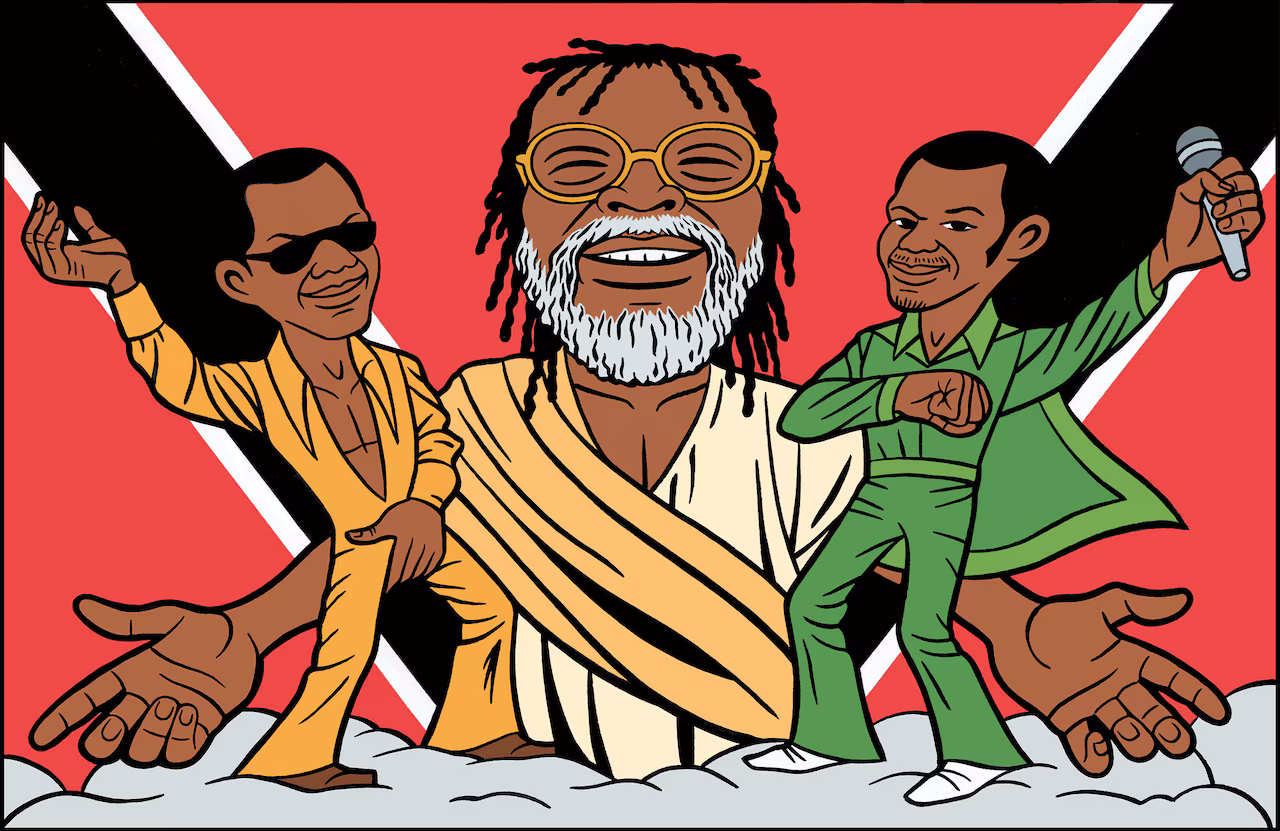
1. Origins (1970s): Calypso in Motion
- Soca emerges in Trinidad & Tobago in the early 1970s.
- Architect: Ras Shorty I (Lord Shorty).
- Core intervention:
- Preserve calypso’s lyrical intelligence and social commentary
- Increase tempo and bodily drive
- Incorporate Indo-Caribbean rhythm
- “Soul of Calypso” meant:
- Songs still argued
- Verses still mattered
- Dance emerged from meaning
Founding assumption:
Soca should move bodies without surrendering speech.
2. Exploratory Maturation (1980s): Tune, Argument, Infrastructure
Modernisation without collapse
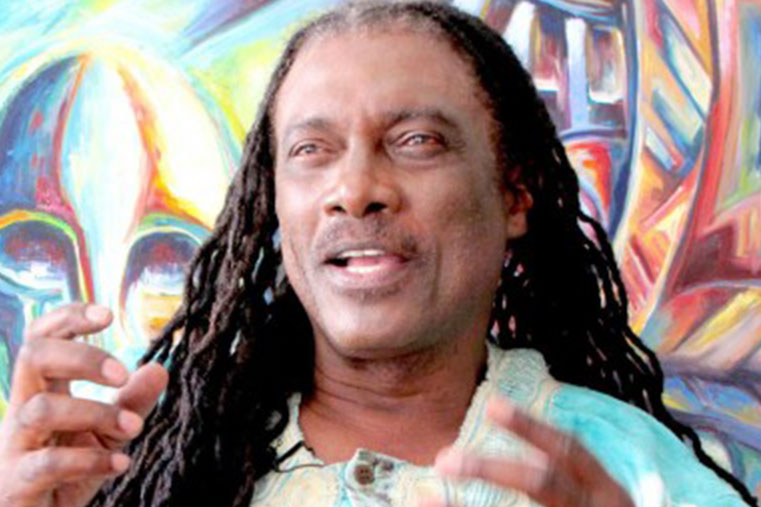
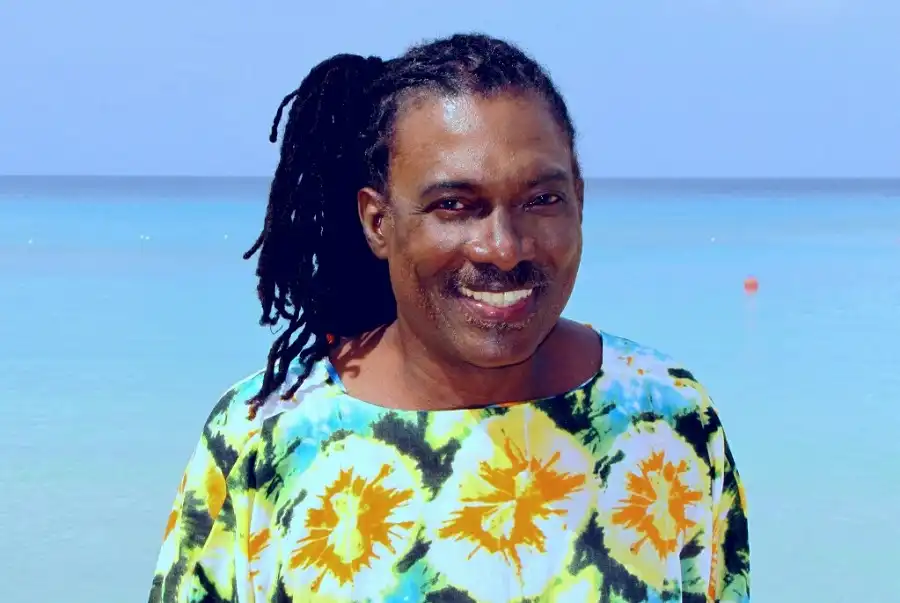
- The Mighty Gabby – “Dr. Cassandra”
- Narrative, satirical, melodically intact
- Produced by Eddy Grant at Blue Wave Studio
- Eddy Grant’s role
- Infrastructure and discipline
- Barbados becomes a co-equal creative centre
- Grynner
- Early Bajan soca retains:
- Song form
- Political wit
- Audience intelligence
- Early Bajan soca retains:
This era is plural, but still governed by shared musical expectations.
3. Soca vs Dancehall/Dub: Distinct Cousins
A lived cultural separation
- In Caribbean ground-level practice, soca and dancehall/dub were distinct spaces.
- At fetes:
- A dub/dancehall set
- Then a soca set
- DJs rarely mixed them.
Functional contrast (historically):
- Soca
- Hedonistic
- Drunk
- Communal
- Release music
- Dancehall / dub
- Harder
- Darker
- More adversarial
- The “gangster” cousin
Modern DJs blend more freely, but this historical separation shaped how the genres evolved — and how audiences understood them.
4. 1990s: Balance with Irritants
Coherence, not purity
- The 1990s represent soca’s last broadly shared centre.
- Two tendencies coexist:
- Mid-tempo, melodic “sweet” soca (later branded groovy in 2005)
- Faster jump-and-wave / early power soca (e.g. Superblue)
- Instructional soca already exists:
- “Follow the Leader”
- Choreography-driven call-and-response
- Widely recognised as annoying but containable
- A tolerated sub-variant, not yet hegemonic
Golden-era anchors:
- Krosfyah – “Krank It”, “Pump It Up”
- Movement implied, not ordered
- Durable hooks
- Lil Rick
- Pop discipline
- Humour without hysteria
These tracks still dominate London and New York Carnival because they work without instruction.
5. Barbados Meta-Soca: Tents, Jokes, and Context
Music that knows where it is
- Barbados preserves a tent-based meta layer longer than most territories.
- Artists often function as social jokes, not scalable brands.
Examples:
- Contone
- A literal car washer with a song
- A Crop Over in-joke
- Funny because everyone knows who he is
- “White Wine”
- Linked to Bacchanal Time Tent
- A moment dependent on timing, place, shared knowledge
Institutional anchor:
- Bacchanal Time Tent
- Still produces tight social commentary
- Maintains calypso’s argumentative spine inside soca
These are situated cultural artefacts, not novelty throwaways.
6. Bashment Soca (Mid-1990s onward): Parallel Street Logic
Divergence, not decline
- Emerges primarily in Barbados, rooted in local “dub” riddims.
- Draws from dancehall aesthetics but remains soca-adjacent.
- Traits:
- Bass-heavy
- Chant-forward
- Dialect-first
Prototype:
- Lil Rick – “Hard Wine” (1996)
- Raw
- Unpolished
- Street-functional
Later formalisation (e.g. Bashment Soca Monarch) recognises what was already culturally established.
7. The French-Creole Axis: Zouk, Bouyon, Dennery Segment
Parallel carnival ecosystems
- Zouk (Kassav’)
- Polished, sensual, adult
- Night-time carnival music
- Bouyon (WCK, Dominica)
- Faster, rougher, chant-driven
- French-Creole rhythmic base
- Dennery Segment (St Lucia)
- Kuduro-influenced, ultra-fast
- Youth-driven, digitally viral
- Bouyon soca
- St Lucia, Antigua, Eastern Caribbean
- A soca-adjoint fusion, not a replacement
- Burning Flames (Antigua)
- Early high-energy regional bridge
These are adjacent ecosystems, not evolutionary stages.
8. The International Breakout That Went Nowhere
Export success ≠ genre health
- Anslem Douglas – “Who Let the Dogs Out”
- Clever soca-adjacent call-and-response
- Repurposed as international novelty
- Cultural meaning stripped out
- Rupee
- Slow soca
- Radio-friendly
- Brief crossover
- Kevin Lyttle – “Turn Me On”
- Soca’s biggest global pop hit
- Proof the mainstream window was real but fleeting
Soca’s pop scalability peaked almost as soon as it appeared.
9. Fragmentation Becomes Dominant Logic (2000s)
- Instructional soca moves from edge case to centre.
- Command lyrics become structural:
- “Hands in the air”
- “Everybody jump”
- “Footsteps”
- Composition retreats in much mainstream power soca.
- Production intensity compensates.
9.5 Reggaeton, “Ragga Ragga”, and What Left Soca
Listen:
- Red Plastic Bag – Ragga Ragga
- Daddy Yankee – Gasolina
This is not a story of theft.
It is a story of selection.
By the late 1990s and early 2000s, soca begins to abandon certain protections it once held instinctively:
- Implied groove
- Minimal verbal instruction
- Rhythmic space that lets the body decide
Those elements do not disappear.
They reappear elsewhere, most successfully in reggaeton.
“Ragga Ragga” (Red Plastic Bag)
Originally a Bajan satire of ragga/dancehall opacity and bravado, Ragga Ragga is built on chant, bounce, and repetition, but framed as commentary. Over time, the chant escapes its context. The song — or fragments of it — circulates widely across the Caribbean basin, functioning as identity rhythm or carnival chant, often with no awareness of authorship or irony. The joke survives; the argument does not.
Reggaeton’s move
Reggaeton’s rhythmic core comes primarily from Jamaican dancehall (the Dem Bow riddim), not soca. But reggaeton systematises something soca once did well: percussion-first groove, minimal harmonic obligation, and bodily logic that does not rely on shouted instruction.
Daddy Yankee’s “Gasolina” is decisive because it locks into movement without explanation. Where soca increasingly tells the crowd what to do, reggaeton lets the rhythm do it.
The irony
Soca’s influence travels farthest when it is detached from soca itself — when authorship fades and commentary is stripped away. This is not failure, but it is loss of control. Soca did not lose its clothes; it stopped defending them, and other genres wore them better.
10. Carnival lock-in and over-production
- Kerwin Du Bois
- Polished, constrained
- Machel Montano – “Like ah Boss”
- Extreme production density
- Energy enforced rather than discovered
This is not artistic failure — it is Carnival optimisation.
11. Soca in 2025
- Soca is alive, loud, and plural:
- Carnival-dominant
- Streaming-visible
- Artists like Machel, Bunji, Kes
- Commentary persists:
- In tents
- In local scenes
- Especially in Barbados
- Innovation survives through:
- Afrosoca
- Chutney
- Bouyon/Dennery fusions
Pluralism is now the genre’s defining condition.
12. Final Diagnosis
- Soca did not die.
- It:
- Originated as calypso in motion
- Matured through tune and argument
- Briefly cohered in the 1990s (despite irritants)
- Fragmented as instruction became dominant
- The diaspora keeps replaying the era when:
- Instruction was optional
- Groove was trusted
- The music didn’t need to shout
Closing note
This is not a lament.
It’s a map: of how a genre learned to survive by splitting rather than centralising — and why one decade still carries disproportionate cultural weight.
Leave a Reply